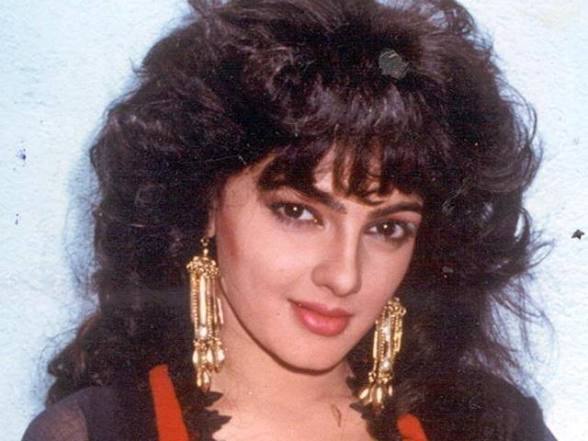
Mamta Kulkarni Biography: Age, Early Life, Movies, Career, Personal Life and Latest Updates
Quick Profile
| Field | Details |
|---|---|
| Full Name | Mamta Kulkarni |
| Age | 53 years old |
| Nationality | Indian |
| Birth Date | April 20, 1972 |
| Birth Place | Bombay (now Mumbai), Maharashtra, India |
| Known For | Indian former actress and model |
| Profession | Former actress, model, and later spiritual figure |
| Industry | Hindi cinema, with work in other Indian film industries as well |
| Popular Films | Waqt Hamara Hai, Krantiveer, Karan Arjun, Sabse Bada Khiladi, Baazi, China Gate |
| Active Film Era | Mainly the 1990s and early 2000s |
| Recent Public Attention | Return to public spotlight, spiritual journey, and media coverage around her post-Bollywood life |
Mamta Kulkarni Biography: Age, Early Life, Movies, Career, Personal Life and Latest Updates
Mamta Kulkarni is one of those Bollywood names that still sparks instant nostalgia. For people who grew up watching Hindi cinema in the 1990s, she was not just an actress or model. She was a full-on screen presence—glamorous, bold, memorable, and impossible to ignore. At the peak of her fame, Mamta Kulkarni became one of the most talked-about actresses of her generation, appearing in successful commercial films and building a fan following that stretched far beyond India’s major cities. Years later, even after she stepped away from films, curiosity around her life never really disappeared.
That is exactly why Mamta Kulkarni remains a strong biography subject today. Her life story is not a simple rise-and-fall celebrity tale. It is a layered journey that includes early fame, public attention, media controversies, disappearance from mainstream cinema, long years away from the spotlight, legal headlines, spiritual claims, and an unexpected return to public conversation. In recent years, public interest in her has increased again because of renewed media coverage, her return to India, and her spiritual transformation being discussed across entertainment news platforms.
In the biography niche, Mamta Kulkarni stands out because her story connects with multiple audiences at once. Some readers want to know about her childhood and film career. Others are searching for details about her personal life, rumored relationships, and why she quit the industry. Another group is curious about where she is now and how she transformed from a glamorous actress into a public figure associated with spirituality. That broad search intent makes her an excellent biography subject for an AdSense-friendly, SEO-focused long-form article.
Early Life and Background
Mamta Kulkarni was born in 1972 and came from a Marathi-speaking family. Public biographical profiles note that she grew up in Mumbai’s Andheri-West area, particularly around Yari Road, Versova. She reportedly had sisters named Mithila and Moulina, details that have often appeared in her biographical write-ups.
Her upbringing in Mumbai likely played a major role in shaping her future. Mumbai has always been the center of the Hindi film industry, and for many aspiring actors and models, simply being close to the entertainment world creates access to auditions, industry networks, and opportunities. In Mamta Kulkarni’s case, she entered the public eye at a time when Bollywood was rapidly changing. The 1990s brought a different kind of celebrity culture—music channels, glossy magazines, and a growing fascination with stars’ personal lives. This environment helped create the conditions for her rise.
What made Mamta noticeable from the beginning was her screen appeal. She did not fit quietly into the background. She carried confidence and glamour, and that image helped her become popular in both modeling and films. In those years, the line between actress and style icon was often very thin, and Mamta Kulkarni moved through that space in a way that made her widely recognizable.
Although many biographies of film stars focus heavily on formal education or early training, Mamta Kulkarni’s public image was built less around institutional preparation and more around her on-screen charisma and public persona. She emerged as a star through visibility, audience response, and commercial success rather than through the kind of “method actor” narrative often attached to certain other performers.
Entry Into Films
Mamta Kulkarni entered the entertainment world in the early 1990s. Biographical film records indicate that she appeared in cinema beginning around 1991–1992, and her early credits helped establish her as a fresh face in the industry. Public databases and profiles identify Mera Dil Tere Liye among her early Hindi film appearances, while broader career summaries note her rise through the early 1990s into mainstream Bollywood.
The Hindi film industry during that period was highly competitive. New actresses were constantly entering the field, and very few managed to become memorable enough to stay in public discussion for years. Mamta Kulkarni did. One reason was timing: she arrived during a decade that celebrated glamour, popular music, strong visual appeal, and crowd-pleasing entertainers. Another reason was that she quickly got associated with commercially visible films rather than remaining limited to minor roles.
Her early years in cinema were marked by rapid recognition. She was not just another newcomer trying to survive in a crowded lineup. She was increasingly seen as one of the actresses who could add excitement, appeal, and visibility to a commercial film. This positioned her well for the kinds of roles that dominated 1990s Bollywood—song-heavy entertainers, action dramas, romance, and family-viewing blockbusters.
Rise to Fame in Bollywood
Mamta Kulkarni rose to fame during the 1990s, a decade in which she became known as one of Bollywood’s most glamorous and talked-about actresses. Public profiles and film summaries consistently list successful titles such as Waqt Hamara Hai (1993), Krantiveer (1994), Karan Arjun (1995), Sabse Bada Khiladi (1995), Andolan (1995), Baazi (1996), and China Gate (1998) among her best-known films.
These films mattered because they were not obscure entries in film history. They were mainstream projects that helped define the commercial cinema of their era. By appearing in such films, Mamta secured a place in the memory of audiences who associated 1990s Bollywood with dramatic storytelling, memorable songs, and charismatic stars. Her presence in these films gave her a distinct identity in an industry full of major personalities.
One of the important things about her rise is that it happened during a period when actresses were often judged not just by acting alone but by star power, popularity, dance presence, and the ability to draw media attention. Mamta Kulkarni fit that mold strongly. She became a figure of fascination—both admired and debated. The attention around her image, style, and media appearances made her one of the prominent female stars of the decade.
Her popularity was helped by the fact that she did not remain boxed into just one type of film. She appeared in action-driven entertainers, dramatic stories, and films that relied heavily on star chemistry. That adaptability increased her reach and kept her visible to a broad audience.
Notable Movies and Career Highlights
A biography of Mamta Kulkarni would feel incomplete without a closer look at the films that shaped her image. Several titles stand out as especially important in understanding her film career.
Waqt Hamara Hai
This film is frequently listed among Mamta Kulkarni’s commercially known projects. It contributed to her growing visibility in the industry and helped establish her as an actress who could be featured in mainstream entertainment cinema.
Krantiveer
Krantiveer is one of the titles most commonly associated with Mamta Kulkarni’s successful period. The film’s strong public recognition gave weight to her standing in Bollywood. Being part of a film that remained culturally visible helped her career image significantly.
Karan Arjun
This is perhaps one of the most famous films linked to her name because of the movie’s huge popularity and lasting place in Bollywood culture. Even decades later, Karan Arjun remains a reference point in discussions of 1990s Hindi cinema, and Mamta’s association with it adds to the durability of her fame.
Sabse Bada Khiladi
Another key film in her career, Sabse Bada Khiladi contributed to the glamorous and commercially popular image that defined Mamta Kulkarni in the mid-1990s. It reinforced her relevance in star-driven mainstream cinema.
Baazi and China Gate
These films showed that she remained visible beyond her initial breakthrough period. China Gate, in particular, is often remembered among audiences discussing late-1990s Bollywood and has helped keep her name relevant in public memory.
Overall, Mamta Kulkarni’s filmography reflects a career built around strong visibility and commercial association rather than quiet, art-house recognition. She was part of the kind of cinema that reached mass audiences. That is a major reason her biography continues to attract attention.
Mamta Kulkarni as a 1990s Glamour Icon
A big part of Mamta Kulkarni’s fame came from her image. In the 1990s, she was often seen as a glamour icon—someone whose public personality extended beyond film roles. She represented a bold, high-visibility style of celebrity that matched the mood of the decade.
This label brought both admiration and criticism. In Bollywood, glamour often creates attention fast, but it can also overshadow talent in public discussion. In Mamta’s case, media conversation frequently centered on her looks, styling, and public image. That made her famous, but it also shaped the way she was discussed. She became one of those actresses whose name carried a strong visual identity.
For biography readers, this part of her story is important because it explains why she stood out. Many actresses acted in successful films during the same era, but not all of them became symbolic of the decade’s glamorous star culture. Mamta Kulkarni did.
Challenges and Controversies
Like many stars who rise quickly, Mamta Kulkarni’s journey was not free of controversy. In fact, controversy became one of the reasons her name remained in headlines even after her acting career slowed down. Over time, media focus shifted from her films to her absence, rumored personal life, legal issues, and later public reappearance.
One of the biggest controversies linked to her public image involved allegations around a drug case. Reports in late 2024 stated that the Bombay High Court had dropped the FIR against her in the Rs 2,000 crore drug case, which became a major reason her name returned to mainstream news coverage.
This development matters in a biography context because it changed how the public discussed her. For years, she was a figure surrounded by rumor, speculation, and incomplete narratives. Legal developments gave news outlets a reason to revisit her life story, and this renewed coverage also brought attention back to her old film career.
A good AdSense-friendly biography should handle this carefully: not sensationally, but factually. Mamta Kulkarni’s life became a story of fame, disappearance, and re-emergence. That arc naturally attracts reader interest. Still, it is important to separate verified developments from gossip. Reliable reports show that legal and public attention around her persisted for years, and her return to India became tied to those headlines.
Why Did Mamta Kulkarni Leave Bollywood?
One of the most searched questions about Mamta Kulkarni is why she left Bollywood. The exact answer has often varied depending on interviews, media interpretation, and public speculation, but recent reports suggest that Mamta herself framed her departure in spiritual terms. In a 2024 report, she said she had gone in search of truth and had remained immersed in devotion and penance, comparing that journey to a spiritual path.
This is a striking shift from the public image she had in the 1990s. At one stage she was closely associated with glamour, entertainment, and mainstream cinema. Later, she began describing her life in the language of spirituality, detachment, and inner search. Whether readers see that as transformation, reinvention, or contradiction, it undeniably added another layer to her story.
Many celebrities leave films quietly and fade from public memory. Mamta Kulkarni did not vanish in a way that reduced curiosity. Her absence actually made people more curious. The contrast between who she was in public imagination and who she later claimed to become is one of the strongest reasons interest in her biography has continued.
Personal Life and Relationship Rumors
Mamta Kulkarni’s personal life has long been the subject of rumor and public speculation. Among the most frequently discussed topics is her reported connection to Vicky Goswami. For years, media reports and public gossip suggested that the two had a relationship and were possibly married. However, more recent reporting has noted that Mamta denied these marriage rumors, calling them untrue.
This is worth stating clearly because biography articles often repeat personal-life claims without sufficient care. The more accurate framing is that Mamta Kulkarni’s personal life has been surrounded by public rumors, but some of the most repeated claims—especially about marriage—have been denied by her.
In biography writing, personal life sections are important because readers often search for terms like “husband,” “family,” or “children.” But it is better to stay factual. Publicly available reporting indicates that she has not confirmed being married, and that she directly dismissed rumors of marriage to Vicky Goswami.
That said, her personal life remains a major part of public curiosity precisely because she stayed away from the industry for so long and because her name was repeatedly linked with controversy. When information is scarce, rumors grow. That has definitely been true in Mamta Kulkarni’s case.
Spiritual Journey and Sanyas
One of the most dramatic chapters in Mamta Kulkarni’s biography is her spiritual transformation. In early 2025, entertainment and general news reports widely covered that she had renounced worldly life and taken sanyas at the Maha Kumbh Mela, joining the Kinnar Akhara. NDTV also reported that she had embraced a spiritual path and that this move became a major talking point because of her former identity as a Bollywood glamour star.
Other reports from January 2025 stated that she had been given a spiritual title and would be addressed as Shri Yamini Mamta Nand Giri.
This shift fascinated the public because it represented such a sharp contrast with the Mamta Kulkarni that audiences remembered from the 1990s. Celebrity reinvention is common, but a move from screen glamour to religious and spiritual identity is especially dramatic. That is why her biography now has two very distinct phases: the film-star phase and the spiritual phase.
It also helps explain why she is once again heavily searched online. Many people are not only looking for old film details; they are trying to understand the transformation itself. Was it gradual? Was it linked to her long disappearance from cinema? Was it a reaction to controversy? Was it genuinely spiritual? These questions are part of why her life remains compelling.
Return to Public Spotlight
Even after years away from the center of Bollywood, Mamta Kulkarni has continued to appear in public discourse. Recent reporting in March 2026 described her return to the spotlight after roughly 25 years through a television appearance that drew major nostalgic attention. According to The Times of India, her presence on Laughter Chefs Unlimited Entertainment Season 3 created a wave of excitement among fans who remembered her from the 1990s.
This matters because it shows that public memory of Mamta Kulkarni is still active. She is not just a former actress remembered only through old clips or retro articles. Her name still has enough cultural weight to generate news, nostalgia, and debate.
At the same time, newer reports also suggest that public reactions to her image continue to be mixed. As recently as March 2026, media coverage highlighted trolling and criticism after she appeared in a more glamorous public look despite her earlier association with sanyas and spirituality.
That tension—between former actress, spiritual figure, and returning celebrity—is exactly what keeps her biography relevant. Mamta Kulkarni is no longer discussed only as a former star. She is discussed as a public figure whose life seems to move between very different identities.
Career Legacy
Mamta Kulkarni’s legacy in Indian cinema is tied strongly to the 1990s. She may not have remained continuously active in films for decades, but her impact during her prime years was enough to make her memorable long after leaving the industry. Her name still appears in discussions about Bollywood’s glamorous era, and several of her films remain recognizable to audiences who revisit 1990s Hindi cinema.
Legacy is not always about the longest career. Sometimes it is about how strongly a person represents a particular moment in entertainment history. Mamta Kulkarni represented a time when stardom was built on screen image, magazine culture, music popularity, and mass-audience cinema. She fit that era perfectly.
At the same time, her legacy is complicated. She is remembered not only for hit films and glamour, but also for controversies, disappearance, and reinvention. That makes her biography more layered than that of many stars whose stories follow a simpler path.
Mamta Kulkarni and Public Curiosity in 2026
As of 2026, Mamta Kulkarni remains a subject of active public interest because of the unusual shape of her life story. She was a successful actress, then a largely absent celebrity, then a controversial public figure, and then a person associated with religious transformation and renewed media attention. Recent coverage of her TV appearance and social-media discussion proves that people are still eager to know what she is doing and how she sees herself now.
This ongoing relevance is important from an SEO point of view. A biography article performs best when a subject has both historical interest and current search activity. Mamta Kulkarni fits that perfectly. Readers search for her because they remember her movies, because they are curious about her personal life, and because they want to understand recent headlines.
Net Worth and Financial Speculation
Many biography readers search for “Mamta Kulkarni net worth,” but there is a problem here: reliable, current, verifiable figures are not easily established from authoritative sources. A careful AdSense-friendly biography should avoid inventing exact numbers unless strong sourcing is available. Public interest in celebrity wealth is understandable, but unsupported estimates can weaken article quality.
A better approach is to say that Mamta Kulkarni earned fame and likely substantial income during her successful years in films and modeling, but exact current net-worth figures vary widely across entertainment websites and are difficult to verify independently. That approach is cleaner, safer, and more trustworthy.
Family Life
There is comparatively limited verified public information available in mainstream reporting about Mamta Kulkarni’s family beyond mentions of her Marathi-speaking household and sisters in biographical profiles.
In long-form biography writing, this is one of those places where restraint actually improves quality. It is better to mention only what is consistently reported than to fill space with unverified details. Readers appreciate a biography that sounds credible rather than one that repeats every rumor circulating online.
Media Image and Reinvention
Mamta Kulkarni’s biography can also be understood as a story of reinvention. Reinvention in celebrity culture is common, but her case stands out because the shift was so stark. She moved from one of Bollywood’s glamorous public images to an identity centered on spirituality and renunciation. Then, in recent coverage, she re-entered popular media space in ways that revived her earlier image too.
That is why people continue debating her. Some see her as a star who walked away from fame in search of something deeper. Others see contradiction between her spiritual public positioning and her reappearance in glamour-centered media conversations. Either way, debate keeps interest alive.
What Makes Mamta Kulkarni’s Story Unique?
There are many former actresses from the 1990s, but Mamta Kulkarni’s biography feels different for a few reasons.
First, she had clear mainstream success. She was not a side figure from the era. She worked in recognized films and became widely known.
Second, she disappeared from the center of Bollywood in a way that created mystery rather than closure.
Third, controversy kept her name alive in public discussion for years.
Fourth, her spiritual turn added a powerful and unexpected dimension to her public identity.
Finally, her recent reappearance in the public eye proves that audiences still remember her and still care enough to talk about her.
That combination is rare. It turns an ordinary film biography into a dramatic life story with multiple acts.
Conclusion
Mamta Kulkarni is far more than a former actress from 1990s Bollywood. She is a public figure whose life has moved through fame, glamour, controversy, withdrawal, spiritual transformation, and renewed attention. Born in 1972 and raised in a Marathi-speaking family in Mumbai, she rose through the Hindi film industry to become one of the most recognizable faces of her era. Films like Krantiveer, Karan Arjun, Sabse Bada Khiladi, Baazi, and China Gate helped define her image as a major commercial star.
Yet what makes her biography especially compelling is not just her success in films. It is the strange and dramatic path that followed. Her name became linked with controversy and rumor, but recent reporting has also highlighted legal relief, her return to India, her embrace of sanyas, and her unexpected re-entry into public entertainment conversation.
For readers, Mamta Kulkarni represents both nostalgia and intrigue. She belongs to a memorable period of Bollywood history, but she also remains part of present-day conversation. That is why interest in her biography has survived the passing of time. Her story continues to evolve, and that makes her one of the more fascinating celebrity figures to write about in the biography niche.