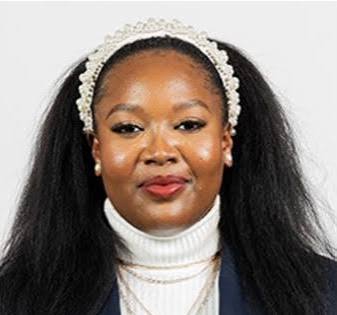
Karabo Khakhau Biography: Age, Education, Political Career, and DA Leadership Journey
Karabo Khakhau Biography
Karabo Khakhau biography is a strong topic in the South African politics niche because she is one of the country’s most visible young opposition politicians. She is a Member of the National Assembly of South Africa, serves as a national spokesperson for the Democratic Alliance (DA), and first attracted national attention when she became the youngest-ever Member of a Provincial Legislature in South Africa after her 2019 election to the Free State Legislature. Parliament’s official profile lists her as Karabo Lerato Khakhau, a DA MP from the Free State regional list, and the DA continues to publish her as an active spokesperson in 2026.
Her public profile has grown because her story combines youth leadership, student politics, provincial government, national Parliament, and rising party influence. She previously served as SRC President at the University of Cape Town, later moved into the Free State Provincial Legislature, entered the National Assembly in November 2022, won a full parliamentary term in 2024, and was appointed a DA national spokesperson on 15 July 2024.
For readers looking for a clean, informative, AdSense-friendly political profile, Karabo Khakhau is an excellent subject because her biography reflects ambition, public service, education, youth leadership, and the rise of a new generation in South African politics.
Quick Profile
| Field | Details |
|---|---|
| Full Name | Karabo Lerato Khakhau |
| Popular Name | Karabo Khakhau |
| Date of Birth | 27 June 1997 |
| Age | 28 years old as of 22 March 2026 |
| Birthplace | Welkom, Free State, South Africa |
| Nationality | South African |
| Profession | Politician |
| Political Party | Democratic Alliance (DA) |
| Current Position | Member of the National Assembly of South Africa |
| Parliamentary List | Regional list for Free State |
| Other Current Role | National Spokesperson of the Democratic Alliance |
| DA Spokesperson Since | 15 July 2024 |
| Former Office | Member of the Free State Provincial Legislature |
| Provincial Term | 22 May 2019 – 15 November 2022 |
| Known For | Youngest-ever MPL in South Africa, DA leader, youth political voice |
| Education | University of Cape Town; University of the Witwatersrand School of Governance |
| Committee Role | Portfolio Committee on Higher Education |
Introduction
Karabo Khakhau belongs to a younger generation of South African politicians who entered public life early and moved quickly through leadership spaces. She is not only a party official or backbench legislator. She is part of a visible political shift in which student leaders, young professionals, and early-career activists have moved into formal democratic institutions at a much younger age than before.
That is one of the reasons the Karabo Khakhau biography has gained search interest. She is associated with several “firsts” and “youngest” milestones, but her story is not only about age. It is also about preparation, education, communication skill, and a steady climb through structured political roles.
Her public journey reflects three connected arenas: university leadership, provincial politics, and national politics. She first made a name for herself in student governance, then entered the Free State Provincial Legislature, and later became a national MP. That progression gives her biography a clear structure and makes her stand out as more than just a media-facing politician.
Early Life and Background
Karabo Lerato Khakhau was born on 27 June 1997 and comes from Welkom in the Free State, South Africa. Multiple public profiles, including parliamentary and reference summaries, identify Welkom as her home area and confirm her full name and date of birth.
Her Free State roots matter because regional identity often shapes political careers in South Africa. Politicians are not just known by party label. They are also understood through province, community, language, and local social conditions. In Khakhau’s case, her connection to Welkom and the Free State became part of her public image as a young leader from outside the country’s most elite political centers.
That background likely contributed to her appeal when she later entered the provincial legislature. Voters and party structures often respond strongly to candidates who can represent a province with authenticity rather than appearing parachuted in from elsewhere.
Her biography is therefore not simply the story of a young politician with good education. It is also the story of someone whose identity is grounded in a specific provincial and social context.
Education
Education is one of the strongest parts of the Karabo Khakhau biography. Public profiles note that she matriculated from Welkom-Gimnasium in 2015, then studied toward a Bachelor of Social Science at the University of Cape Town, majoring in Politics & Governance, Sociology, and Social Development. They also note that she later completed a Graduate Certificate in Advanced Governance and Public Leadership at the University of the Witwatersrand School of Governance and has pursued postgraduate study in Public Management there as well.
This educational path makes sense in light of her political career. The combination of politics, governance, sociology, and public leadership fits naturally with someone moving toward public office. It gave her both theoretical grounding and leadership-focused training.
University education also mattered because it was not separate from her political development. Her student years were not quiet academic years followed by later political activity. Instead, student leadership and academic development seem to have run in parallel. That overlap helped turn university into a launchpad for public life.
For readers and publishers, these details strengthen the biography because they show a structured path into politics rather than a sudden or accidental rise.
Student Leadership at the University of Cape Town
Before she became a legislator, Karabo Khakhau gained attention through student leadership. Public biographical sources state that she joined the Democratic Alliance in 2016, became involved in DASO at the University of Cape Town, and was elected SRC President after receiving the highest number of votes among candidates in the 2017/18 student leadership cycle.
This stage is crucial. Many politicians begin in youth structures, but not all student leaders turn that experience into national relevance. Khakhau did. Student politics often serves as a testing ground for communication, campaigning, coalition-building, public speaking, and conflict management. All of those skills later matter in mainstream politics.
Her SRC leadership also showed that she could win support in a contested democratic environment. University elections, while smaller than public elections, still require message discipline, organization, and credibility. They can reveal a lot about future political potential.
This phase of her life also helped establish her as more than a party member. She became a leader in her own right, with a public profile shaped by elections, not just appointments.
Joining the Democratic Alliance
Karabo Khakhau joined the Democratic Alliance in 2016, according to public summaries of her political history. From there, she moved through youth and student structures before entering elected public office.
Joining the DA placed her inside South Africa’s main opposition tradition and gave her a pathway into formal politics. The party’s emphasis on youth development, campus structures, and candidate-building appears to have helped her rise quickly.
This part of the biography matters because political careers are not built only on personal talent. They are also built on institutional vehicles. In Khakhau’s case, the DA provided that vehicle. But she still had to prove herself within it through elections, organizational work, and public visibility.
That balance between individual ability and party opportunity is a recurring theme in political biographies. Khakhau’s story is a good example of how a party structure can elevate a young leader who already shows drive and public skill.
Becoming South Africa’s Youngest-Ever MPL
One of the defining moments in the Karabo Khakhau biography came after the 8 May 2019 provincial election, when she was nominated to the Free State Provincial Legislature and sworn in on 22 May 2019. At just 21 years old, she became the youngest-ever Member of a Provincial Legislature in South Africa. This milestone is reflected in public reference pages and external profiles that continue to identify her with that record.
This was a major breakthrough. It turned her from a student political figure into a national-interest political story. Media attention naturally followed because young legislators are still relatively rare, especially those entering office with a clear record-setting distinction.
But the significance of this moment goes beyond age. Becoming the youngest MPL meant she entered one of the country’s formal lawmaking institutions at an unusually early stage of life. That brought both visibility and pressure. Young office-holders are often judged more harshly because people question whether they are ready. Holding that office required maturity, message control, and work ethic.
Her early entry into the provincial legislature helped define her public brand as a serious young leader rather than just a symbolic youth face.
Service in the Free State Provincial Legislature
Karabo Khakhau served in the Free State Provincial Legislature from 22 May 2019 until 15 November 2022. During this time, she built experience in formal legislative politics and developed from a youth-profile figure into a more established opposition politician.
Provincial legislatures matter a lot in South African politics, even if national politics gets more headlines. They expose politicians to constituency concerns, regional governance issues, oversight responsibilities, and policy debate at a practical level. For a young politician, this environment can be one of the most valuable training grounds possible.
This phase likely helped Khakhau transition from activist-style politics into procedural politics. Campaigning and student leadership are important, but legislative work adds another layer: committee work, scrutiny of departments, formal debate, and party discipline.
Her years in the Free State legislature also strengthened her claim to represent the province authentically. By the time she moved to national office, she was no longer simply “from” the Free State. She had also governed and legislated from that political base.
Move to the National Assembly
Karabo Khakhau resigned from the Free State Legislature on 15 November 2022 to take up a seat in the National Assembly, where she was sworn in on 16 November 2022. Parliament’s official website currently lists her as a National Assembly member for the Democratic Alliance from the regional list for Free State.
This was the moment her biography moved from promising provincial leader to national legislator. The National Assembly is a much bigger stage, with broader public scrutiny and greater political consequence. Becoming an MP changed the scale of her work and visibility.
Her appointment also suggests that the DA viewed her as a rising asset worth elevating. Parties do not move younger politicians into national office without expecting them to contribute meaningfully.
This step is one of the strongest parts of her biography because it demonstrates upward movement based on sustained political performance rather than temporary media attention.
Parliamentary Work
Parliament’s official member page lists Karabo Khakhau as serving on the Portfolio Committee on Higher Education. In public political communication, she has also been associated with higher education and related oversight work, including DA responses to developments in the sector.
Committee work is where much of the serious business of Parliament happens. It is often less visible than major debates in the chamber, but it matters greatly in shaping oversight, questioning executive performance, and examining policy.
For Khakhau, this area fits well with her background. A politician who rose through student leadership and educational institutions being active in higher education oversight feels coherent. It gives continuity to her public identity.
It also gives her a policy focus that is easy for readers to understand. She is not just a general political personality. She is an MP linked in part to education, youth development, and governance issues.
Re-Election in 2024
Public profiles note that Karabo Khakhau was elected to a full term in Parliament in the 2024 general election. That matters because it means her place in national politics did not depend only on a mid-term replacement opportunity. She secured a continued role in the next Parliament.
This is an important point in any political biography. Being appointed or filling a vacancy can introduce a politician to national office, but winning or retaining a place in the next electoral cycle shows continued institutional trust and political value.
Her re-election also helped shift her public identity from “rising young MP” to “second-term MP,” a phrase now used in external profiles about her.
That change in wording matters because it reflects political consolidation. She is no longer only a future prospect. She is now part of the ongoing parliamentary generation of her party.
Appointment as DA National Spokesperson
A major step in Karabo Khakhau’s rise came on 15 July 2024, when she was appointed national spokesperson of the Democratic Alliance, alongside Jan de Villiers. This is reflected in public profiles and DA-related references, and it remains current in 2026.
This appointment is highly significant. A national spokesperson is one of the most visible communication roles in a political party. It requires message discipline, media skill, confidence under pressure, and the ability to represent the party line in fast-moving political situations.
By naming her to that role, the DA signaled that Khakhau was not only useful legislatively, but also as a public-facing communicator. This widened her profile from MP to national party voice.
For biography readers, this role adds sharpness to the article because it highlights leadership, trust, and influence within the party structure.
Communication Style and Public Image
Karabo Khakhau’s rise suggests that public communication is one of her strongest assets. Moving from SRC leadership to spokesperson work usually requires clarity, confidence, and comfort in contested public debates.
Her public image is that of a young, articulate, modern opposition politician: educated, media-capable, and institutionally ambitious. That image has likely helped the DA position her as part of its next-generation leadership voice.
Young politicians often face a challenge: they must seem energetic without seeming inexperienced. Khakhau’s biography suggests that she has largely built her career by balancing those perceptions well. Her record gives her credibility, while her age still gives her generational significance.
This combination is a major reason the Karabo Khakhau biography appeals to readers. She represents both continuity and change inside South African opposition politics.
Role in Current Politics
Karabo Khakhau remains active in current South African political life. In March 2026, the DA published a statement attributed to her as Karabo Khakhau MP regarding missing SETA funds, showing that she remains publicly active as both an MP and party communicator.
She has also been in recent news connected to internal DA leadership contest developments in March 2026, with multiple outlets reporting her withdrawal or disqualification from a race for deputy chairperson of the party’s federal council. These reports underscore that she is not just a junior figure; she is active enough within the party to be part of leadership contests and internal power discussions.
That is useful context for readers because it shows she is not only notable for what she did in 2019 or 2022. She remains politically relevant right now.
Why Karabo Khakhau Stands Out
Karabo Khakhau stands out for several reasons.
First, she entered formal politics very young and broke a national age record as an MPL.
Second, she built a pathway from student politics to provincial office to Parliament, which gives her career a clear developmental arc.
Third, she combines educational credentials with practical legislative experience.
Fourth, she holds a party communication role that places her among the recognizable public faces of the DA.
And fifth, she remains active in current affairs and party politics in 2026.
These elements together make her a very strong modern political biography subject.
Karabo Khakhau and Youth in Politics
One of the most interesting dimensions of her story is what it says about youth in politics. South African democracy often debates whether younger people are adequately represented in formal institutions. Khakhau’s rise offers one answer: younger leaders can enter those spaces and become influential if they build experience early.
Her story may be especially meaningful to students, young activists, and early-career professionals interested in politics. She shows that public office is not reserved only for older political veterans. At the same time, her biography also shows that serious preparation matters. Her path was not random. It included activism, student elections, party work, academic study, and legislative service.
This makes her a useful example of structured youth leadership rather than purely symbolic youth representation.
Achievements
Karabo Khakhau’s achievements already include several notable milestones.
She became the youngest-ever Member of a Provincial Legislature in South Africa in 2019.
She served in the Free State Provincial Legislature from 2019 to 2022.
She joined the National Assembly in November 2022 and later secured a full term in 2024.
She serves on the Portfolio Committee on Higher Education.
She became a national spokesperson of the Democratic Alliance in July 2024.
These are substantial achievements for a politician still in her twenties.
Challenges and Scrutiny
As with any rising politician, public visibility also brings scrutiny. Young politicians often face doubts about experience, pressure to perform perfectly, and intense public judgment. Recent internal party reports around DA federal council leadership contests also show that Khakhau’s career is unfolding under real political pressure, not just celebration.
This is worth mentioning because strong biographies should not read like publicity blurbs. Political rise always involves friction, internal competition, and criticism. In Khakhau’s case, her growing influence seems to have placed her more directly inside those dynamics.
That is normal for a politician moving upward. It also means her biography remains open and evolving rather than settled.
Public Appeal
Karabo Khakhau’s appeal is easy to understand.
She is young but already experienced.
She speaks from both educational and legislative experience.
She represents a newer generation without being politically untested.
She brings a province-based identity into national politics.
And she occupies a communication role that keeps her visible.
This makes her relevant to several audiences at once: youth-oriented readers, political readers, DA supporters, parliamentary-watch readers, and general biography readers.
Legacy in Progress
It is still early to define Karabo Khakhau’s full legacy, but a few things are already clear.
She is part of the generation of younger South African politicians who entered serious office early and refused to remain symbolic.
She has already marked history by becoming the youngest provincial legislator in the country.
She has moved from provincial office to national office and then to party spokesperson duties, which suggests an upward trajectory.
Whether she eventually becomes a senior cabinet-level opposition figure, party executive leader, or long-term policy specialist, her biography already shows the beginning of a notable political life.
Conclusion
The story of Karabo Khakhau biography is the story of youth leadership turning into formal political power. Born on 27 June 1997 in Welkom, she rose from student politics at the University of Cape Town to become the youngest-ever Member of a Provincial Legislature in South Africa in 2019, later entered the National Assembly in November 2022, won a full parliamentary term in 2024, and became a national spokesperson for the Democratic Alliance on 15 July 2024. Parliament’s official records also show her serving on the Portfolio Committee on Higher Education, confirming her active national role.
Her biography stands out because it combines education, activism, legislative experience, youth visibility, and current political relevance. For readers looking for a clean, updated, AdSense-friendly political biography, Karabo Khakhau is one of the strongest young political profiles in South Africa right now.