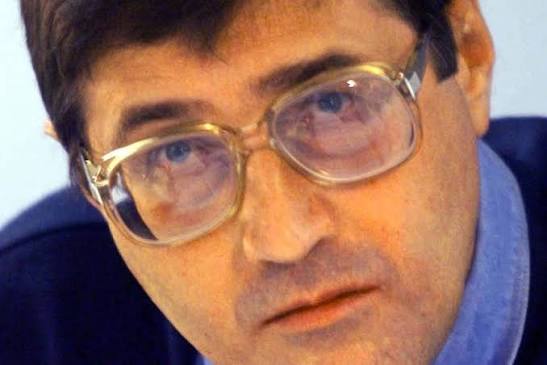
Eugene de Kock Biography: “Prime Evil,” Apartheid Death Squad Leader, Crimes, Trial, Parole, and Latest 2026 Update
Eugene de Kock is one of the most infamous figures in South African history. Known widely by the chilling nickname “Prime Evil,” he became a symbol of the apartheid state’s brutality because of his role as commander of the police counterinsurgency unit based at Vlakplaas, where anti-apartheid activists were hunted, tortured, abducted, and killed. His story still attracts major public interest because it sits at the intersection of politics, crime, justice, apartheid history, and national memory.
In 2026, Eugene de Kock returned to the headlines again after testifying at a South African inquiry linked to the 1985 Cradock Four killings. Reports said the former police commander, now 77, denied direct involvement in that specific case but testified that apartheid police maintained photographs of around 6,000 activists marked as “known terrorists” who could be tracked and killed if they could not be arrested. That latest appearance reminded many readers that De Kock is not just a historical figure from the apartheid era, but someone whose actions still shape unresolved questions about truth, accountability, and justice in South Africa today.
For people searching online right now, the central questions are usually the same: Who is Eugene de Kock? What exactly did he do? Why was he called Prime Evil? What happened at his trial? Why was he released on parole? And where is he now? This article will give you answer to all question continue reading.
Quick Profile
| Field | Details |
|---|---|
| Full Name | Eugene Alexander de Kock |
| Known As | Eugene de Kock |
| Nickname | “Prime Evil” |
| Nationality | South African |
| Profession | Former South African police officer |
| Famous For | Commanding the apartheid-era Vlakplaas death squad |
| Police Role | Commander of the C1/C10 counterinsurgency unit at Vlakplaas |
| Joined Police | 1968 |
| Major Conviction | Convicted in 1996 for multiple apartheid-era crimes; reports say 89 charges |
| Sentence | Long prison term totaling effectively over 200 years in public historical summaries |
| Parole | Released on parole in 2015 |
| Latest News | Testified in 2026 at inquiry into Cradock Four killings |
Who Is Eugene de Kock?
Eugene de Kock is a former South African police colonel who became notorious for overseeing apartheid-era state violence. He is most closely associated with Vlakplaas, a police base outside Pretoria used for covert operations against anti-apartheid activists and opponents of white minority rule. Over time, his name became shorthand for the hidden machinery of apartheid repression: assassinations, dirty tricks, cover-ups, and organized terror carried out in the name of the state.
Unlike some officials who tried to remain in the shadows, De Kock eventually became one of the best-known faces of apartheid-era violence. Part of that happened because of the scale of the crimes linked to Vlakplaas. Part of it happened because of his later testimony and the public exposure of security police operations during South Africa’s democratic transition. By the time the Truth and Reconciliation Commission and later trials brought more evidence into the open, De Kock had already become a national symbol of state-sponsored murder.
His biography matters because it tells a bigger story than one man’s rise and fall. It reveals how apartheid was enforced not only through laws and segregation, but also through a violent security structure that targeted those who resisted it.
Early Life and Background
Publicly accessible biographical references on Eugene de Kock are less detailed about his private early childhood than about his police and operational life. What is clear from historical summaries is that he later built a career inside the South African Police and became deeply involved in security operations during the apartheid era. A South African History Online biographical source and related historical material frame him primarily through his policing career and later role at Vlakplaas.
That absence of richly detailed early-life material is itself revealing. Eugene de Kock is remembered not because of a celebrated upbringing, business success, or cultural fame, but because of what he became inside one of the most repressive state systems of the 20th century. His public identity is built almost entirely around the machinery of apartheid violence.
Entry Into the Police Force
According to a South African History Online-linked biography, Eugene de Kock joined the South African Police in 1968. Before his command at Vlakplaas, he had already developed a reputation within the police and reportedly served multiple tours of duty in Rhodesia, where regional counterinsurgency campaigns shaped many security men of that era.
That detail matters because Rhodesia and apartheid South Africa were both frontier spaces of violent anti-insurgency thinking. Officers serving in those environments often absorbed a militarized worldview in which liberation movements were treated not as political opponents but as enemies to be crushed by any means available. De Kock’s later conduct at Vlakplaas did not come out of nowhere. It emerged from a security culture built on secrecy, impunity, racial ideology, and brute force. This is an inference drawn from the pattern described in historical sources about his police service and Vlakplaas role.
Vlakplaas and the Death Squad System
Eugene de Kock became infamous as commander of the C1/C10 unit at Vlakplaas, a police counterinsurgency base outside Pretoria. Historical summaries describe the unit as a paramilitary or counterinsurgency squad that targeted anti-apartheid activists through killings, torture, intimidation, and coercion.
Vlakplaas occupies a dark place in South African memory because it represents the underground face of apartheid. While official apartheid laws openly enforced racial hierarchy, units like Vlakplaas handled the covert war: neutralizing activists, penetrating liberation networks, recruiting informers, and carrying out operations designed to eliminate dissent. De Kock was not just a small participant in that system. He became one of its defining commanders.
Sources describe his unit as going after people linked to liberation movements, especially Black anti-apartheid activists. These were not random crimes in the ordinary sense. They were political crimes committed in service of state power. That is why De Kock’s name still carries such weight. He came to embody the cruelty of apartheid’s security arm.
Why He Was Called “Prime Evil”
The nickname “Prime Evil” became attached to Eugene de Kock because of the scale and horror of the crimes associated with him. News reporting and historical references still use the phrase today when identifying him, showing how deeply that label became fixed in public memory.
Nicknames like that usually stick only when a public figure comes to symbolize something larger than an individual biography. In De Kock’s case, he symbolized the most murderous instincts of apartheid policing. The phrase did not merely brand him as a criminal. It branded him as a face of moral extremity within the old regime.
That label also reflects how South Africans processed the truth that emerged in the 1990s. For many, Eugene de Kock was the visible villain in a much bigger system that had tried to hide its dirtiest work. His notoriety made him unforgettable, but it also risked narrowing blame to one man when the broader machinery involved many others.
Crimes and Atrocities
Historical accounts and court-linked summaries describe Eugene de Kock as being implicated in multiple murders and other serious crimes. South African History Online records that he was convicted in relation to killings of Black anti-apartheid activists and other offenses including conspiracy to murder and fraud.
One summary notes that he was convicted of six killings in one major ruling, alongside many lesser but still grave crimes, while broader recent reporting says he was convicted in 1996 on 89 charges. These figures come from different summaries of overlapping legal outcomes, so the safest conclusion is that De Kock was convicted on numerous counts arising from apartheid-era crimes, including murder and conspiracy.
His crimes were significant not only because lives were taken, but because they were wrapped inside state legitimacy. He operated as part of the police, under an apartheid government that framed many victims as threats or terrorists. That state framing attempted to disguise political killings as security work. Later inquiries and public records helped break that disguise.
In 2026, his testimony at the Cradock Four inquiry added yet another chilling detail. He said apartheid police had photographs of around 6,000 anti-apartheid activists labeled as “known terrorists” and that these people were to be tracked and killed if arrest was not possible. Even for readers already familiar with apartheid violence, that number captures the industrial scale of the mindset that security police operated with.
The Cradock Four and the 2026 Inquiry
One reason Eugene de Kock is trending again is his appearance at a 2026 inquiry into the Cradock Four killings. The Cradock Four were anti-apartheid activists Matthew Goniwe, Fort Calata, Sicelo Mhlauli, and Sparrow Mkonto, who were killed in 1985 in a case long believed to involve apartheid security forces.
According to AP reporting, De Kock denied direct involvement in the killings during his testimony, but he said he had been asked to help cover up the murders by interfering with ballistics. He testified under protection in Gqeberha, while renewed efforts by families and South African authorities pushed for answers in cases that had never been properly prosecuted. The same report noted that officers identified in the crimes had died without being prosecuted.
This new inquiry matters because it shows the apartheid past is not finished business. Many families still want the full truth. Many cases remain unresolved. And every new hearing reopens the question of whether democratic South Africa did enough to prosecute those responsible for political murders after apartheid ended.
Trial and Conviction
Eugene de Kock’s fall from feared security commander to convicted criminal became one of the most dramatic courtroom stories of post-apartheid South Africa. Historical summaries state that he was convicted in 1996, and AP’s 2026 report says he was convicted on 89 charges. South African History Online also records his conviction for murders and a range of related crimes.
Another SAHO historical note says a judge effectively jailed him for more than 200 years, a symbolic reflection of the sheer number and seriousness of the crimes.
His conviction mattered for several reasons. First, it showed that the democratic state was willing, at least in some high-profile cases, to pursue senior figures from the apartheid security system. Second, it offered the public a rare glimpse into how state terror had functioned. Third, it gave some victims and families a measure of legal recognition, even if justice remained incomplete.
Yet De Kock’s trial also raised awkward questions. Why him, and not so many others? Was he a uniquely brutal man, or was he one brutal executor within a much wider chain of command? Those questions followed South Africa through the Truth and Reconciliation era and beyond.
Relationship to the Truth and Reconciliation Commission
Eugene de Kock was also a significant figure in the broader truth-telling processes that followed apartheid. Records from the Truth and Reconciliation Commission show that he featured in amnesty-related proceedings, and one submission described him as a forthright witness who gave evidence honestly to the best of his ability. That statement was part of legal argument at the time, not a neutral historical verdict, but it reflects how important his testimony became in uncovering hidden operations.
Britannica’s overview of post-apartheid South Africa also notes that the TRC exposed details of murders and the operations of the Vlakplaas counterinsurgency unit, with De Kock becoming one of the emblematic figures linked to those revelations.
This is one of the strangest and most debated parts of his biography. A man widely viewed as one of apartheid’s worst killers also became, in some settings, a source of truth about the very system he had served. Some saw that as useful honesty. Others saw it as partial confession from someone who had already benefited from being more candid than his superiors.
Was Eugene de Kock a Scapegoat?
This is one of the most common and most difficult questions in any serious biography of Eugene de Kock. Historical sources make clear he was directly involved in grave crimes and led a notorious unit. At the same time, they also show he operated inside a broader apartheid state system that encouraged, authorized, concealed, or tolerated violence against activists.
So the fairest answer is this: he was not innocent, and he was not merely a scapegoat. He was a major perpetrator. But public memory often focused on him partly because he was visible, infamous, and prosecutable, while many others who shaped policy or enabled operations did not face the same level of legal consequence. That is an inference based on the contrast between De Kock’s convictions and the many unresolved apartheid-era cases that continued into later inquiries.
Prison Years
After his conviction, Eugene de Kock spent many years in prison. Public summaries describe his sentence as effectively stretching over centuries, though in practice South African parole law still allowed the possibility of release after a long period served.
During these prison years, his image shifted slightly in public debate. He remained a hated symbol for many, but he also became part of a broader discussion about confession, remorse, accountability, and whether South Africa’s transition should emphasize punishment, truth, or reconciliation. This debate was never simple, and De Kock sat right in the middle of it.
Release on Parole in 2015
A major turning point came when Eugene de Kock was released on parole in 2015. AP’s 2026 reporting confirms that he was freed on parole that year after serving a long portion of his sentence.
His parole triggered intense public debate. For some, the release felt deeply painful because his crimes were so severe and the wounds of apartheid were still raw. For others, parole was seen as consistent with South Africa’s broader transition framework, especially given that the country had long wrestled with the balance between truth-telling, punishment, and reconciliation.
Whether one views his release as justice, mercy, legal routine, or moral failure depends a lot on one’s view of post-apartheid South Africa itself. That is why Eugene de Kock remains such a charged figure even years after leaving prison.
Where Is Eugene de Kock Now?
The freshest reliable update is that Eugene de Kock, now 77, appeared in 2026 at an inquiry into the Cradock Four killings and testified under protection in Gqeberha. Public reporting tied him to renewed investigations into unresolved apartheid-era crimes.
Beyond that, reliable current public details about his private day-to-day life are limited, and it is better not to speculate. What can be said with confidence is that he remains historically and politically relevant because unresolved apartheid cases keep bringing his name back into the national conversation.
Public Reputation and Legacy
Eugene de Kock’s legacy is almost entirely negative in public memory. He is remembered less as a former policeman and more as the embodiment of apartheid’s secret violence. His nickname, his command at Vlakplaas, his convictions, and his courtroom notoriety all combine to make him one of the most feared names in South African political history.
But his legacy is not only about individual evil. It also forces a national reckoning with systems, institutions, and obedience. De Kock’s biography asks uncomfortable questions: How do ordinary state agencies become engines of atrocity? How many people knew? How many benefited? How many escaped consequences? Those questions are part of why his story still matters decades later.
Why Eugene de Kock Is Still Trending
Eugene de Kock is trending in 2026 because his testimony at the Cradock Four inquiry connected a notorious apartheid-era figure to one of South Africa’s unresolved political murder cases. AP reported that his testimony included disturbing details about activist target lists and cover-up efforts.
Eugene de Kock in South African History
In the long arc of South African history, Eugene de Kock stands as a reminder that apartheid was enforced not just by laws, passes, and segregation, but by armed men who committed crimes in secret under official protection. Britannica’s discussion of post-apartheid South Africa notes that the Truth and Reconciliation Commission brought some of those hidden operations into the open, including the Vlakplaas unit he commanded.
That is why his name survives while many other officials are remembered only dimly. He became a vessel for a whole chapter of national trauma.
Final Thoughts
Eugene de Kock is one of the darkest figures in modern African political history. As commander of the apartheid-era Vlakplaas unit, he became linked to murders, torture, conspiracy, and the suppression of anti-apartheid resistance. His 1996 conviction made him one of the most prominent former security officials to face serious punishment after apartheid, and his 2015 parole release ensured that debate over justice and reconciliation would continue.
Now, in 2026, his testimony at the Cradock Four inquiry has brought him back into the headlines once again. That renewed attention is not just about one elderly former policeman. It is about the unfinished business of apartheid-era truth, memory, and justice in South Africa.
For readers searching today, Eugene de Kock is not merely a former officer with a criminal record. He is a historic symbol of how violent systems operate, how states hide crimes, and how nations struggle for decades to fully confront what was done in their name.