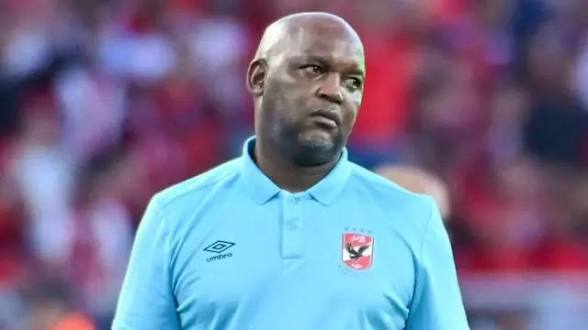
Pitso Mosimane Biography: Age, Wife, Career, Net Worth, Trophies, and Football Legacy
Pitso Mosimane is a South African former professional football player and one of Africa’s most successful football coaches. Born on 26 July 1964 in Kagiso, Gauteng, South Africa, he played as a midfielder before building a historic coaching career with clubs such as SuperSport United, Mamelodi Sundowns, Al Ahly, Al Ahli Saudi, Al Wahda, Abha, and Esteghlal. He is widely celebrated for winning major domestic and continental trophies and for helping raise the global profile of African coaching.
Quick Profile
| Field | Details |
|---|---|
| Full Name | Pitso John Hamilton Mosimane |
| Popular Name | Pitso Mosimane |
| Date of Birth | 26 July 1964 |
| Age | 61 years old |
| Place of Birth | Kagiso, Gauteng, South Africa |
| Nationality | South African |
| Profession | Former football player, football coach, manager |
| Playing Position | Midfielder |
| Wife | Moira Tlhagale Mosimane |
| Children | Commonly reported as two |
| Known For | Coaching success with Mamelodi Sundowns and Al Ahly |
| Former Clubs as Player | Jomo Cosmos, Mamelodi Sundowns, Orlando Pirates, Ionikos, KFC Rita Berlaar, Al Sadd |
| Former Teams Coached | SuperSport United, South Africa, Mamelodi Sundowns, Al Ahly, Al Ahli Saudi, Al Wahda, Abha, Esteghlal |
| Current Status | Widely reported as unattached after leaving Esteghlal in January 2025 |
| Legacy | One of the most decorated and influential coaches in African football history |
Introduction
When football fans discuss the greatest coaches to come out of Africa, Pitso Mosimane’s name almost always enters the conversation very early. That is not hype. It is the result of years of consistency, pressure, trophies, tactical intelligence, and a rare ability to win in different football cultures. In South Africa, he is viewed as a football giant. Across the continent, he is respected as a coach who broke barriers. In global football conversations, he is often cited as proof that elite African coaching deserves more recognition than it has historically received.
Although many people first search for “Pitso Mosimane biography” because they know him as a famous coach, his story began long before the technical area, the trophies, and the touchline interviews. He was first a footballer. He understood the game from the inside. He experienced changing rooms, pressure, travel, tactics, and competition as a player before later becoming one of the most decorated minds in the sport. That combination helped shape the authority and balance that now define his football identity.
His journey is also compelling because it is layered. He is not simply a former player who became a coach. He is a South African football figure whose career reflects discipline, reinvention, and ambition. He built a name in local football, expanded his influence nationally, and then stepped into some of the most demanding club environments on the continent and beyond. He won in South Africa, won in Egypt, worked in Saudi Arabia, managed in the United Arab Emirates, and later had a spell with Iran’s Esteghlal. That kind of career path is uncommon and says a lot about how he is viewed in football circles.
For content creators, bloggers, and readers looking for a full, Adsense-friendly biography article, Pitso Mosimane offers one of the strongest football biography subjects in Africa. He combines public recognition, search interest, family curiosity, career milestones, inspirational value, and a trophy record that keeps people searching for more. That is why biography articles about him tend to perform well when they are accurate, structured, and easy to read.
This article gives you a full look at Pitso Mosimane’s early life, playing career, coaching rise, marriage, football philosophy, achievements, and legacy. It is written in a clean format suitable for readers, search engines, and monetized blog platforms.
Early Life and Background
Pitso John Hamilton Mosimane was born on 26 July 1964 in Kagiso, Gauteng, South Africa. Kagiso is a township with a deep sporting and social history, and it helped shape the mentality of many people who later rose to prominence in different areas of South African life. For Mosimane, growing up in that environment meant learning discipline, resilience, and community values early. These qualities would later become visible in both his playing and coaching careers.
Like many children who become serious footballers, he developed a love for the game at a young age. Football was not just a pastime. It was part of everyday life, expression, and aspiration. Local football culture in South Africa, especially in township spaces, has long served as a powerful incubator for talent. Players had to be creative, technically sharp, and mentally tough. That kind of foundation matters. It often produces players who understand rhythm, improvisation, and emotional intensity in ways formal systems sometimes cannot teach.
Mosimane’s youth football background is associated with Rockville Hungry Lions, a detail that appears in football records and later career summaries. From there, he moved into the senior side of the game and began a professional path that would take him beyond South Africa’s borders.
His early life story may not be filled with flashy headlines in the way modern celebrity biographies often are, but that is partly what makes it powerful. It feels grounded. It reflects a generation that built careers through persistence rather than spectacle. Before the global football audience came to know him as “Jingles,” before continental finals and major trophies, he was a young South African with talent, ambition, and a growing understanding of the game.
Education, Mindset, and Personal Development
A major reason Pitso Mosimane stands out is that people do not talk about him only as a motivator. They talk about him as a thinker. Over the years, he has earned a reputation for preparation, tactical planning, confidence in his methods, and constant learning. While some coaches rely heavily on charisma, Mosimane has often projected something else alongside charisma: study, structure, and intent.
His public image has long suggested a coach who values growth and self-improvement. That matters because football management at a high level is no longer only about man-management. It involves sports science, analysis, adaptation, communication, media pressure, and leadership across cultures. Mosimane’s success in multiple countries points to a professional who understood that modern coaching requires continuous development.
His mindset also appears in how he carried himself during difficult transitions. Leaving familiar environments, entering new football cultures, and coaching in places with intense fan pressure require confidence. At clubs like Al Ahly, where expectations are relentless and patience is limited, coaches need more than knowledge. They need nerve. Mosimane repeatedly showed that.
Another important aspect of his personal development is identity. He did not seem interested in shrinking himself to fit external expectations. In interviews and media interactions over the years, he often came across as self-assured, direct, and proud of his work. That confidence helped make him a symbol for many African coaches who felt they were often underestimated internationally.
Playing Career: Clubs and Position
Before his managerial fame, Pitso Mosimane was a professional footballer who played mainly as a midfielder. His career included several clubs across South Africa and abroad, showing that he had broad playing exposure before moving into coaching. Football records list him as having played for Jomo Cosmos, Mamelodi Sundowns, Orlando Pirates, Ionikos in Greece, KFC Rita Berlaar in Belgium, and Al Sadd in Qatar.
That list alone tells an interesting story. Many players remain within one league or one national system, but Mosimane experienced football in different environments. Playing in South Africa gave him an understanding of local football culture and league intensity. Playing abroad exposed him to other tactical systems and styles. These experiences likely helped shape his later flexibility as a coach.
As a midfielder, he occupied one of the most intellectually demanding positions on the pitch. Midfielders often have to understand both defense and attack, manage tempo, read danger, and connect phases of play. It is not surprising that many successful coaches were once midfield players. The position encourages scanning, timing, tactical balance, and game reading. In Mosimane’s case, that foundation seems to have translated naturally into coaching.
Football records show notable statistics from his club years, including stints with real output in goals, especially during some periods with Jomo Cosmos and KFC Rita Berlaar. Even though he is not remembered globally as an iconic playing superstar, he clearly had a serious professional playing career, and that credibility matters. Players often respond differently to coaches who have lived the life themselves.
His playing journey also reflects the football landscape of his era. South African players who carved out meaningful careers across local and foreign clubs had to combine talent with adaptability. The game was less globalized in its media coverage than today, so many solid careers were not documented with the same level of daily attention modern players receive. Still, the record is clear: Mosimane was a legitimate professional footballer before he ever became a celebrated manager.
South Africa National Team Career
Pitso Mosimane also represented South Africa at international level. Available football records credit him with 4 caps and 1 goal for the national team during 1993 to 1994.
Some readers may look at those numbers and think they are modest, and on paper they are. But international recognition still matters. Earning caps means a player reached a standard considered worthy of national selection. In Mosimane’s case, it added another layer to his football identity and connected him more closely to South African football history.
International football also gives players a broader understanding of competition, responsibility, and public scrutiny. Even short national-team careers can be deeply formative. They place players in systems where expectations are heavier, the margin for error is smaller, and the emotional symbolism is stronger. Coaching later with that background can be an advantage.
Mosimane would eventually return to the national-team environment in a much bigger role, this time not as a player but as the coach of South Africa. That full-circle journey from player to national-team manager is one of the more compelling dimensions of his biography. It shows continuity and trust within the football system.
Transition from Player to Coach
Not every former footballer becomes a great coach. In fact, many do not. The skills overlap, but they are not identical. Playing requires execution. Coaching demands planning, instruction, psychology, leadership, recruitment awareness, and long-term structure. Pitso Mosimane made that transition successfully, and not just successfully at a modest level. He became elite.
His coaching path took shape in the early 2000s, and one of his major early managerial roles was with SuperSport United, where records show he worked from 2001 to 2006.
This was an important phase because it gave him a platform to establish his identity as a manager rather than merely a former player trying his luck on the bench. Developing a team over multiple seasons requires credibility and clarity. At SuperSport United, he had the space to sharpen both.
Early coaching years often determine whether a manager will be seen as temporary or serious. Mosimane used those years to become the latter. He built practical experience, faced league challenges, learned how to manage squads, and strengthened his tactical authority. This foundation would later support his rise to bigger roles.
Coaching South Africa
Mosimane later became manager of the South Africa national team, with records placing his tenure from 2010 to 2012.
Coaching a national team is a very different job from club management. A national coach does not train players every day all year. Instead, the work depends heavily on selection, camp preparation, tactical efficiency, and emotional management during shorter periods. It is one of the hardest forms of coaching because the time is limited but the expectations are huge.
For Mosimane, leading South Africa was another sign of the trust placed in his football brain. National-team appointments are rarely casual. They represent a belief that the coach can carry the hopes of a country’s football culture. Even though his national-team spell did not define his legacy in the way his club successes later would, it remains an important chapter in his career. It showed that he had reached the top coaching tier within South African football.
Mamelodi Sundowns Era: The Defining Domestic Chapter
If one period truly established Pitso Mosimane as a towering figure in South African club football, it was his time at Mamelodi Sundowns. He became manager of the club in 2012 and remained there until 2020, one of the most significant stretches in his career.
At Sundowns, Mosimane built not just a winning team but a footballing culture. That is a major difference. Many coaches win a trophy or two through momentum, a strong squad, or short-term form. Building a culture means creating consistent standards, recognizable patterns of play, and an expectation of excellence that survives pressure. Mosimane did that.
Under his leadership, Mamelodi Sundowns became one of the strongest and most admired teams in African football. He won multiple league titles, domestic trophies, and most importantly led the club to the 2016 CAF Champions League title, a landmark achievement for both the club and South African football.
That continental triumph was huge. Winning the CAF Champions League places a team among Africa’s elite, and for a South African coach to lead that success carried symbolic weight. It reinforced the idea that South African tactical and managerial expertise could dominate at the highest level on the continent.
His Sundowns side was also admired for how it played. There was often a sense of control, confidence, and technical quality. Mosimane did not simply chase results through reactive football. He wanted structure and assertiveness. Over time, this helped shape his public reputation as a coach with a distinct footballing identity rather than someone who adjusted purely for survival.
The Sundowns years also brought individual recognition. Football records note that Mosimane was ranked among the world’s top coaches in 2016 by the International Federation of Football History & Statistics, and he also won CAF Coach of the Year recognition. Those honors reflected the broader football world beginning to take more notice of his work.
Many South African fans still regard this era as central to his legend. It was the period in which he stopped being only a respected coach and became, for many, the standard.
Al Ahly and Continental Greatness
After leaving Mamelodi Sundowns in 2020, Mosimane accepted one of the most demanding jobs in African football: head coach of Al Ahly. The move was major. Al Ahly is not just a big club. It is one of the biggest and most pressurized clubs on the continent, with a massive fan base and a culture built around winning.
Mosimane’s appointment was historic in its own way. Football records describe him as the first non-Egyptian African to coach Al Ahly. That alone made the move significant. But what made it truly memorable was what happened next. He delivered trophies quickly.
Within months, he led Al Ahly to the 2020 CAF Champions League title after defeating Zamalek in the final. He then guided the club to a third-place finish at the FIFA Club World Cup, as well as other domestic and continental honors, including the Egypt Cup and the African Super Cup. In 2021, he won another CAF Champions League title with the club.
That run was extraordinary. Succeeding at Al Ahly is hard because every match is judged at a high level. To not only succeed but collect major silverware so quickly confirmed Mosimane’s class in unmistakable fashion. It also strengthened his argument as one of the best African coaches of his generation.
His time in Egypt expanded his profile internationally. South African fans already knew his quality, but Al Ahly placed him under a continental spotlight of even greater intensity. Every tactical decision, every lineup choice, every result mattered. He proved he could handle that environment and win in it.
Even after his Al Ahly tenure ended in 2022, the period remains one of the strongest blocks in his coaching résumé. It demonstrated that his achievements at Sundowns were not a one-club story. He could cross borders, manage stars, handle different football politics, and still win.
Al Ahli Saudi, Al Wahda, and Abha
Following Al Ahly, Mosimane continued his coaching travels in the Middle East. His official biography notes that he guided Al Ahli Saudi back to the Saudi Pro League in 2023 by winning the first division league. He later worked with Al Wahda in the UAE Pro League and then became manager of Abha FC in Saudi Arabia in January 2024.
This stage of his career shows an important feature of Mosimane’s professional life: he remained in demand. Clubs in competitive football environments kept turning to him because his reputation was built on leadership and delivery. Promotion battles, top-flight ambitions, and rebuilding projects all require a coach who can impose belief quickly.
Guiding Al Ahli Saudi back to the top division added another meaningful achievement to his résumé. Promotion campaigns are often stressful because clubs carry huge expectations while operating in a league where every dropped point matters. Getting the job done requires tactical stability and mental consistency across the season.
His official site presents these roles as part of an ongoing international coaching story rather than a decline from earlier glory. That framing makes sense. In modern football, experienced elite coaches often move through various markets and projects. Success is no longer measured only by staying at a single global giant. It is also measured by adaptability.
Esteghlal and Recent Career Status
Football records show that Mosimane later coached Esteghlal from 2024 to 2025. Recent reporting indicates that he has remained unattached since January 2025, with media coverage suggesting he has devoted time to his soccer school while waiting for a new opportunity.
That matters for anyone writing a current biography article because it helps keep the content accurate. A lot of older biography pages remain frozen in time and end up outdated. A better approach is to acknowledge that, as of recent reports, he is not tied to a club and is viewed as available for the right project.
This unattached phase does not weaken his legacy. If anything, it keeps speculation alive because a coach with his reputation can always reappear in a major job. Fans and media often link high-level coaches to big clubs or national teams whenever vacancies emerge, especially when those coaches have a record of winning trophies fast.
Pitso Mosimane’s Wife and Family Life
One of the most searched personal topics about Pitso Mosimane is his wife. He is widely associated with Moira Tlhagale Mosimane, who is often mentioned in profiles about his life and career. South African History Online describes him as married to Moira Mosimane and as a father of Lelentle and Kopano.
Publicly, Moira has often been seen not just as a spouse but as part of the wider support structure around his career. In modern sports, families often play a major role behind the scenes, especially for coaches whose jobs involve travel, stress, media scrutiny, and constant relocation. Maintaining stability at home can be vital.
Mosimane has generally kept parts of his private life more measured than some public figures do, but the consistent picture presented in reputable profiles is that family has remained an important part of his identity.
Nickname and Public Image
Pitso Mosimane is popularly known by the nickname “Jingles.” The nickname has become part of his football identity and is widely recognized by fans. While football nicknames can start casually, some end up capturing personality. In Mosimane’s case, “Jingles” became part of a brand that blended confidence, charm, tactical seriousness, and strong media presence.
Publicly, he has often come across as articulate and assertive. He is not a coach who hides from attention. He understands narrative, pressure, and the value of standing firmly behind his work. That has made him a compelling interview subject over the years and helped build a strong personal brand beyond results alone.
His image also carries symbolic weight in African football. For many supporters and observers, Mosimane represents possibility. He is proof that an African coach can walk into elite jobs, command respect, and win major honors without apologizing for his identity.
Coaching Style and Football Philosophy
One reason Pitso Mosimane has lasted so long at a high level is that he is not seen merely as a motivator. He is seen as a football strategist. While tactics can vary based on squad, opponent, and league context, his reputation has often centered on control, structure, technical confidence, and psychological belief.
Transfermarkt lists his preferred formation as 3-4-3, though coaches at his level usually adapt depending on available players and match demands.
What stands out in discussions of Mosimane’s teams is that they often try to play with authority. He likes teams that understand spacing, transitions, and collective responsibility. At his best, his sides combine tactical discipline with enough confidence on the ball to impose themselves.
He also appears to value mindset heavily. Winning continental and league titles is not only about systems. It is also about getting players to believe under pressure. Across different clubs, Mosimane showed that he could inspire strong mentality in addition to organizing tactics.
Trophies, Honors, and Major Achievements
Pitso Mosimane’s trophy record is one of the strongest in African coaching. His major honors include domestic league titles and continental success, most notably the CAF Champions League with Mamelodi Sundowns in 2016 and with Al Ahly in 2020 and 2021.
He also earned major domestic recognition in South Africa and beyond, and his name has been linked to top-level coaching honors, including CAF Coach of the Year distinction and international recognition from the IFFHS.
Pitso Mosimane Net Worth
Search interest around Pitso Mosimane’s net worth remains high, but exact figures are often inconsistent across the internet. Reliable official sources do not appear to provide a verified public net-worth number. What can be said with confidence is that he has managed some of the continent’s biggest clubs and has also worked in well-funded football markets outside South Africa, which strongly suggests a high-earning career. Recent media reporting has even described him as one of the highest-earning African coaches in history, though exact sums should be treated carefully unless confirmed directly.
Why Pitso Mosimane Matters in African Football
Pitso Mosimane’s importance goes beyond titles. He matters because he challenged assumptions. For a long time, African football coaching conversations often gave more prestige to foreign names, especially European ones. Mosimane’s career became part of the counter-argument. He showed that African coaches could not only compete with the best on the continent but outperform them in high-pressure jobs.
He also brought credibility to South African coaching on a bigger stage. South Africa has produced talented players and important clubs, but Mosimane’s work gave the country an even stronger place in elite African coaching conversations. His continental successes made that impossible to ignore.
For younger coaches, his career offers a blueprint: learn deeply, believe in your work, embrace pressure, and do not limit your ambition to one league or country. That is a powerful legacy.
Pitso Mosimane’s Legacy
Legacy in football is complicated. It is not just about how many trophies you won. It is also about what people remember you for, what doors you opened, and what standards you left behind. In Pitso Mosimane’s case, the legacy is rich.
He is remembered as a former player who became an elite coach. He is remembered as a South African who conquered major continental stages. He is remembered as a coach who could speak with authority because he had results behind him. He is remembered as someone who made African coaching excellence more visible.
He is also remembered for range. Winning in South Africa is one thing. Winning with Al Ahly in Egypt is another. Taking on jobs across the Middle East and beyond adds still more depth. Few African coaches can point to that kind of geographic and competitive breadth.
Even if he never coached another match, his football story would already be secure. But because he remains a figure who could still take another major role, his biography still feels active rather than closed.
Frequently Asked Questions
Who is Pitso Mosimane?
Pitso Mosimane is a South African former professional football player and one of Africa’s most successful football coaches.
How old is Pitso Mosimane?
He was born on 26 July 1964, making him 61 years old as of 2026.
Where is Pitso Mosimane from?
He is from Kagiso, Gauteng, South Africa.
Is Pitso Mosimane married?
Yes, he is widely reported to be married to Moira Mosimane.
What position did Pitso Mosimane play?
He played as a midfielder.
Which clubs did Pitso Mosimane play for?
He played for Jomo Cosmos, Mamelodi Sundowns, Orlando Pirates, Ionikos, KFC Rita Berlaar, and Al Sadd.
Which teams has Pitso Mosimane coached?
He has coached SuperSport United, South Africa, Mamelodi Sundowns, Al Ahly, Al Ahli Saudi, Al Wahda, Abha, and Esteghlal.
What is Pitso Mosimane famous for?
He is best known for his highly successful coaching career, especially his major achievements with Mamelodi Sundowns and Al Ahly.
Conclusion
Pitso Mosimane’s biography is the story of ambition meeting preparation. He started as a South African midfielder, grew into a serious football thinker, and became one of the most decorated coaches Africa has produced. He succeeded locally, nationally, continentally, and internationally. He won trophies, earned respect, and broke barriers for African coaching.
That is why interest in his life continues to grow. Readers want to know his age, his wife, his playing history, his coaching record, his net worth, and what he may do next. But beyond all of that, the reason his biography matters is simple: Pitso Mosimane built a football life that commands attention.
He is not just a former player. He is not just a successful coach. He is one of the defining football figures of modern Africa.