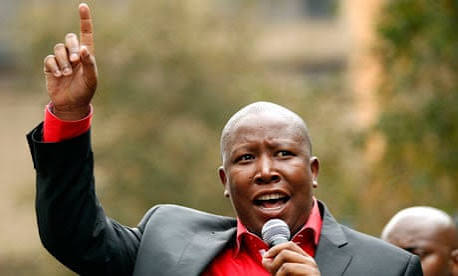
Julius Malema Biography: Age, Family, Political Career, EFF Leadership, and Parliament Journey
Julius Malema Biography
Julius Malema biography is one of the most searched topics in South African politics because he is bold, controversial, influential, and impossible to ignore. He is widely known as the founder and president of the Economic Freedom Fighters (EFF) and has served as a Member of the National Assembly of South Africa since May 2014. He first rose to national prominence as president of the ANC Youth League from 2008 to 2012, before being expelled from the ANC and launching the EFF in 2013.
For readers looking for a strong AdSense-friendly political biography, Julius Malema offers exactly that: a compelling life story, a dramatic rise, major political turning points, electoral relevance, a strong public brand, and ongoing national influence. Whether admired as a fearless opposition figure or criticized as one of South Africa’s most provocative politicians, Malema remains central to modern political debate.
Quick Profile
| Field | Details |
|---|---|
| Full Name | Julius Sello Malema |
| Popular Name | Julius Malema |
| Date of Birth | 3 March 1981 |
| Age | 45 years old (as of 2026) |
| Birthplace | Seshego, Transvaal Province, South Africa |
| Nationality | South African |
| Profession | Politician |
| Current Role | Member of the National Assembly of South Africa |
| Political Party | Economic Freedom Fighters (EFF) |
| Position in Party | Founder and President of the EFF |
| Former Party | African National Congress (ANC) |
| Famous For | Radical political speeches, EFF leadership, land reform advocacy |
| Education | University of South Africa; University of the Witwatersrand |
| Mother | Flora Mahlodi Malema |
| Children | 3 |
| Parliamentary Role | MP since 21 May 2014 |
Introduction
Julius Malema is one of the most talked-about politicians in South Africa. He built a national reputation through fiery speeches, populist messaging, direct confrontation, and a political style that refuses softness. Some people see him as the voice of poor and marginalized South Africans. Others see him as a master of provocation who thrives on outrage. Either way, he has become one of the defining figures of post-apartheid opposition politics.
His journey is not ordinary. He came from a modest background, rose through student and youth politics, became head of the ANC Youth League, was expelled from the ANC, then returned stronger by founding his own political party. That party, the EFF, quickly became one of the most visible opposition forces in South Africa. Britannica identifies him as a politician known for his outspoken style and notes that he became leader of the EFF after helping launch it in 2013.
What makes the Julius Malema biography so interesting is that it combines ambition, conflict, survival, reinvention, and power. He did not disappear after being pushed out of the ANC. He turned that fall into a relaunch. That alone makes him a major political case study.
Early Life and Background
Julius Sello Malema was born on 3 March 1981 in Seshego, in what was then the Transvaal Province of South Africa. He was raised primarily by his mother, Flora Mahlodi Malema, and his upbringing is often described as modest. Britannica and other biographical sources place his origins firmly in Seshego and note the early foundations of his political identity.
His childhood matters because it shaped the political language he would later use so effectively. Malema has long framed himself as someone who understands poverty, inequality, and exclusion from personal experience rather than abstract theory. That gives his message emotional force, especially among supporters who believe mainstream politics has failed to transform daily life for ordinary South Africans.
Like many future politicians, Malema did not begin with elite polish. He came through activism, youth structures, and public speaking. His rise was tied to grassroots energy and personal hunger. He learned early how to command attention, how to organize, and how to turn political language into spectacle.
That instinct would later become his signature. Long before he entered Parliament, he knew how to dominate a room, energize a crowd, and make himself the center of a political moment.
Education
Public biographical references list Julius Malema as having studied at the University of South Africa and the University of the Witwatersrand. Those institutions are routinely cited in profiles discussing his education and public development.
His educational profile is often discussed alongside his political evolution. Unlike leaders whose appeal rests mainly on technocratic expertise, Malema’s public image has always depended more on political communication, ideological confidence, and mass mobilization. Still, his education helped reinforce the idea that he is not merely a crowd-driven speaker, but also someone engaged with political thought and public affairs at a deeper level.
Education did not soften his style. If anything, it gave added structure to his political arguments. Over time, he developed a more defined ideological vocabulary around economic justice, land redistribution, nationalization, and black empowerment. Supporters see conviction in that. Critics see performance. But nobody really confuses him with a passive political figure.
Early Political Involvement
Julius Malema became active in politics at a young age. Before his rise to national fame, he was involved in youth activism and political organizing. His early years in political structures helped him build the foundation that later carried him into the ANC Youth League and beyond.
According to public biographical summaries, Malema also served as President of the Congress of South African Students from 1999 to 2002. That role matters because it shows that his political development was already underway well before his ANC Youth League breakthrough.
This early activism gave him three important assets. First, it gave him organizational experience. Second, it gave him ideological exposure. Third, it gave him a stage. Malema is not a politician who suddenly appeared from nowhere. His later success was built on years of movement politics, youth leadership, and aggressive self-positioning.
In biographies of major political figures, these early stages are important because they show whether someone grew inside the machinery of politics or arrived from outside it. Malema clearly came from within political structures, but he mastered the art of presenting himself as an insurgent even while rising through established organizations.
Rise in the ANC Youth League
The turning point in Julius Malema’s early political life came when he became President of the African National Congress Youth League (ANCYL) in 2008. This role transformed him into a national figure. He was no longer just a youth activist. He became one of the loudest and most visible voices associated with the ANC’s younger generation. Britannica notes his Youth League presidency ran from 2008 to 2012.
As Youth League president, Malema built a brand around fearlessness, confrontation, and theatrical political energy. He made headlines regularly. He spoke in ways that traditional party figures often avoided. He attacked opponents with forceful language and embraced controversy instead of running from it. To supporters, this made him exciting. To critics, it made him reckless.
This phase of his life is essential to any Julius Malema biography because it shows how he learned to use conflict as political fuel. Many politicians try to appear above the fight. Malema understood that in a media age, conflict can be the fight. He turned outrage into visibility and visibility into influence.
His time in the Youth League also connected him to wider internal ANC battles. He was not just making noise from the sidelines. He was participating in live power struggles within the ruling movement. That gave him a sharper sense of how political systems work, how alliances form, and how quickly they can collapse.
Controversy and Expulsion from the ANC
Malema’s years in the ANC Youth League made him famous, but they also pushed him toward disciplinary trouble. His style, rhetoric, and repeated clashes with party leadership eventually brought him into direct conflict with the ANC establishment. In 2012, he was expelled from the ANC, ending one of the most dramatic chapters of his early career. Britannica identifies his Youth League leadership as ending in 2012, and broad biographical accounts connect that ending to his expulsion from the party.
For many politicians, expulsion from a major party would have been the end. For Malema, it became a reset button.
This is one of the biggest reasons his biography remains so compelling. He did not simply survive political exile. He used it to reinvent himself. That ability to convert defeat into momentum is part of what separates him from short-lived firebrands. He understood that being thrown out of the ANC could be reframed not as humiliation, but as proof that he was too disruptive for the old order.
His expulsion also helped define the mythology of Julius Malema. He became, in the eyes of his supporters, the politician who said what others were too cautious to say and paid the price for it. That story helped him build a loyal base.
Founding of the Economic Freedom Fighters
After leaving the ANC, Julius Malema helped found the Economic Freedom Fighters (EFF) in 2013 and became its president. This was the most important reinvention of his political life. Britannica notes that he helped launch the leftist EFF in 2013 and became its leader.
The EFF was not designed to be a quiet party. It was built for disruption. Its image, language, uniforms, and political messaging were all meant to stand out. The red berets became instantly recognizable. The party spoke directly about land, economic exclusion, inequality, and radical transformation. It targeted voters who were frustrated with both the ANC and traditional opposition politics.
Malema was the obvious face of that movement. His energy matched the party’s brand perfectly. He did not need to adjust himself to fit the EFF. The EFF was built around a style he already embodied: militant symbolism, ideological sharpness, media drama, and constant pressure on the political establishment.
This chapter is central to the Julius Malema biography because it marks the point where he stopped being just a breakaway figure and became an institution builder. Founding a party is one thing. Building it into a nationally recognized force is another. Malema did both.
Julius Malema in Parliament
Julius Malema became a Member of the National Assembly on 21 May 2014, after the EFF won seats in the general election. He was re-elected in later elections and continues to serve in Parliament. His parliamentary status is also reflected in recent South African parliamentary material, where he appears as a participating member in committee work and National Assembly proceedings in 2026.
His arrival in Parliament changed the tone of opposition politics. He did not enter as a quiet legislator focused only on procedure. He entered as a disruptor. Malema and the EFF quickly became known for turning parliamentary sessions into headline events. They challenged presidents directly, interrupted proceedings, and used the chamber as a stage for political confrontation.
That strategy worked. Parliament was no longer just an institutional forum. Under Malema’s style, it also became a theater of accountability and spectacle. Supporters argued that he forced the ruling elite to answer difficult questions. Critics said he undermined decorum and reduced legislative politics to performance.
Still, no serious biography can ignore how effective he was at using Parliament to build the EFF brand. He understood something important: speeches inside Parliament can travel far beyond Parliament. Clips become headlines, headlines become narratives, and narratives build national influence.
Leadership Style
Julius Malema’s leadership style is direct, aggressive, charismatic, and highly media-aware. He does not speak like a technocrat. He speaks like someone trying to move emotion as much as opinion. That helps explain why he has remained politically relevant for so long.
He uses repetition well. He uses symbolism well. He uses conflict extremely well. He knows how to create memorable lines and sharpen political debates into moral struggles. To supporters, this is courage. To critics, it is demagoguery. But either way, it is effective politics.
His style also depends on discipline inside performance. Malema may look spontaneous, but much of his public persona is tightly shaped. He knows the value of visual identity, timing, confrontation, and message consistency. The red beret is not accidental. Neither is the tone. Neither is the refusal to blend in.
That is one reason the Julius Malema biography continues to attract readers. He is not bland. He has built one of the most recognizable political brands in South Africa.
Main Political Beliefs and Public Positions
Julius Malema is most associated with strong positions on land reform, economic redistribution, nationalization, and black economic justice. The EFF’s politics are widely described as left-wing and focused on economic transformation. Britannica characterizes the party as leftist and links Malema closely to its ideological identity.
His most famous political themes include:
- expropriation of land without compensation
- stronger state control or influence in strategic sectors
- redistribution of wealth
- criticism of economic inequality in post-apartheid South Africa
- attacks on political elites and corruption
These issues made him especially appealing to younger voters, unemployed citizens, and people who felt that formal political freedom had not produced enough economic change.
Supporters believe Malema voices painful truths that others avoid. Critics argue that his solutions are simplistic, destabilizing, or inflammatory. But even critics usually admit that he has been highly effective at forcing uncomfortable economic questions into the center of public debate.
Parliamentary Confrontations and National Attention
Malema’s time in the National Assembly has included multiple dramatic moments. Public biographical summaries note that he has been ejected from Parliament several times and became nationally known for high-profile clashes during major debates, including those involving former President Jacob Zuma.
These confrontations helped shape his image as the politician least interested in ceremonial deference. He challenged authority directly and publicly. This made him especially visible during periods when many South Africans were frustrated with corruption, scandal, and weak accountability.
He turned parliamentary conflict into a political asset. That was a big shift in style from older opposition habits. Instead of speaking softly inside formal structures, he used those structures to create public pressure.
This part of his biography matters because it shows how he moved from being a party leader into becoming a permanent media force. South Africans who did not follow daily politics still knew who Julius Malema was, largely because he made himself unavoidable.
Public Support and Popular Appeal
Julius Malema’s popularity comes from more than controversy. He has a real base of support. Much of that support comes from people who believe he speaks clearly about poverty, race, inequality, unemployment, and unfinished transformation in South Africa.
His appeal is especially strong among voters who are tired of polished caution. He sounds urgent, angry, and emotionally engaged. In a political culture where many leaders sound scripted, that can be powerful.
He also understands symbolism better than many rivals. Politics is not only about policy documents. It is also about identity, energy, and the feeling that someone is actually fighting. Malema gives many of his supporters exactly that feeling.
Of course, popularity of this kind can also be unstable. A politics built on intensity must keep delivering intensity. But Malema has shown unusual staying power. More than a decade after founding the EFF, he remains its dominant face and central message carrier. Parliamentary records from 2026 still reflect his active participation in legislative work, underscoring that he remains a live political figure rather than a faded headline.
Criticism and Controversy
Any serious Julius Malema biography must discuss controversy. In truth, controversy is not a side note in his career. It is part of the main story.
He has repeatedly drawn criticism for remarks interpreted as threatening or inflammatory. Public biographical summaries note several instances where comments about violence or racial conflict triggered backlash and legal or political reaction.
Critics accuse him of:
- using dangerous rhetoric
- deepening political polarization
- encouraging confrontation over stability
- prioritizing spectacle over workable governance
- exploiting public anger for political gain
Supporters push back hard against these claims. They argue that Malema is being judged more harshly because he challenges economic power and racial inequality directly. In their view, his language reflects the seriousness of South Africa’s unresolved social crisis.
That tension is a major reason he remains a divisive figure. People rarely feel neutral about Julius Malema. He tends to provoke admiration or alarm, and often both at once.
Personal Life
Public biographical sources identify Julius Malema’s mother as Flora Mahlodi Malema and list him as having three children.
Compared with his political life, his private life receives less sustained attention in many formal biographies. That is partly because his public image is so dominated by politics. He is one of those figures whose identity in the media is almost entirely political. Even when personal details are mentioned, they are usually brief and secondary.
Still, readers searching for a full biography often want basic family facts, and those details help round out the profile. They remind readers that behind the hard speeches, sharp tailoring, and combative interviews is a person with a family life and private responsibilities.
Julius Malema’s Place in South African Politics
Julius Malema has earned a permanent place in modern South African political history. Not because everyone agrees with him. The opposite, actually. He matters because he changed the shape of opposition politics.
Before Malema’s rise with the EFF, opposition politics often felt more predictable. He injected a different style: younger, more militant in tone, more visual, more confrontational, and more rooted in economic grievance. He helped normalize a form of opposition that was not content to merely critique from a distance. It wanted to embarrass, expose, and pressure the establishment in real time.
He also shifted public conversation. Land reform, economic justice, and the failures of post-apartheid inequality became harder to sideline partly because he insisted on them so loudly.
That is the mark of political influence. A leader becomes important not only when they win office, but when they change what everyone else has to talk about.
Achievements
Julius Malema’s achievements are both political and symbolic.
He rose from youth activism to national leadership.
He became president of the ANC Youth League and used that role to build national recognition.
He survived expulsion from the ANC and founded the EFF in 2013, transforming personal political defeat into a new party movement.
He entered the National Assembly in 2014 and has remained an active MP, with recent parliamentary references confirming his participation in 2026 legislative and committee activity.
He helped build the EFF into one of South Africa’s best-known opposition parties.
He shaped national debate far beyond his party’s seat count by making economic injustice a central political issue.
These are not small achievements. Many politicians reach visibility. Far fewer build a durable political identity after being expelled from a dominant ruling party.
Challenges and Limitations
For all his influence, Julius Malema also faces clear limitations.
His confrontational politics energize supporters but also alienate potential allies.
His rhetorical intensity can dominate headlines while raising questions about long-term coalition-building and broader electoral growth.
The EFF’s message is powerful for protest politics, but critics continue to ask how it would translate into stable governance at a national scale.
These limitations are part of the biography too. Great political visibility is not the same thing as uncontested trust. Malema’s biggest strength, his disruptive force, is also one of the main reasons many voters remain wary of him.
Still, politics is not only about being universally liked. It is often about forcing change by refusing politeness. On that front, Malema has been very successful.
Legacy
Julius Malema’s legacy is still being written, but some things are already clear.
He will be remembered as:
- one of the most controversial South African politicians of his generation
- the founder and long-time leader of the EFF
- a major opposition voice in the National Assembly
- a politician who reshaped political language around land and economic power
- a leader who turned expulsion into reinvention
Whether history ultimately judges him as a transformational force, a destabilizing populist, or a bit of both, he has already secured a place in the national story.
Conclusion
The story of Julius Malema biography is the story of ambition, disruption, reinvention, and endurance. Born on 3 March 1981 in Seshego, Julius Sello Malema rose from youth activism to become President of the ANC Youth League, survived expulsion from the ANC, founded the Economic Freedom Fighters in 2013, and has served as a Member of the National Assembly of South Africa since 21 May 2014. He remains one of the loudest, most influential, and most debated figures in South African public life.
His political journey is not calm, neat, or universally admired. That is exactly why people keep searching for him. He represents unfinished arguments about justice, land, race, leadership, and economic power in South Africa. He is not a background figure. He is a front-page figure.
For an AdSense-friendly biography article, Julius Malema is a strong choice because his life story combines search demand, political significance, public controversy, and lasting relevance.