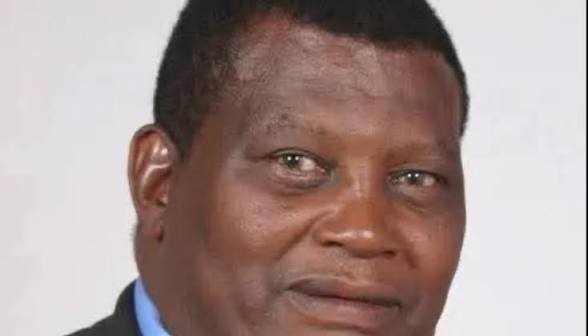
Daniel Karaba Biography: Age, Education, Political Career, Family, Death, and Legacy

Daniel Karaba Biography: Age, Education, Political Career, Family, Death, and Legacy
Daniel Karaba was a Kenyan politician, educationist, and former Senator for Kirinyaga County. Born in 1948 in Kiamaina, Kirinyaga County, he built his early career in education before joining politics. He served as Member of Parliament for Kirinyaga Central and later became the first Senator of Kirinyaga County after the 2013 general election. Daniel Karaba died in March 2026 at the age of 78, leaving behind a legacy in both education and public service.
Quick Profile Table
| Field | Details |
|---|---|
| Full Name | Dickson Daniel Karaba |
| Popular Name | Daniel Karaba |
| Nationality | Kenyan |
| Year of Birth | 1948 |
| Age at Death | 78 |
| Place of Birth | Kiamaina, Kirinyaga County, Kenya |
| Profession | Politician, Educationist, Former Teacher and Principal |
| Known For | Former Kirinyaga Central MP and Former Kirinyaga Senator |
| Political Party | NARC (earlier), TNA / Jubilee Alliance |
| Education | Kiamaina Primary School, Kamuiru High School, Kagumo High School, University of Nairobi |
| Major Offices Held | MP for Kirinyaga Central; Senator for Kirinyaga County |
| Death | March 23, 2026 |
| Legacy | Education leadership, parliamentary service, county representation |
Introduction
Daniel Karaba was one of those public figures whose career moved across two powerful spaces in Kenyan society: education and politics. Before many people knew him as a senator or legislator, he had already built a name as a respected teacher and school administrator. That background shaped the way he was seen in public life. He was often described not just as a politician, but as a leader formed by service, discipline, and education.
For readers searching for Daniel Karaba biography, the real interest goes beyond dates and offices. People want to know who he was, where he came from, how he rose into leadership, what he achieved, and why his death in March 2026 drew strong tributes in Kirinyaga and beyond. Recent reports confirm that former Kirinyaga Senator Daniel Karaba died on Monday, March 23, 2026, at the age of 78. The news was publicly confirmed by Kirinyaga Governor Anne Waiguru, who praised his humility, service, and dedication to education and leadership.
His life story reflects the path of a man who worked through the education system, became a school principal, earned respect in public service, entered elective politics, won parliamentary office, and later became the first Senator of Kirinyaga County under Kenya’s devolved system. That combination of educational influence and political office gave him a distinct identity in Kenyan public life.
This article gives you a complete and updated look at Daniel Karaba’s age, background, education, teaching career, political journey, death, and legacy in a clean format suitable for biography readers and search visibility.
Early Life and Background
Daniel Karaba, also referred to in some records as Dickson Daniel Karaba, was born in 1948 in the village of Kiamaina in Kirinyaga County, Kenya. His roots in Kirinyaga remained central to both his educational and political identity throughout his life. Even after rising into national leadership, he continued to be associated closely with the region and people from which he came.
Growing up in rural Kenya during the post-colonial transition period meant that education was not just a personal opportunity but a ladder for community transformation. Many leaders of his generation were shaped by schools that emphasized discipline, public morality, and national development. Karaba appears to have emerged from exactly that kind of environment. The available profiles on him consistently place his beginnings in a modest village background before his later rise into school leadership and politics.
His early life matters because it helps explain the way he was later remembered. Tributes after his death did not present him only as a former senator. They also recalled him as a teacher, mentor, and educationist whose life influenced many people before and during his time in politics. That public memory suggests his early values—hard work, learning, and local community identity—never really disappeared, even after he entered electoral office.
Although detailed public records about his parents, siblings, and private childhood life are limited, what is clear from the available sources is that Karaba’s story followed a recognizable and respected path in Kenyan public life: village upbringing, strong educational progression, service-oriented professional work, and eventual movement into national politics.
Education
Daniel Karaba’s educational journey is one of the strongest parts of his biography. According to biographical records, he attended Kiamaina Primary School before proceeding to Kamuiru High School for his O Levels. He later joined Kagumo High School for his A Levels. After that, he enrolled at the University of Nairobi, where he pursued a bachelor’s degree in Education.
That academic path is important for two reasons. First, it placed him within Kenya’s respected pipeline of trained educators. Second, it laid the foundation for the professional identity that stayed with him for decades. Long before many politicians develop a national image, Karaba had already earned standing as an educator. This is one reason why the title “Mwalimu” was naturally attached to him in tributes and public references after his passing. In East African public culture, that label carries weight: it implies not just teaching as a job, but also mentorship, discipline, and community respect.
The educational institutions linked to his life also show continuity. He did not jump abruptly from school into politics. Instead, he went through a full ladder of academic and professional formation, which likely strengthened his image as a grounded and experienced leader. For a political figure, especially one serving in education-related parliamentary roles later, this background gave credibility.
His University of Nairobi education in particular helped prepare him for leadership in the secondary school system. Kenya’s education sector has historically produced many influential public servants and politicians, and Karaba was one of those figures whose professional training became the basis for national leadership.
Teaching and Education Career
Before Daniel Karaba entered active politics, he built a substantial career in education. Available profiles state that he worked as a professional teacher and later rose through the ranks to become a deputy principal and then a principal in several Kenyan schools. The schools associated with his professional career include Kagumo High School, Highway Secondary School, Kianyaga High School, Kirimara High School, and Njegas Secondary School.
This part of his biography is not just an early chapter. It is one of the reasons he remained relevant and respected in public life. School leadership often places a person at the center of community influence, local administration, student mentorship, and policy implementation. Karaba’s years in the classroom and the principal’s office likely helped shape the leadership style later noted in his political career.
He also served as Chair of the Secondary Schools Heads Association from 1984 to 1998, according to biographical records. That role suggests he was not merely an individual school administrator but also an influential figure in the broader education sector. Chairing such an association for a long period indicates sustained trust among peers and a serious administrative profile.
Some recent reports also highlight his role in transforming educational institutions, especially as a school principal. One report specifically notes that he served as principal at Kianyaga High School, where he helped build its reputation as a strong academic institution. While tribute pieces may use celebratory language, they align with the wider picture of Karaba as a leader whose education work came before and underpinned his political life.
His teaching background also explains why he later had a natural connection to legislative work in the education sector. In politics, leaders often become associated with committees that match their life experience. Karaba’s career followed that pattern almost exactly.
Entry Into Politics
Daniel Karaba transitioned into politics after a long and established career in education. He entered electoral politics in 2002, a politically significant year in Kenya marked by major national change. In that election cycle, he won the Kirinyaga Central parliamentary seat on a National Rainbow Coalition (NARC) ticket. That victory formally launched his national political career.
His move into politics was not unusual for someone with his profile. In many parts of Kenya, senior educators have historically been seen as suitable candidates for public office because of their administrative experience, community relationships, and moral standing. Karaba already had public recognition, and his background would have made him a credible option to voters looking for a serious and experienced leader.
As MP for Kirinyaga Central, he represented a constituency with active political competition and strong local interest in leadership performance. His election in 2002 came during the rise of NARC, the coalition that ended KANU’s long hold on power nationally. So his entry into Parliament happened during a moment of wider democratic energy and institutional change in Kenya. That broader political context adds extra weight to his early parliamentary career.
Still, politics is rarely a straight line. After serving as MP, Karaba later faced electoral setbacks and legal contestation tied to constituency politics. Those moments became part of his public story too, showing that his political path included both victory and defeat.
Career as Member of Parliament for Kirinyaga Central
Daniel Karaba served as Member of Parliament for Kirinyaga Central from 2003 to 2007, according to parliamentary and civic profile records. During this time, he was part of Kenya’s national legislature and participated in policy and parliamentary work during a key period in the country’s democratic development.
His education background seems to have shaped his parliamentary assignments. Records indicate that he served as chairman of the education committee in the 9th Parliament. That appointment made practical sense. He was not an outsider to the field; he was someone who had spent years in schools, educational administration, and leadership structures before entering the National Assembly.
Committee leadership often matters more than many casual readers realize. A committee chair can shape discussion, legislative priorities, stakeholder engagement, and sector oversight. In Karaba’s case, his role in education-related legislative work fit naturally with his life story and professional competence. It also reinforced his public brand as a leader whose authority came from actual experience.
His parliamentary years helped expand his profile beyond the education sector into broader governance. Once a person has served in the National Assembly, their leadership identity changes: they are no longer just local professionals or regional administrators but national actors with a public record. For Karaba, that record later supported his successful run for the Senate in the devolved era.
Election Loss, Court Petition, and Political Resilience
One of the notable parts of Daniel Karaba’s biography is that his political career was not built only on easy wins. After serving as MP, he lost the 2007 parliamentary election for Kirinyaga Central to John Ngata Kariuki. However, he challenged the result in court, and the election was eventually nullified in October 2010. A by-election followed in February 2011, but Karaba lost again, this time to Joseph Gitari.
This period is important because it shows his political resilience. Many politicians disappear after losing office, especially after contentious elections. Karaba did not. Instead, he stayed in the political arena and later made a comeback in a different and even more prominent county-wide office.
The court challenge also reflects a broader trend in Kenyan politics, where electoral disputes increasingly moved into legal institutions. Whether readers view such cases through the lens of justice, political strategy, or democratic competition, they are part of the real mechanics of modern electoral life. Karaba’s involvement in that process placed him among politicians willing to pursue constitutional and judicial avenues after contested outcomes.
Losing twice in the post-2007 period could have ended his career. Instead, it became a pause before a major return. That later comeback would prove especially significant because it came in a new constitutional era, after Kenya introduced devolution and established the modern Senate structure.
Becoming the First Senator of Kirinyaga County
Daniel Karaba’s biggest political comeback came in 2013, when he contested for the Kirinyaga Senatorial seat on a The National Alliance (TNA) ticket and won decisively. Biographical records report that he garnered 215,977 votes. That victory made him the first Senator of Kirinyaga County under Kenya’s devolved constitutional system.
This was a major milestone in his political life. County senator is not just another title; in the context of Kenya’s 2010 Constitution and devolved governance, it is a role tied to county representation at the national level. Senators are expected to protect county interests, engage in national debate, and participate in oversight related to devolution. Karaba’s election therefore placed him in a position of symbolic and practical importance for Kirinyaga.
Winning that office after earlier political setbacks also strengthened his image as a resilient public figure. It showed that his support base remained substantial and that voters still saw value in his experience. For many politicians, returning after defeat is difficult; returning to become a county’s first senator is even more significant.
Recent tributes published after his death repeatedly referred to him as Kirinyaga’s first senator, underlining how central that achievement was to his public identity. Even years after leaving office, that title remained one of the key ways he was remembered.
Work in the Senate
During his tenure in the Senate, Daniel Karaba continued to engage with education and legislative affairs in ways consistent with his background. Available records state that he served as Chairman of the Senate Education Committee in the 11th Parliament. He was also a member of the Committee on Delegated Legislation and the Committee on Parliamentary Broadcasting and Library.
His Senate committee roles reflect two things. First, he remained strongly connected to education policy and oversight. Second, he also took part in the institutional and procedural side of parliamentary work. The Committee on Delegated Legislation, for example, deals with rules, regulations, and oversight tied to delegated lawmaking. That kind of committee work is often technical and less publicly glamorous, but it matters in the functioning of a legislature.
By serving in these roles, Karaba contributed not only as a political figure but also as an institutional actor. Legislatures depend on members who understand governance in detail, especially in the early years of a constitutional transition. As one of the senators in the 2013–2017 Senate, he was part of the generation of lawmakers shaping how devolution and county representation would work in practice.
His term as senator is recorded by public profile platforms as running from March 11, 2013, to July 16, 2017. After that, he was also listed as an aspirant for the senatorial seat in the 2017 electoral cycle under the Jubilee Party.
Party Affiliation and Political Identity
Daniel Karaba’s political life moved across party formations that reflected Kenya’s changing coalition politics. He first won parliamentary office through NARC in 2002, then later emerged in the Senate through TNA, which was a constituent party in the Jubilee Alliance. Public records also show his later association with the Jubilee Party during the 2017 cycle.
This pattern is not unusual in Kenyan politics, where political alignments often change through coalition-building, constitutional shifts, and party restructuring. So while readers may notice multiple party labels across his career, the bigger point is continuity in his regional influence and public identity rather than ideological reinvention. He remained known above all as a Kirinyaga leader with a strong education background.
His public image seems to have rested less on flashy national controversy and more on his experience, education sector credibility, and service profile. That kind of identity often ages better in public memory, especially after death, because tributes tend to focus on grounded contributions rather than partisan conflict. Recent condolences and reports about his passing clearly leaned into this framing.
Daniel Karaba’s Family and Private Life
Search interest around biographies often includes family details, but in Daniel Karaba’s case, publicly available and reliable information about his wife, children, and wider family is limited in the current sources reviewed. That means it would be unsafe to invent or overstate personal details that are not clearly documented. What can be said with confidence is that tributes following his death repeatedly extended condolences to his family, relatives, friends, and the people of Kirinyaga, confirming that he left behind loved ones and a community that mourned him deeply.
For an Adsense-friendly biography, it is better to be accurate than speculative. Many low-quality biography pages on the internet fill gaps with unverified claims about spouses, children, wealth, or private relationships. That approach can hurt trust. In Karaba’s case, the strongest verified parts of his story are his birth year, educational journey, teaching career, political offices, and death.
So, while readers may search phrases like Daniel Karaba wife, Daniel Karaba children, or Daniel Karaba family, the honest answer is that recent and credible public sources do not provide much confirmed detail on these personal areas. It is best to leave those sections modest and factual rather than padded with rumors.
Daniel Karaba’s Death
Former Kirinyaga Senator Daniel Karaba died on Monday, March 23, 2026. Multiple recent reports confirm his death, with Kirinyaga Governor Anne Waiguru publicly announcing the news and paying tribute to him as a distinguished leader marked by service, humility, and commitment to education and leadership. Several reports also state that he died at the age of 78.
Some reports and social posts mention that he passed away after a short illness, but this detail appears more often in secondary or social reporting than in the most formal summary items. Because of that, it should be treated cautiously unless more authoritative confirmation emerges. What is firmly established is the date of death, his age, and the public confirmation by county leadership.
The public reaction to his death reflected the broad respect he commanded in both education and politics. He was remembered not only as a former senator, but also as a teacher, principal, and mentor whose influence reached many lives. That dual legacy explains why tributes often sounded personal as well as political.
In the world of public biography writing, death often reframes a leader’s story. Careers once seen in fragments—teacher, MP, senator, committee chair—suddenly become a full narrative. In Karaba’s case, that narrative is one of gradual rise, public resilience, and service across sectors.
Tributes and Public Reaction
The tributes that followed Daniel Karaba’s death consistently described him as a distinguished son of Kirinyaga, a devoted teacher, and a respected leader. Governor Anne Waiguru’s public statement was especially prominent in the reporting and helped shape the early public narrative around his passing. Other reports highlighted condolences from leaders and members of the public who recalled his contribution to education and community leadership.
This reaction matters because it shows what people considered central about his life. They did not remember him only as a former officeholder. They emphasized his humility, service, and education background. Those themes appeared again and again in the coverage.
The tone of the tributes also suggests that Karaba’s legacy outlived partisan cycles. Even after leaving elective office, he remained an identifiable figure in Kirinyaga’s political and civic memory. That staying power often belongs to leaders whose earlier professional life created impact beyond elections. In his case, education gave his public life an unusually durable foundation.
Legacy
Daniel Karaba’s legacy rests on three main pillars: education, legislative service, and county representation. First, he spent years shaping schools and students before entering politics. That alone would have made him a significant local figure. Second, he served in Parliament and later in the Senate, where he brought educational experience into national legislative work. Third, he became the first senator of Kirinyaga County in the devolved era, a role that gave him lasting historical significance in county politics.
His life also illustrates a broader truth about public leadership in Kenya: some of the most enduring figures are not necessarily the loudest ones, but those whose careers connect institutions, communities, and generations. Karaba’s story connects classrooms to Parliament, local schools to national legislation, and village roots to county-wide representation.
For Kirinyaga County, his legacy includes being part of the early leadership generation that helped define representation under devolution. For the education sector, he remains an example of how school leadership can evolve into national service. And for biography readers, his life stands as a reminder that political identity can be built on long years of professional credibility rather than media spectacle alone.
Was Daniel Karaba Rich? Net Worth
There is no strong, current, and verifiable public source in the material reviewed that gives a reliable figure for Daniel Karaba’s net worth. Because of that, it is better not to publish a guessed amount. Many biography websites harm credibility by inserting unverified net-worth figures simply to capture search traffic. For a clean, Adsense-friendly article, accuracy wins.
A safer wording is this: Daniel Karaba’s exact net worth was not publicly confirmed in reliable current sources, but his career included senior roles in education and public office as an MP and senator.
Frequently Asked Questions About Daniel Karaba
Who was Daniel Karaba?
Daniel Karaba was a Kenyan politician and educationist who served as MP for Kirinyaga Central and later as Senator for Kirinyaga County. He was also a respected teacher and school principal.
How old was Daniel Karaba?
Daniel Karaba was 78 years old at the time of his death in March 2026.
Where was Daniel Karaba born?
He was born in Kiamaina, Kirinyaga County, Kenya.
What was Daniel Karaba known for?
He was known for his work in education, his service as Kirinyaga Central MP, and for becoming the first Senator of Kirinyaga County.
When did Daniel Karaba die?
He died on March 23, 2026.
What did Daniel Karaba study?
He studied Education at the University of Nairobi after attending Kiamaina Primary School, Kamuiru High School, and Kagumo High School.
Conclusion
Daniel Karaba’s biography is the story of a man who moved from the village classroom environment into some of Kenya’s most important leadership spaces. Born in 1948 in Kiamaina, he grew through the education system, became a teacher, rose to principalship, led within the school administration world, entered politics, served as an MP, and later became Kirinyaga’s first senator in the devolved era. He died on March 23, 2026, at the age of 78, leaving behind a strong reputation for humility, service, education, and leadership.
For anyone searching Daniel Karaba biography, the clearest takeaway is that his life cannot be reduced to one title. He was a teacher, an education administrator, a parliamentarian, a senator, and a public servant whose influence crossed generations. That is why his death drew such immediate attention and heartfelt tributes. His legacy lives on in the schools he served, the people he mentored, and the political history of Kirinyaga County.
