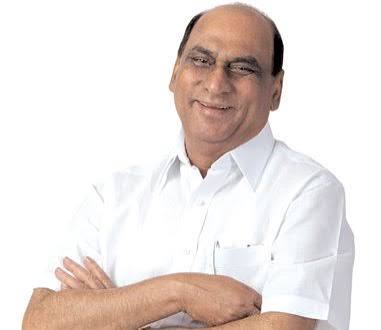
Datta Meghe Biography: Age, Death, Political Career, Education Empire, and Legacy of the Veteran Indian Leader

Datta Meghe Biography: Age, Death, Political Career, Education Empire, and Legacy of the Veteran Indian Leader
Quick Profile
| Field | Details |
|---|---|
| Full name | Datta Raghobaji Meghe |
| Popular name | Datta Meghe |
| Date of birth | November 11, 1936 |
| Place of birth | Pawnar, Wardha district, Maharashtra, India |
| Age at death | 89 |
| Date of death | March 22, 2026 |
| Nationality | Indian |
| Profession | Politician, educationist, institution builder |
| Known for | Five-time MP, former Maharashtra minister, founder of a major education and healthcare network |
| Education | B.A. from Nagpur University |
| Early career | Worked with LIC before entering politics |
| Political roles | Maharashtra Legislative Council member, Lok Sabha MP, Rajya Sabha member, former state minister |
| Major public image | Veteran Vidarbha leader and builder of private educational institutions in Maharashtra |
| Survived by | Sons including Sameer Meghe, a BJP MLA, and Sagar Meghe |
Datta Meghe was an Indian politician, educationist, and veteran Vidarbha leader who died on March 22, 2026, at the age of 89. Born on November 11, 1936, in Pawnar, Wardha district, he served in the Maharashtra Legislative Council, Lok Sabha, and Rajya Sabha, and also held ministerial posts in Maharashtra. He was widely known for building a large private education and healthcare network in Maharashtra, including institutions associated with DMIHER.
Introduction
Datta Meghe was one of the most recognizable political figures to emerge from Vidarbha in Maharashtra. For decades, he moved through public life as a lawmaker, minister, strategist, regional power broker, and education entrepreneur. His name carried weight not only in electoral politics but also in the world of higher education and healthcare infrastructure, where he helped build a large institutional network. His death in March 2026 pushed renewed public interest in his life story, political influence, and long legacy across Maharashtra.
For biography readers and search users, Datta Meghe stands out because his story crosses several important themes at once: regional politics, party shifts, parliamentary service, educational expansion, and the development of Vidarbha as a political identity. That combination is exactly why searches around his biography, age, death, family, and achievements are now trending. Based on current obituary-style coverage, the strongest search angles are his death news, political journey, education empire, and legacy in Maharashtra.
Who Was Datta Meghe?
Datta Meghe was an Indian politician and educationist best known as a five-time Member of Parliament and a major institution builder in Maharashtra. He spent more than five decades in public life and served in multiple political formations over the years. He held positions in the Maharashtra Legislative Council, the Lok Sabha, and the Rajya Sabha, while also serving as minister of state and later cabinet minister in Maharashtra. In parallel, he became identified with one of Maharashtra’s largest private education and healthcare networks.
He was not merely a routine politician who won elections and disappeared into archives. He remained relevant because he blended political influence with institution building. In Maharashtra, especially in Vidarbha, that made him a figure larger than a normal constituency leader. He helped shape careers, influence regional debates, and build long-term educational structures that outlived election cycles.
Datta Meghe’s Birth, Age, and Early Life
Datta Meghe was born on November 11, 1936, in Pawnar in Wardha district, Maharashtra. He later became one of the best-known public figures from the wider Vidarbha region. Reports published after his death consistently identify Wardha and Vidarbha as central to his political identity and life story.
At the time of his death on March 22, 2026, he was 89 years old. That figure has been repeated across current obituary reporting and is one of the main reasons users are searching his biography now. Age-related queries often spike after the death of major political or public figures, and Datta Meghe’s case fits that pattern.
Before entering active politics, Meghe studied at Nagpur University, where he earned a B.A. degree. He also reportedly worked with LIC before moving fully into political life. That early path matters because it shows that he did not begin as a dynastic national figure. He came into prominence through regional politics, organization work, and long-term local influence.
Education and Professional Background
Datta Meghe’s academic qualification is generally reported as a Bachelor of Arts from Nagpur University. While that might seem like a small line in a biography, it became more meaningful later because he went on to build a large education ecosystem. There is a certain symmetry in that journey: a graduate from Maharashtra’s academic system later became associated with creating universities, colleges, and healthcare institutions that served thousands of students.
His early employment with LIC gave him a non-political professional background before he entered the public arena. Many long-serving Indian politicians began with grassroots or professional roles before electoral office, but Datta Meghe’s transition is notable because it led not just to politics but to an institutional legacy in education and medicine.
Entry Into Politics
Datta Meghe’s formal rise in politics began with the Maharashtra Legislative Council in 1978. According to current reporting, he served three successive terms there until 1991. This phase was crucial because it built the platform for his later parliamentary career. It also established him as a serious Vidarbha leader rather than a temporary regional player.
During his legislative council years, he held several important responsibilities. Reports state that he served as minister of state for housing, civil supplies, and technical education, and later as cabinet minister for energy and forests. He also served as Leader of the Opposition in the Legislative Council. These were not ceremonial roles. They placed him in positions that shaped policy, administration, and his reputation within Maharashtra politics.
This stretch of his career explains why he later became seen as a heavyweight rather than simply a frequent election contestant. He had both legislative experience and administrative experience. That combination helped him navigate multiple parties and political transitions over the decades.
Datta Meghe in the Lok Sabha
After his long stint in the Maharashtra Legislative Council, Datta Meghe entered the Lok Sabha in 1991 on a Congress ticket. Obituary coverage notes that he represented constituencies including Nagpur, Ramtek, and Wardha across successive terms. That breadth of representation reinforced his image as a leader with influence beyond a single pocket borough.
Being described as a five-time MP is one of the strongest identifiers attached to his public career in current coverage. It signals both longevity and electoral adaptability. In India’s shifting political terrain, especially in Maharashtra, staying relevant over multiple cycles is no small feat. Meghe managed to remain a recognizable parliamentary figure even as alliances, party structures, and regional sentiments evolved.
His parliamentary career matters for search intent because many users looking up Datta Meghe now want one clear answer to a basic question: why was he important? One of the simplest correct answers is this: he was important because he did not serve in only one office. He moved from state politics to national politics and remained influential in both.
Rajya Sabha and National-Level Relevance
In addition to serving in the Lok Sabha, Datta Meghe also served a term in the Rajya Sabha. This further strengthened his national profile. A political career that includes both houses of Parliament is rare enough to stand out, and it explains why he is frequently described as one of Vidarbha’s tallest political figures in obituary coverage.
Service in both Houses of Parliament also suggests that his influence was not merely electoral. It points to trust within party structures and the broader political ecosystem. Politicians who hold both state and national roles often become brokers of institutional memory, regional demands, and party negotiation. Meghe’s long public life fits that model. This is an inference based on the range of offices he held and the way current reports describe his stature.
Political Parties and Shifting Alliances
One of the most interesting parts of Datta Meghe’s biography is his movement across party lines. Current reports say he held prominent positions in three national political parties during his public life. He was initially associated with the Congress, later shifted to the NCP, and eventually returned to Congress before he and his family joined the BJP in 2014, reportedly citing the neglect of Vidarbha.
These shifts were not random. In regional politics, especially in Maharashtra, such moves often reflect changing alliances, local grievances, factional dynamics, and strategic calculations about development and representation. In Meghe’s case, the move was also tied in current reporting to the issue of Vidarbha and the sense that the region had not received fair attention.
That does not make his political path simple. It makes it more revealing. Datta Meghe’s biography reflects the reality of Indian politics outside the neat national headline version. Regional leaders often build influence not by staying symbolically pure within one party forever, but by staying relevant to their region’s power map. Meghe appears to have done exactly that. This is an interpretation supported by the sequence of party changes and his continuing prominence over time.
Datta Meghe and the Vidarbha Movement
Another important part of Datta Meghe’s public identity was his support for the separate Vidarbha movement. Obituary coverage specifically notes that he remained a staunch supporter of the demand for Vidarbha. This positioned him not just as a politician seeking office, but as a regional voice tied to a longer political aspiration in Maharashtra.
The separate Vidarbha issue has carried emotional, economic, and political weight for years. Leaders associated with it are often remembered not merely for what office they held, but for how they articulated regional frustration and development claims. Datta Meghe’s connection to that cause helped deepen his identity as a Vidarbha strongman.
For readers searching his biography after his death, this matters because it explains why he was mourned across political lines. A leader identified with a region’s aspirations often leaves behind a larger footprint than someone known only for party loyalty.
Ministerial Roles in Maharashtra
Datta Meghe’s ministerial assignments in Maharashtra included portfolios such as housing, civil supplies, technical education, energy, and forests. These are significant departments, especially in a state as economically and politically important as Maharashtra. His handling of these roles helped build his administrative reputation in addition to his electoral one.
The inclusion of technical education in his ministerial record is especially interesting when viewed alongside his later role as an education entrepreneur and institution builder. While the record does not automatically prove a direct line between policy work and later private education expansion, the overlap is striking and helps explain why education became such a dominant part of his public identity. This is an inference based on his ministerial background and later institutional work.
Datta Meghe as Educationist and Institution Builder
Beyond politics, Datta Meghe became widely known as the founder of one of Maharashtra’s largest private education networks. Current reporting repeatedly emphasizes that his influence extended into education and healthcare. The official DMIHER website describes the institution as a major multidisciplinary and accredited university hub, reinforcing the scale of the network associated with his name.
DMIHER, or Datta Meghe Institute of Higher Education & Research, is presented on its official site as a prominent deemed university in Maharashtra with a wide academic footprint. The institution offers programs across medicine, dentistry, nursing, physiotherapy, pharmacy, and other fields. This supports the common description in obituary reporting that Datta Meghe built not just a political career but a full educational and healthcare ecosystem.
This institutional side of his biography is a big reason his name remained familiar even to people who did not closely follow day-to-day politics. A politician’s public memory often fades after office, but institutions keep a name alive. In Meghe’s case, the university and related educational structures extended his visibility far beyond elections.
The Education Empire Narrative
Many readers now search “Datta Meghe education empire” because current reports frame him as a builder of a major network in education and healthcare. While “empire” is a media shorthand rather than an official institutional category, it reflects the scale and influence of the establishments associated with him. Official university pages show a broad multi-program structure and a significant academic presence.
In biography terms, this is what makes Datta Meghe different from many former MPs. Plenty of politicians win seats. Fewer create organizations that continue shaping professional education, medical training, and regional development long after active political relevance declines. Meghe’s institutional footprint helps explain why his death drew attention not only from political circles but also from educational and civic communities. This inference is supported by the way current coverage ties his identity to both politics and institutions.
Family and Personal Life
Current obituary coverage identifies Datta Meghe as being survived by his sons, including Sameer Meghe, who is a BJP MLA, and Sagar Meghe. That detail shows how his influence continued through family involvement in public life. In India, politics often operates through both individual leadership and family continuity, and the Meghe family appears to remain politically visible in Maharashtra.
Public reports released after his death have focused more on his political and institutional legacy than on private personal details. That means the most reliable updated information available right now concerns his offices, background, educational work, and the political role of his family members already in public life.
Datta Meghe’s Public Reputation
Datta Meghe is being remembered in current reports as an approachable, service-oriented, and highly influential public figure in Vidarbha. These descriptions matter because obituary journalism usually compresses a lifetime into a few defining traits. The fact that multiple reports highlight his accessibility and public service image suggests that this was central to how supporters and colleagues viewed him.
At the same time, his legacy is not just emotional or symbolic. It is practical. He left behind political memory, institutional infrastructure, and a family still connected to public affairs. That combination often marks the biographies of leaders who outgrow their formal titles.
Datta Meghe’s Death
Datta Meghe died on March 22, 2026, and the news was widely reported on March 23, 2026. Reports state that he was 89 years old at the time of his death. Coverage from Maharashtra media described his passing as the death of a senior leader, educationist, and social figure whose influence stretched across Vidarbha and beyond.
His death triggered tributes from major political figures, including those outside any single party line. Current Marathi coverage mentions condolences from figures such as Nitin Gadkari and Devendra Fadnavis, which reflects the broad public weight of his passing.
When a figure like Datta Meghe dies, search interest usually rises not only because of the death itself, but because many younger readers are encountering the name seriously for the first time. That is why biography content around his age, party history, offices held, institutions built, and family is now particularly valuable for search traffic. This is an inference based on current obituary-driven search behavior and the themes dominant in present coverage.
Why Datta Meghe Matters in Indian Political Biography
Datta Meghe matters because he represents a specific kind of Indian political figure that is easy to underestimate from a distance. He was not primarily a celebrity politician in the TV age. He was something more old-school and, in many ways, more durable: a regional heavyweight who accumulated power through organization, constituency relevance, administrative roles, parliamentary service, and institution building.
His career also reflects the layered nature of Indian democracy. A leader can be simultaneously local and national, ideological and pragmatic, political and entrepreneurial, controversial to some yet indispensable to others. Datta Meghe’s movement across parties, his support for Vidarbha, and his educational network all show a figure who operated through multiple channels of influence.
In biography terms, that gives him lasting relevance. Readers interested in Maharashtra politics, the evolution of Vidarbha leadership, or the rise of politically linked educational institutions will all find Datta Meghe a significant case study.
Legacy
The word most strongly attached to Datta Meghe in current reporting is legacy. That legacy has three visible pillars. First, his long public career across state and national institutions. Second, his role in shaping Vidarbha’s political voice. Third, his contribution to education and healthcare through institutions that continue to function after him.
His political legacy lies in endurance. Few leaders remain relevant across so many phases of public life. His regional legacy lies in identification with Vidarbha’s concerns. His institutional legacy lies in the educational network that carries his name. Together, these make him more than a former officeholder; they make him part of Maharashtra’s public memory.
Even for readers with no partisan interest, his biography shows how power can be built in India outside the most visible national spotlight. Datta Meghe’s story is about long-range relevance: how a man from Wardha rose to legislative office, national Parliament, ministerial influence, and institutional prominence. That is a substantial legacy by any political standard.
Conclusion
Datta Meghe’s biography is the story of a man who left a deep mark on Maharashtra through politics, education, and regional leadership. Born in 1936 in Pawnar, Wardha, he rose from a professional background into a long public career that included the Maharashtra Legislative Council, the Lok Sabha, the Rajya Sabha, and ministerial office. He died on March 22, 2026, at the age of 89, leaving behind not only a political record but also a major educational legacy.
For search users asking who Datta Meghe was, the clearest answer is this: he was one of Vidarbha’s most influential veteran leaders, a five-time MP, a former minister, and the builder of a large educational and healthcare network in Maharashtra. That is why his name remains important even after his passing.
FAQ
Who was Datta Meghe?
Datta Meghe was an Indian politician, educationist, and veteran Vidarbha leader who served in the Maharashtra Legislative Council, Lok Sabha, and Rajya Sabha, and was associated with a major education and healthcare network in Maharashtra.
What was Datta Meghe’s age at death?
He was 89 years old when he died in March 2026.
When did Datta Meghe die?
Current reports say Datta Meghe died on March 22, 2026, with the news widely carried on March 23, 2026.
What was Datta Meghe known for?
He was known for being a five-time MP, former Maharashtra minister, supporter of Vidarbha, and founder of a major private education and healthcare network.
What institutions were associated with Datta Meghe?
He was closely associated with institutions under the Datta Meghe name, including DMIHER, which the official website describes as a major multidisciplinary deemed university in Maharashtra.
Which parties was Datta Meghe associated with?
Current reports indicate that over his long career he was associated with the Congress, NCP, and later the BJP through a family political shift in 2014.
