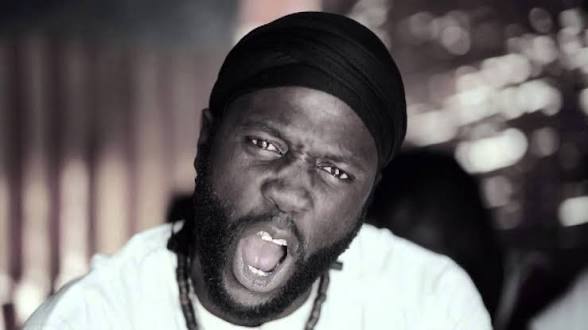
Kilifeu Biography: Age, Real Name, Career, Keur Gui, Y’en a Marre, and Net Worth

Kilifeu Biography: Age, Real Name, Career, Keur Gui, Y’en a Marre, and Net Worth
Quick Profile
| Field | Details |
|---|---|
| Full Name | Landing Mbessane Seck |
| Popular Name | Kilifeu |
| Other Stage Name | Kalachnikov |
| Year of Birth | 1979 |
| Place of Birth | Kaolack, Senegal |
| Nationality | Senegalese |
| Profession | Rapper, songwriter, activist |
| Genre | Hip-hop, political rap, conscious rap |
| Famous For | Member of Keur Gui, activism, Y’en a Marre |
| Group | Keur Gui |
| Years Active | Since 1996 |
| Known Associate | Thiat |
| Movement | Y’en a Marre |
| Religion | Not widely confirmed in major public sources |
| Marital Status | Not publicly confirmed |
| Net Worth | Not publicly verified |
Introduction
Kilifeu is one of the most respected names in Senegalese hip-hop. Known for his sharp lyrics, fearless public voice, and strong political engagement, he is more than just a rapper. To many followers of African music and democratic activism, Kilifeu represents a generation of artists who used music as a weapon against injustice, corruption, and poor leadership. His story is not only about entertainment. It is about survival, resistance, youth power, and cultural influence.
Born as Landing Mbessane Seck, Kilifeu rose from humble beginnings in Kaolack, Senegal, and became part of one of the most influential rap groups in the country, Keur Gui. Alongside his fellow rapper Thiat, he built a reputation for socially conscious music that spoke directly to the struggles of ordinary people. Their songs challenged the political establishment, criticized social inequality, and gave a voice to frustrated young citizens. Over time, Kilifeu became known not only as an artist but also as a public intellectual and activist.
What makes Kilifeu especially important is that his impact goes beyond the studio. He was one of the cofounders of Y’en a Marre, a Senegalese youth movement that played a major role in mobilizing civic participation, especially during the country’s tense political moments in the early 2010s. This movement became a symbol of youth resistance and democratic engagement in West Africa, and Kilifeu’s name became tied to that history.
In recent years, Kilifeu has remained a public figure in Senegal’s cultural and political conversations. His relevance has continued through music, activism, public appointments, and controversies. Reports from 2024 indicated that he had been appointed chairman of the board of Senegal’s Grand Théâtre National, while reporting from March 2026 stated that he was later dismissed from that post. Those developments show that he remains close to the center of public debate in Senegal.
This biography explores Kilifeu’s early life, music career, activism, struggles, achievements, public influence, and legacy.
Early Life and Background
Kilifeu was born in 1979 in Kaolack, a major city in Senegal. Public biographies describe him as coming from a family with griot roots, meaning a background connected to traditional oral poetry, praise singing, storytelling, and cultural memory. In many West African societies, griot heritage is closely tied to music, public speech, and social commentary. That background helps explain why Kilifeu later developed into a powerful lyricist and performer with a deep connection to social issues.
His childhood was not easy. Public biographical summaries state that he lost his parents while he was still young and was raised by relatives, including his aunts and sisters. These difficult circumstances forced him to grow up quickly. According to available biographies, he became responsible for family matters at a very young age and even left school to work. One source notes that he worked in a peanut oil factory in Kaolack after abandoning his studies due to family responsibilities. This part of his life is important because it shaped the seriousness and realism that later became visible in his music.
Unlike artists whose careers began with privilege or elite support, Kilifeu’s path seems to have emerged from hardship, observation, and direct contact with the daily struggles of ordinary Senegalese people. Those experiences gave him authenticity. When he rapped about unemployment, corruption, poverty, youth frustration, and political betrayal, listeners believed him because he was not speaking as an outsider. He was speaking as someone who had lived through instability and responsibility from an early age.
Kaolack itself also played a role in shaping his identity. The city is culturally rich and historically important, but like many places outside major capitals, it has often represented a different side of national life than the political and media center of Dakar. Being from Kaolack added another layer to Kilifeu’s voice. He became associated with a more grounded, regional, people-centered style of hip-hop. His music was never just urban glamour. It was rooted in struggle, local reality, and collective frustration.
These early experiences laid the foundation for the artist he would become: bold, politically aware, socially engaged, and resistant to silence.
How Kilifeu Entered Music
Kilifeu’s connection to music began early, influenced both by his cultural roots and his environment. Public accounts link his artistic development to his griot family heritage, which may have helped shape his command of language and performance. Still, it was rap music that became his chosen medium. Like many African youth in the 1990s, he was drawn to hip-hop not just as entertainment but as a way to protest, express identity, and question authority.
In 1996, Kilifeu co-founded the rap group Keur Gui with Thiat. The group emerged from Kaolack and later became one of Senegal’s best-known rap acts. The name “Keur Gui” is often translated from Wolof as something like “the house” or “the family,” a fitting identity for a group that spoke to collective realities rather than individual celebrity. From the beginning, Keur Gui was different from artists focused mainly on commercial success. The group was known for engaged lyrics, political criticism, and a commitment to conscious rap.
Kilifeu’s stage presence and lyrical style quickly made him stand out. He became known by the alias Kalachnikov, a nickname that reflected the force and aggressiveness of his lyrical delivery rather than literal violence. His verses were often direct, uncompromising, and socially charged. Instead of chasing soft mainstream themes, he chose to confront uncomfortable truths.
This was also a risky path. Reports and profiles about Keur Gui describe a long history of censorship, arrests, and repression connected to their politically critical music. The group’s style made them admired by ordinary people but often unpopular with authorities. That tension only increased their credibility. In many ways, opposition helped define Kilifeu’s artistic identity. He was not simply a rapper making records. He was part of a movement using art as resistance.
Rise of Keur Gui
Keur Gui became one of the most important rap groups in Senegal by combining artistry with activism. The group’s discography includes projects such as 1ère mi-temps, 2ème mi-temps, Ken Bugul, Liy raam, Nos connes doléances, and Encyclopédie. These works helped establish the group’s identity as a bold voice in Senegalese hip-hop.
What made Keur Gui special was the content of their music. Their songs were not designed only for dance floors or radio play. They were built around criticism, public education, and social commentary. The group addressed corruption, weak governance, economic hardship, and broken promises. That kind of rap resonated deeply with young people who felt neglected by political elites. The Kennedy Center has described Keur Gui as one of Africa’s most visible and socially engaged hip-hop groups, which reflects the reputation they built over time.
The group’s reputation grew even stronger because of the personal risks they faced. Reporting and profiles describe incidents in which Kilifeu and Thiat were arrested, beaten, censored, or jailed because of their music and activism. Instead of weakening them, these experiences strengthened their image as truth-tellers. Their credibility came from sacrifice. Listeners saw that they were willing to pay a price for speaking out.
Keur Gui also helped reshape the idea of what African rap could be. Rather than imitate foreign commercial formulas, the group localized hip-hop into a tool for civic consciousness. Their work showed that rap in Senegal could be culturally rooted, politically daring, and socially useful. Kilifeu, as one of the group’s central figures, played a major role in that transformation.
Kilifeu and Political Rap
Kilifeu is often described as a political rapper, but that label can sound too narrow. His work is better understood as conscious rap with direct civic purpose. He uses lyrics not only to criticize leaders but also to challenge citizens, demand accountability, and encourage awareness.
Political rap in Senegal has a long and important history, but Kilifeu helped push it into a more confrontational and organized space. His songs and public speeches reflected an insistence that artists should not remain neutral in the face of injustice. That idea became one of the defining features of his career. He was not interested in being a passive celebrity. He wanted music to matter.
This approach brought admiration and criticism at the same time. Supporters praised him as brave and principled. Critics sometimes saw him as too aggressive, too political, or too close to controversy. But regardless of opinion, it became difficult to ignore him. Kilifeu turned his voice into a public instrument.
His message connected especially with youth. In many African societies, young people face unemployment, limited opportunities, and frustration with political systems dominated by older elites. Kilifeu’s lyrics spoke directly into that reality. He used music to transform anger into awareness and frustration into collective identity.
That is a major reason why his biography matters beyond the entertainment industry. He is part of a generation of African artists who blurred the line between musician and civic actor.
Y’en a Marre and Activism
One of the most important chapters in Kilifeu’s life is his role in Y’en a Marre, the Senegalese youth movement founded in 2011. The name means something like “We’re fed up.” The movement emerged during a period of frustration with governance and political direction in Senegal. It was created by rappers, journalists, and activists who wanted to mobilize citizens, especially the youth, to become more engaged in national life. Kilifeu and Thiat of Keur Gui were among its cofounders.
Y’en a Marre became a historic force in Senegalese politics. The movement encouraged people to register to vote, defend democratic principles, and reject political manipulation. It gained international attention as an example of how music, activism, and civic education could come together. Kilifeu’s involvement made him more than a rapper. It positioned him as a symbol of organized youth resistance.
This movement mattered because it showed a new kind of political engagement. Instead of joining a traditional political party, Kilifeu and his colleagues created a civic platform. They spoke the language of the streets, the youth, and the neglected population. They framed citizenship as active responsibility rather than passive complaint.
Y’en a Marre also expanded Kilifeu’s reputation beyond Senegal. Observers of African democracy began to mention the movement as a powerful example of cultural activism. Scholars, journalists, and cultural critics cited it when discussing how musicians influence political change in Africa. That broader influence strengthened Kilifeu’s public legacy.
Struggles, Arrests, and Censorship
Kilifeu’s path has not been smooth. His biography includes repeated episodes of confrontation with state power and public controversy. Sources about Keur Gui describe arrests, censorship, imprisonment, and physical abuse connected to their critical messages. These incidents are a reminder that speaking truth through music can come at a cost.
Such experiences shaped the public meaning of his career. For many fans, Kilifeu is not respected only because of his talent. He is respected because he endured pressure without abandoning his message. In countries where artists sometimes face co-option or silence, that consistency matters.
At the same time, activism brings complexity. Public figures who challenge systems often face scrutiny, rumors, and political pushback. Kilifeu’s image has sometimes existed in that tense space between artistic heroism and political controversy. But that is also part of what makes him compelling. He is not a neatly packaged celebrity. He is a disruptive public figure whose career reflects the contradictions of art and politics.
Public Appointments and Recent Developments
Kilifeu’s relevance did not end with music and street activism. Recent reports indicate that in 2024 he was appointed chairman of the board of directors of the Grand Théâtre National in Senegal, reflecting his standing in cultural and public life. That appointment suggested that his influence had moved from oppositional activism into institutional recognition.
However, the story changed again in March 2026, when reporting from Seneweb stated that Kilifeu was dismissed from that position following a Council of Ministers meeting. The dismissal became notable news because it involved a prominent rapper-activist whose career has long sat at the intersection of culture and politics.
These developments are important in a biography because they show how dynamic Kilifeu’s public life remains. He is not just a historical figure remembered for past activism. He is still part of the living conversation in Senegal about power, culture, accountability, and public leadership.
Musical Style and Artistic Identity
Kilifeu’s artistic style is rooted in conscious rap and political expression. His lyrics are known for intensity, clarity, and social purpose. He often uses rap not to glorify luxury or personal fame, but to expose failures in society and encourage reflection.
That does not mean his music lacks artistry. On the contrary, Kilifeu’s power comes from combining message and form. His griot-linked heritage, his command of language, and his forceful delivery all contribute to his impact. His style carries urgency. He sounds like someone who believes words should do something.
As part of Keur Gui, he helped shape a distinctly Senegalese form of political hip-hop. The group’s work stands within a larger African tradition of socially engaged music, but also has its own local identity, drawing from Senegalese realities, Wolof expression, and youth street culture.
Discography and Major Works
Public summaries list several notable Keur Gui projects across the years. These include:
- 1ère mi-temps
- 2ème mi-temps
- Ken Bugul
- Liy raam
- Nos connes doléances
- Encyclopédie
These titles reflect the group’s long presence in Senegalese music. The albums helped build a body of work associated with public criticism and collective consciousness. Rather than being remembered for one commercial hit, Kilifeu’s legacy is tied to a sustained artistic mission.
Personal Life
Compared with many celebrities, Kilifeu appears to keep much of his personal life private. Publicly available major sources focus far more on his activism, music, and public role than on his family or relationships. As a result, details about his wife, children, or domestic life are not widely confirmed in reliable public sources. That gap should be respected rather than filled with guesswork.
This privacy may also fit his public identity. Kilifeu has built his reputation on collective concerns rather than personal display. He is known more for what he says about society than for celebrity lifestyle storytelling.
Kilifeu’s Influence in Senegal and Africa
Kilifeu’s influence reaches beyond his own music. He is part of a tradition in which artists serve as conscience, critic, and mobilizer. In Senegal, he helped prove that rap could be central to national debate. Across Africa, he became an example of how musicians can shape democratic conversations.
Y’en a Marre’s influence alone would be enough to secure his place in history. But when combined with his music, his sacrifices, and his public visibility, Kilifeu’s legacy becomes even stronger. He helped redefine the social role of the rapper. Instead of performer only, the rapper could also be organizer, educator, and resistor.
For younger artists, this legacy matters. Kilifeu represents a model of artistic seriousness. He shows that music can still carry moral weight in a commercial age.
Net Worth
There is no widely verified public figure for Kilifeu’s net worth in reliable major sources. Many biography websites like to add estimated wealth figures, but unless that information is supported by strong evidence, it is better to avoid presenting speculation as fact. Based on his long music career, public recognition, performances, and cultural roles, he has likely earned income through music and related engagements, but a precise net worth is not publicly confirmed.
For AdSense-safe publishing, this is actually a better approach. It keeps the article factual and avoids misleading claims.
Why Kilifeu Remains Important
Kilifeu remains important because he represents something bigger than himself. He is part of the story of how young Africans used culture to demand better politics. He is also part of the story of how hip-hop became a serious civic force in Senegal.
His life speaks to resilience. From childhood hardship to public activism, from local music scenes to national influence, his journey shows how art can grow out of struggle and become a platform for change. Even the recent twists in his public career show that he remains relevant, contested, and watched.
In a media environment where many public figures rise and fade quickly, Kilifeu has maintained significance over decades. That kind of endurance usually comes from substance.
Legacy
Kilifeu’s legacy can be understood in three major ways.
First, he is a music icon within Senegalese conscious rap. Through Keur Gui, he helped define a generation of politically engaged hip-hop.
Second, he is a civic actor whose role in Y’en a Marre placed him at the center of democratic mobilization in Senegal.
Third, he is a symbol of resistance, someone whose career reflects the price and power of speaking openly in society.
These layers make his biography rich and meaningful. He is not just another rapper with albums and fame. He is a public figure shaped by hardship, activism, and cultural purpose.
Conclusion
Kilifeu, born Landing Mbessane Seck, is one of the most important rapper-activists in Senegal’s modern history. From his early struggles in Kaolack to his rise as a member of Keur Gui, he built a voice that challenged injustice and inspired youth. His role in Y’en a Marre transformed him from musician to civic symbol, while his continued presence in public life proves that his story is still evolving.
What makes Kilifeu stand out is not only his talent, but also his courage and consistency. He chose a difficult path, one that brought censorship, arrest, and controversy, but also respect and historical importance. In the biography niche, he is a compelling subject because his life connects music, politics, culture, and activism in one powerful story.
For readers searching for Kilifeu biography, real name, age, career, activism, and influence, his story offers all the elements of a memorable public life. He is a rapper, yes, but also a movement figure, a cultural critic, and a symbol of Senegalese youth resistance.
