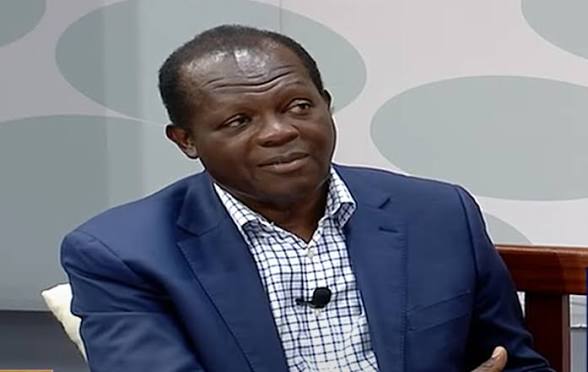
Raphael Tuju Biography: Age, Wife, Children, Political Career, Media Career, and Why He Is Trending in 2026

Raphael Tuju Biography: Age, Wife, Children, Political Career, Media Career, and Why He Is Trending in 2026
Quick Profile
| Field | Details |
|---|---|
| Full name | Raphael Tuju |
| Honor | EGH |
| Date of birth | March 30, 1959 |
| Nationality | Kenyan |
| Profession | Politician, media professional, public servant |
| Education | M.A. in Mass Communications, University of Leicester; educated at Majiwa Primary School, Nakuru High School, and Starehe Boys Centre |
| Known for | Former MP for Rarieda, former Cabinet minister, former Jubilee Party Secretary-General, first African TV producer to win an International Emmy Award |
| Former elective office | Member of Parliament for Rarieda (elected in 2002) |
| Family | Formerly married to Ruth Akinyi; has three children, including two daughters and a son |
| Why he is trending | Reported missing by family in Nairobi on March 22, 2026, prompting a police and DCI investigation |
Raphael Tuju is a Kenyan politician, former Cabinet minister, media professional, and public servant born on March 30, 1959. He is known for serving as MP for Rarieda, holding senior government roles, and becoming the first African TV producer to win an International Emmy Award. In March 2026, he became a trending search topic after his family reported him missing, leading to a police and DCI investigation in Nairobi.
Introduction
Raphael Tuju is one of Kenya’s most recognizable public figures, with a career that has crossed journalism, television production, diplomacy, cabinet service, party politics, and public policy. For many years, he has remained relevant not only because of the offices he held, but because he built a reputation that mixed media credibility with political influence. That combination is rare. It made him stand out in Kenya’s public life long before the latest headlines pushed his name back into trending searches.
In March 2026, Raphael Tuju returned sharply to public attention after his family reported him missing at Karen Police Station. Kenyan media outlets and investigators said his disappearance was under active probe, with the Directorate of Criminal Investigations seeking access to his residence and pursuing leads after his vehicle was reportedly found abandoned. Those developments are the main reason people are currently searching his biography, age, family, and political history.
This article gives a full, updated biography of Raphael Tuju, covering his early life, education, media career, political journey, cabinet roles, family background, public image, and the 2026 developments that have placed him back at the center of national discussion. It is written in an AdSense-friendly, biography-focused format designed to answer the key questions readers are currently searching online.
Who Is Raphael Tuju?
Raphael Tuju is a Kenyan politician, media professional, and public servant best known for his work in government and party politics, as well as his earlier career in television and communications. He is widely described as the first African TV producer to win an International Emmy Award, a distinction that gave him an unusual profile before he entered elected politics. Later, he served as Member of Parliament for Rarieda and held senior ministerial roles in the Kenyan government.
What makes Tuju especially interesting as a biography subject is that he did not emerge from just one lane of public life. He built credibility in media, moved into politics, served in cabinet, and later became deeply associated with high-level party strategy. That range explains why his name still carries weight in Kenya long after his first rise to national prominence. It also explains why current news about his disappearance immediately generated strong public interest.
Raphael Tuju’s Age and Date of Birth
Raphael Tuju was born on March 30, 1959. Based on that birth date, he is 66 years old as of March 23, 2026.
Age is one of the most common search terms in biography content, especially when a public figure trends in the news. In Tuju’s case, people searching for his age are usually also looking for context: who he is, how long he has been in public life, and why his name still matters in Kenya’s political and media history. His 1959 birth year places him in a generation that experienced Kenya’s political transformation from a particularly close vantage point, first through media and later through state service. This is an inference based on the timeline of his career.
Early Life and Education
Raphael Tuju’s educational background reflects a path through several respected institutions. Available profile information says he attended Majiwa Primary School, Nakuru High School, and Starehe Boys Centre. He later earned a Master of Arts in Mass Communications from the University of Leicester in the United Kingdom.
That academic path is important because it fits closely with his first major professional identity: communications and media. He did not move into broadcasting by accident. His later success in journalism, production, and communications appears connected to both formal study and practical work in the field. While many politicians acquire media skills only after entering public life, Tuju came in with communications already built into his foundation. That likely helped shape the calm, polished, and strategic public image for which he became known. This is an inference drawn from his education and career sequence.
Raphael Tuju’s Media Career
Before he became a politician, Raphael Tuju worked as a journalist, television producer, and communications consultant. His media career remains one of the most distinctive parts of his biography because it set him apart from conventional political figures. He was not merely a spokesman or commentator. He was a professional media practitioner with documented success at an international level.
The most frequently cited highlight from this phase of his life is that he became the first African TV producer to win an International Emmy Award for a documentary focused on health and development. That achievement still stands as one of the core evergreen facts in his biography, and it is a major reason he continues to be remembered as more than just a former minister or party official.
That media background gave Tuju a different kind of authority in politics. People who come from broadcasting often understand narrative, message control, public mood, and framing better than many traditional politicians. In Tuju’s case, that likely contributed to his later effectiveness in both cabinet communication and party strategy. This is a reasonable inference based on the overlap between his communications training and his political roles.
The International Emmy Distinction
Raphael Tuju’s biography is often summarized around one standout line: he was the first African television producer to win an International Emmy Award. That claim appears consistently in profile material and is central to his public story.
Why does this matter so much? Because it gives Tuju a layer of prestige outside electoral politics. It means his name is connected not only to the rough-and-tumble of campaigns and government appointments, but also to creative and intellectual achievement. For biography readers, that makes him more compelling. He is not simply another politician with a long résumé. He is a figure who succeeded first in an entirely different arena, then crossed into politics carrying the credibility of international recognition.
Entry Into Kenyan Politics
Raphael Tuju formally entered elective politics in 2002, when he was elected as the Member of Parliament for Rarieda constituency in Siaya County. That election marked the beginning of his direct political career and moved him from public communication into legislative and executive service.
Reports summarizing his parliamentary record note that during his period as MP, he was associated with efforts in education, water access, and health-related development in Rarieda, including new classrooms, a water project, and a mobile hospital initiative intended to address infant mortality and disease challenges. Those details matter because they show that his political profile was not built only on elite appointments. He also had a constituency-facing development record.
This first electoral success came during a major transition period in Kenyan politics. The early 2000s opened new spaces, new alliances, and fresh political identities. Tuju’s move from media into Parliament at that moment helped position him as part of a broader generational and institutional shift in the country. That is an interpretive point, but it fits the timeline of his entry into elected office.
Cabinet and Government Roles
Following the 2002 election and the rise of the National Rainbow Coalition government, Raphael Tuju was appointed to ministerial roles, including Minister of Information and Communications and Minister for Tourism and Wildlife. These were high-visibility portfolios that suited someone with his communications background and national profile.
These roles elevated Tuju from MP to a more nationally recognized government figure. Cabinet posts matter in political biography because they show trust from the executive and often place a politician in major policy debates. In Tuju’s case, the portfolios also reinforced his brand as someone comfortable at the intersection of messaging, public image, and national representation.
He later remained relevant in government circles beyond the first chapter of his cabinet service. A 2018 Kenya National Assembly Hansard shows Members of Parliament explicitly asking about his job designation and position in government, an indication that his role in state structures continued to be significant enough to attract parliamentary scrutiny and public interest.
Party Politics and Strategic Influence
Raphael Tuju’s biography cannot be told fully without mentioning his importance in Kenyan party politics. In later years, he became strongly associated with the Jubilee Party, especially as Secretary-General, a position that placed him close to the nerve center of party organization, internal messaging, and leadership coordination. This role expanded his identity from former minister to political strategist.
That transition is important. Some politicians shine mainly in elective office; others become even more influential behind the scenes. Tuju appears to belong partly to the second category as well. His communications experience, cabinet exposure, and public recognition made him especially useful in party management, where message discipline and strategic navigation matter just as much as mass popularity. This is an inference, but it is strongly supported by the kind of position he held.
Raphael Tuju’s Public Reputation
Over the years, Raphael Tuju built a public image that blended polish, intelligence, and establishment experience. His media background made him articulate. His government service made him seasoned. His party role made him strategically important. Together, those elements created the image of a public figure who understood both how power works and how it is presented.
This sort of reputation can be double-edged in politics. It brings respect, but it can also place a figure close to major controversies, internal disputes, and high-pressure negotiations. That larger context matters when reading the current headlines around him, especially because recent reports connect concern over his disappearance to a broader environment involving property and business disputes.
Family, Wife, and Children
Raphael Tuju’s personal-life profile, as publicly summarized, states that he married Ruth Akinyi in 1986 and that the marriage ended in divorce in 2013. He has three children, including two daughters and one son.
For SEO biography purposes, “wife” and “children” are major search terms, and this is the most consistently available profile information in current public sources. At the moment, the most reliable way to present his family background is to stick to those core facts rather than stretching into unverified private details. That approach is also better for AdSense-friendly biography content, because it stays factual and avoids gossip-driven padding.
Raphael Tuju and the 2020 Road Accident
One of the major personal incidents in Tuju’s recent public life was the serious road accident he was involved in on February 12, 2020, on the Nairobi–Nakuru highway while traveling to Kabarak for the burial of former President Daniel arap Moi. This incident received wide media attention at the time and remains part of his modern public biography.
This event matters in biography writing because it became one of the moments when Tuju’s name moved from political reporting into broader public sympathy and concern. It also reinforced his place in Kenyan public consciousness as a figure whose life and career were still unfolding in very visible ways.
Why Raphael Tuju Is Trending in 2026
Raphael Tuju is trending in 2026 because of the developing reports that he was reported missing by his family. According to Kenyan news reports and the DCI position cited by media outlets, his family filed a missing-person report at Karen Police Station on Sunday, March 22, 2026, after losing contact with him. Investigators then launched inquiries into his whereabouts.
Some reports say his vehicle was found abandoned, while political figures and public commentators have raised fears ranging from disappearance to alleged abduction. Media coverage shows that the issue quickly escalated into a high-profile national story, with public demands for urgent investigation and clarity.
Because the story is still developing, the careful and accurate way to describe it is this: as of March 23, 2026, Tuju’s family had reported him missing, and Kenyan authorities said they were investigating the case. Claims beyond that, especially highly specific allegations, should be treated as allegations unless formally confirmed.
The DCI Investigation
Current reporting says the Directorate of Criminal Investigations opened a probe into Tuju’s disappearance after the report made by his family. Citizen Digital reported that the DCI said Tuju had been reported missing following a family complaint, while Capital FM reported that the agency sought access linked to the investigation at his Karen residence. Standard Media also reported detectives were probing the disappearance amid disputes involving property.
This has turned a biography search into an active news search. When public figures trend because of a live investigation, readers do not just want background facts; they want context. That is why a strong biography article now needs to connect Tuju’s early life and career with the current developments driving search traffic. It also needs to be cautious, because fast-moving investigations can change quickly.
Business and Property Dispute Angle
Some of the current reporting places Tuju’s disappearance within the shadow of broader business or property-related tensions. Standard Media referenced a dispute over properties in Karen, while some public figures quoted in media coverage linked the concern over his whereabouts to commercial issues.
It is important to present this carefully. What is confirmed in reporting is that the disappearance report exists and investigators are involved. References to motive or cause remain part of media reporting and public claims surrounding the story, not settled fact. For that reason, biography content should avoid overstating the dispute angle and instead frame it as part of the surrounding context reported by reputable Kenyan outlets.
Why Raphael Tuju’s Biography Still Matters
Even without the March 2026 developments, Raphael Tuju would still be an important biography subject in East African public life. His life story is unusually layered. He is a media figure with international recognition, a former MP, a cabinet minister, a party strategist, and a recurring presence in major Kenyan political moments.
That range gives his biography strong evergreen value. Readers may arrive through the current missing-person story, but they stay because Tuju’s broader life is genuinely substantial. He belongs to that class of public figures whose biography is about more than a single office or headline. It is about adaptation, relevance, and reinvention over time.
Raphael Tuju’s Legacy in Media and Politics
Tuju’s legacy, at least as it stands from the public record available now, has two major pillars. The first is media. Being identified as the first African TV producer to win an International Emmy Award gives him a lasting place in African broadcasting history. The second is politics. His career as MP, minister, and party official puts him firmly in the story of modern Kenyan governance and political organization.
That dual legacy makes him unusually cross-sectoral. People interested in journalism can claim him as a media pioneer. People interested in politics can point to his cabinet and party roles. People looking at public communication can see in him an example of how media skill can translate into political influence. This is one of the strongest reasons his biography performs well as long-form content: it appeals to more than one audience.
A Careful Note on Net Worth
“Net worth” is a popular search phrase in biography content, but I did not find a reliable primary or high-confidence source giving a precise, updated figure for Raphael Tuju’s net worth. Because of that, it is better not to state a number as fact. That keeps the article more accurate and safer for credibility. The public record does indicate he has had interests in real estate, but that is not enough to support a precise net-worth claim.
For AdSense-friendly publishing, this is actually the smarter move. Inflated or unsourced net-worth figures can weaken trust. A strong biography does not need to fake precision to rank well.
Raphael Tuju in Kenyan Public Memory
Tuju’s place in Kenyan public memory comes from a mix of visibility and versatility. He has been seen as a communicator, reform-era politician, cabinet insider, party tactician, accident survivor, and now a central figure in a major developing news story.
That is why his name keeps resurfacing. Some figures become famous for one dramatic moment. Tuju has remained relevant across multiple eras. His biography is not about a short burst of attention. It is about sustained national presence, sometimes in office, sometimes behind the scenes, and sometimes unexpectedly at the center of breaking news.
Conclusion
Raphael Tuju is a Kenyan politician, media professional, and public servant born on March 30, 1959, whose career spans television production, Parliament, cabinet service, and high-level party politics. He is especially notable for being described as the first African TV producer to win an International Emmy Award, and for later serving as MP for Rarieda and in major government roles.
As of March 23, 2026, he is also at the center of a major developing story after his family reported him missing, prompting an investigation by Kenyan authorities. That is the immediate reason his biography is trending right now.
For readers searching who Raphael Tuju is, the clearest answer is this: he is one of Kenya’s most recognizable public figures of the last few decades, with a life that connects media excellence, political influence, and national relevance. His biography matters because it captures more than one kind of public success, and because the latest developments have once again placed his name at the center of national attention.
FAQ
Who is Raphael Tuju?
Raphael Tuju is a Kenyan politician, media professional, and public servant known for serving as MP for Rarieda, holding cabinet positions, and being the first African TV producer to win an International Emmy Award.
How old is Raphael Tuju?
He was born on March 30, 1959, which makes him 66 years old as of March 23, 2026.
Who is Raphael Tuju’s wife?
Public profile information says he married Ruth Akinyi in 1986 and that they divorced in 2013.
How many children does Raphael Tuju have?
Available public profile information says he has three children: two daughters and a son.
Why is Raphael Tuju trending in 2026?
He is trending because his family reported him missing on March 22, 2026, leading to an investigation by police and the DCI.
What is Raphael Tuju known for in media?
He is known as the first African TV producer to win an International Emmy Award for a documentary on health and development.
What political role made Raphael Tuju widely known?
He became widely known in politics after being elected MP for Rarieda in 2002 and later serving in ministerial roles in the Kenyan government.
