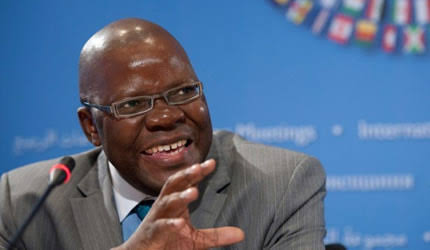
Tendai Biti Biography: Age, Early Life, Education, Political Career, Family, and Legacy

Tendai Biti Biography: Age, Early Life, Education, Political Career, Family, and Legacy
Tendai Biti is a Zimbabwean politician, lawyer, and former Minister of Finance of Zimbabwe who served from February 2009 to September 2013 during the Government of National Unity. He is widely known for helping stabilize Zimbabwe’s economy during a turbulent period marked by hyperinflation, political crisis, and institutional breakdown. Born on 6 August 1966, Biti also became prominent as a senior opposition leader, a former secretary-general of the MDC, and later a leading figure in opposition realignments in Zimbabwean politics.
Quick Profile
| Field | Details |
|---|---|
| Full name | Tendai Laxton Biti |
| Date of birth | 6 August 1966 |
| Age | 59 years old (as of March 24, 2026) |
| Place of birth | Dzivarasekwa, Rhodesia, now Zimbabwe |
| Nationality | Zimbabwean |
| Profession | Politician, lawyer |
| Known for | Former Minister of Finance of Zimbabwe |
| Education | University of Zimbabwe |
| Political background | MDC, MDC-T, PDP, later opposition coalition politics |
| Notable office | Minister of Finance, 2009–2013 |
| Children | 5 |
| Religion | Not widely and reliably documented in major public sources |
Introduction
Tendai Biti is one of the most recognized opposition politicians in Zimbabwe’s modern political history. Over the years, he has built a public image as a sharp legal mind, outspoken government critic, policy-driven political strategist, and one-time finance minister whose name became closely tied to Zimbabwe’s fragile economic recovery between 2009 and 2013.
For many Zimbabweans and observers of African politics, Biti stands out because he moved beyond ordinary opposition activism and occupied one of the most difficult public offices in the country’s recent history: the finance ministry at a time when Zimbabwe was reeling from hyperinflation, currency collapse, and severe international isolation. His years in office earned him praise from some international observers and supporters who argued that he brought discipline and credibility to public finance, even while critics and rivals challenged aspects of his politics and leadership style.
This biography explores Tendai Biti’s life, background, education, legal work, rise in opposition politics, role in Zimbabwe’s unity government, public reputation, and legacy in both finance and democratic activism.
Early Life and Background
Tendai Laxton Biti was born on 6 August 1966 in Dzivarasekwa, a high-density suburb in Harare, then part of Rhodesia and now Zimbabwe. His date and place of birth are consistently reported in major public biographical records.
Although detailed mainstream biographical accounts of his childhood are relatively limited, Biti’s later public career suggests a strong early exposure to questions of justice, governance, and social inequality. Like many politically conscious Zimbabwean figures who came of age in the years surrounding independence and the early post-independence era, his generation was formed by a country wrestling with liberation history, economic restructuring, and the difficult realities of nation-building.
Dzivarasekwa itself is significant in Zimbabwe’s social and political geography. It has long been associated with working-class life and urban political consciousness. Growing up in such an environment likely shaped Biti’s sensitivity to questions of public welfare, state accountability, and the economic pressures facing ordinary citizens. That broader background helps explain why he later developed into both a labor-oriented lawyer and a highly vocal opposition politician.
Even though many online biographies tend to repeat the same brief facts about his early years, what remains clear is that Biti emerged from a Zimbabwean setting marked by political intensity and social change. His later career in law and politics did not come out of nowhere; it reflected the formation of a man deeply engaged with the structure of the state and the daily burdens placed on citizens.
Education
Tendai Biti studied at the University of Zimbabwe, an institution that has educated many of the country’s leading lawyers, politicians, academics, and public officials. Public biographical records identify the University of Zimbabwe as his alma mater.
His legal education became the backbone of his public life. In Zimbabwe, law has often been one of the most important pathways into politics, especially for opposition figures who must navigate constitutional disputes, election litigation, human rights issues, and state repression. Biti’s legal training clearly positioned him for that world.
A university education in law typically requires not only technical mastery of statutes and procedure but also close engagement with political institutions, constitutionalism, and public accountability. In Biti’s case, those interests later became visible in his speeches, court-related work, policy arguments, and parliamentary interventions. He developed a reputation as an articulate and combative public figure, traits often sharpened in legal practice.
The University of Zimbabwe has historically been a place where intellectual debate and political consciousness intersect. Many national debates around reform, democracy, student activism, and governance have passed through its lecture halls and networks. Biti’s later prominence in the opposition movement fits into that broader pattern of educated professionals stepping into Zimbabwe’s contested political space.
Legal Career
Before becoming nationally known as finance minister, Tendai Biti was already respected in legal and political circles as a lawyer. Reuters described him as “a lawyer by training,” and public biographical sources note that he handled labor and human rights litigation, including representation involving trade unions.
That legal background mattered enormously. In Zimbabwe, where politics has often overlapped with courtroom struggles, electoral disputes, and constitutional controversy, law is not merely a profession; it is often a front line of political engagement. Biti’s work representing organized labor and rights-based causes placed him within the wider democratic reform ecosystem that challenged authoritarian tendencies in the country.
His legal practice also gave him the rhetorical tools that later became part of his political identity. He earned a reputation for precise argument, forceful language, and a willingness to confront state power directly. Those qualities made him effective in opposition politics, but they also brought risks. Public opposition in Zimbabwe, especially during the 2000s, often involved arrests, intimidation, and legal vulnerability.
In many ways, Biti’s legal career and political career were never separate lanes. They fed into each other. His legal training sharpened his political interventions, while political developments pushed him deeper into public advocacy. By the time he rose to senior leadership in the opposition, he was already seen as more than a lawyer. He had become one of the most visible intellectual and strategic voices in Zimbabwe’s democratic movement.
Entry Into Politics and the Rise of the MDC
Tendai Biti was part of the founding generation of the Movement for Democratic Change (MDC), the political party that emerged in 1999 as the most serious challenge to ZANU-PF’s dominance in post-independence Zimbabwe. Public biographical records state that he helped found the MDC and later became one of its most important leaders.
The MDC’s rise reflected deep public dissatisfaction with economic decline, governance failures, and restrictions on political freedom. It drew support from labor, urban voters, civil society activists, professionals, and citizens who believed Zimbabwe needed a democratic reset. Biti’s background as a lawyer with labor and rights experience made him a natural fit for that coalition.
In 2000, he was elected Member of Parliament for Harare East, a constituency he would remain associated with for many years. His election placed him at the center of formal politics during one of the most polarized periods in Zimbabwe’s history.
Within the party, Biti’s rise was not accidental. He was intelligent, media-savvy, policy-minded, and unusually effective at framing political disputes in legal and constitutional terms. These qualities helped him move into top party positions, including service as Secretary-General of the MDC and later MDC-T after the opposition split.
The office of secretary-general is one of the most important positions in any political movement. It involves organization, messaging, negotiation, internal discipline, and strategic direction. Biti’s holding of that office showed the level of trust placed in him and the significance of his role in shaping the opposition’s internal machinery.
Harare East and Parliamentary Career
As MP for Harare East, Tendai Biti became one of the key parliamentary voices of the Zimbabwean opposition. Public records show he first won the seat in 2000, retained it in 2005, and was again re-elected in the highly consequential 2008 parliamentary election.
Harare East is politically important because urban constituencies in Zimbabwe have often served as strongholds for opposition politics. These areas tend to reflect frustrations around unemployment, public services, inflation, governance, and democratic rights. Biti’s repeated success there indicated both his personal political appeal and the strength of anti-establishment sentiment among urban voters.
In parliament, he served on committees related to land, agriculture, defense, home affairs, budget, finance, and economic development, according to public biographical summaries. Those committee roles aligned with the broad themes that later defined his career: state accountability, governance, and economic reform.
His parliamentary years helped shape him into a national rather than merely local figure. Parliament gave him a stage from which to critique economic mismanagement and government excess. It also exposed him to the practical details of state budgeting and public administration, experience that would later prove valuable when he was appointed finance minister.
Arrests, Repression, and Political Risk
Like many senior Zimbabwean opposition figures in the 2000s, Tendai Biti faced serious repression. Public records note that he was arrested in 2007 along with MDC leader Morgan Tsvangirai and others after a prayer rally in Highfield. Reuters also carried Biti’s account of brutal abuse during detention, underscoring the physical risks of opposition politics in Zimbabwe during that period.
These experiences became part of his political identity. He was not merely a politician making speeches from a safe distance; he was someone who personally endured state pressure and alleged abuse. That reality gave moral force to his later arguments about democratic reform, rule of law, and electoral legitimacy.
The violent climate surrounding Zimbabwean elections in the 2000s also shaped Biti’s prominence. During and after the 2008 elections, the country entered a tense and often brutal phase marked by violence against opposition supporters and disputes over the results. Public records show Biti claimed MDC victory trends based on partial results, and he remained outside Zimbabwe for part of the post-election period amid the violence.
That period was a turning point in Zimbabwean politics. It led to intense negotiations, regional mediation, and eventually the formation of a power-sharing arrangement. For Biti personally, it also created the conditions under which he would move from opposition critic to national office-holder.
Appointment as Minister of Finance
On 10 February 2009, MDC leader and Prime Minister-designate Morgan Tsvangirai announced Tendai Biti as Minister of Finance in Zimbabwe’s Government of National Unity. Public biographical records show Biti took office on 13 February 2009.
This was one of the most difficult cabinet appointments in the country’s history. Zimbabwe’s economy had been devastated. Hyperinflation had destroyed savings and salaries. The national currency had effectively collapsed. Public confidence in institutions was shattered. Formal economic activity had withered, and basic fiscal credibility was close to nonexistent.
To take the finance portfolio in that environment was politically risky and administratively daunting. Any failure could have permanently damaged Biti’s reputation. Any success would still be constrained by the reality that the unity government was an uneasy partnership between long-time rivals.
Yet the appointment also made sense. Biti was already known for legal and policy sharpness, and he had become one of the opposition’s leading strategic minds. He entered the ministry not as a technocrat detached from politics, but as a highly political reformer stepping into a state apparatus shaped by competing centers of power.
Tendai Biti and Zimbabwe’s Economic Crisis
To understand Biti’s legacy, it is essential to understand the crisis he inherited. Zimbabwe’s economy had become globally infamous for hyperinflation and monetary collapse. The Zimbabwean dollar lost credibility to such an extent that, as later reflected in public summaries, Biti said in his first budget that “the death of the Zimbabwe dollar is a reality we have to live with.” Public accounts of the country’s economic history also note that the shift to foreign-currency use helped end hyperinflation and restore basic business normalcy.
The crisis was not just about numbers. It affected every part of life: wages, food prices, school fees, transport, medicine, and public confidence. For ordinary Zimbabweans, the collapse of monetary value meant daily uncertainty and the erosion of dignity. For government, it meant a near-total breakdown in fiscal credibility.
Biti stepped into office at exactly this breaking point. The public expectation was enormous, but the available room for action was limited. He had to work within a power-sharing government, under a long-ruling president, alongside institutions weakened by years of crisis.
That he became associated with stabilization at all is one reason his finance-minister years remain the defining chapter of his public life.
Economic Policies and Stabilization Efforts
Tendai Biti’s tenure as finance minister is widely associated with budget discipline, cash budgeting, and support for the practical reality of a multi-currency or dollarized environment. Reuters later wrote that he had “won international plaudits” for his work during the 2009–2013 government, while broader public accounts of Zimbabwe’s economy credit that period with ending hyperinflation and permitting renewed economic growth.
Cash budgeting became one of the key phrases linked to his name. In basic terms, this meant limiting expenditure to available revenue rather than sustaining reckless deficits through monetary chaos. In a country emerging from hyperinflation, that approach represented a dramatic shift toward fiscal restraint.
The multi-currency environment was equally important. Once the Zimbabwean dollar had effectively failed, practical commerce increasingly relied on foreign currencies such as the U.S. dollar and South African rand. Public economic summaries note that this helped restore normal business activity and that Zimbabwe recorded growth in 2009 after years of contraction.
Biti’s supporters argue that he brought seriousness, transparency, and realism to a ministry that had previously been overwhelmed by collapse. In their view, he did not “solve” every structural problem, but he helped create breathing room. He restored some confidence, enabled state functions to resume in more predictable ways, and gave citizens relief from the worst excesses of inflationary destruction.
Critics, of course, point out that the improvement was partial and fragile. The unity government itself was unstable, and many structural economic weaknesses remained unresolved. But even critics often acknowledge that the finance ministry under Biti represented a more disciplined and credible phase than what came before.
Relationship With Morgan Tsvangirai and the Unity Government
Tendai Biti’s rise cannot be separated from Morgan Tsvangirai, the long-time opposition leader who became prime minister under the power-sharing deal. Biti was one of Tsvangirai’s top lieutenants for years and a central figure in the MDC’s national strategy. Public records show he served as secretary-general and later held other senior positions in opposition politics linked to Tsvangirai’s movement.
Inside the Government of National Unity, the relationship between the MDC side and ZANU-PF was always uneasy. This tension shaped Biti’s finance-minister role. He had to manage the treasury while navigating political resistance, mistrust, and institutional friction. Every budgetary and policy decision existed within a contested state structure.
Even so, his years in office elevated him beyond party administrator status. He became a national figure associated not only with opposition rhetoric but with actual governance. That transition matters historically. Many opposition leaders remain permanently in critique mode; Biti entered the harder arena of executive responsibility.
Reuters later reported that he was still seen as someone whose financial stewardship during that period had earned respect, even years after leaving office.
End of Tenure as Finance Minister
Tendai Biti’s period as finance minister ended in September 2013, following the end of the unity government arrangement. Public records list his term as running from 13 February 2009 to 10 September 2013, after which Patrick Chinamasa returned to the position.
The 2013 transition was politically significant. It marked the return of a more consolidated ZANU-PF-led governmental structure after the exceptional arrangement of power-sharing. For Biti, it meant a return from cabinet office to opposition politics, where he would continue to shape debates but without direct control over economic policy.
Leaving office also changed how his record would be judged. Once no longer in the ministry, he became a reference point in arguments about economic management. Supporters presented his years as evidence that disciplined governance could stabilize Zimbabwe. Opponents argued that the unity-government period had limitations and that structural issues ran deeper than a single minister’s reforms.
Either way, his tenure became the benchmark against which later finance ministers were often compared.
Party Splits and the People’s Democratic Party
Zimbabwean opposition politics has long been marked by factional disputes, leadership tensions, and strategic disagreements. Tendai Biti became deeply involved in these conflicts after his years as finance minister. Public records show that after splits within the opposition, he became associated with the People’s Democratic Party (PDP), serving as its president from 2015 to 2017.
The formation of the PDP reflected the broader instability of opposition coalition-building in Zimbabwe. While Biti remained an influential national figure, party fragmentation complicated the opposition’s ability to present a united front against ZANU-PF.
For Biti personally, this period revealed both his strength and his limitations. He remained relevant, visible, and intellectually formidable, but the repeated realignment of opposition formations made it harder for any one leader to consolidate broad-based national momentum. Zimbabwean voters who wanted change often became frustrated by opposition splits, personality clashes, and strategic infighting.
Still, the fact that Biti remained central to these realignments showed how significant he was within the political class. He was not a minor defector or temporary factional figure. He was consistently treated as a heavyweight whose decisions affected the shape of the opposition landscape.
Return to Opposition Coalition Politics
After the PDP period, Biti again became part of broader opposition coalition efforts. Public biographical records identify him as later rejoining opposition formations linked to the MDC-T and eventually serving as a senior figure in the Citizens Coalition for Change (CCC), including a vice-presidential role beginning in 2019.
This phase of his career showed his durability. Zimbabwean politics is unforgiving, and many once-prominent figures fade after losing office or becoming trapped in factional disputes. Biti did not disappear. He remained a recognizable name in national conversations about governance, law, elections, and economic reform.
He also continued to speak on national issues with the same direct and often forceful tone that had long defined him. Reuters coverage from the post-2017 period continued to quote him as an important opposition voice on the country’s future and the nature of the state.
Public Image and Leadership Style
Tendai Biti’s public image is built around several qualities: intellectual sharpness, bold speech, legal precision, and a willingness to confront political opponents directly. Even in brief Reuters profiles, he is presented as a serious figure whose finance-minister years earned international regard.
Supporters often describe him as principled, highly intelligent, and policy-focused. They see him as one of the few Zimbabwean politicians capable of combining political courage with technical competence. To them, his role during the unity government showed he could do more than criticize; he could govern.
Critics, meanwhile, sometimes portray him as combative, divisive, or too closely associated with the fragmentation of opposition politics. Like many prominent political figures, Biti inspires both admiration and frustration depending on the observer’s viewpoint.
But whatever one’s political position, it is difficult to deny his significance. He is one of the very few Zimbabwean opposition politicians whose name is strongly linked to both democratic resistance and concrete state administration.
Family and Personal Life
Public biographical records indicate that Tendai Biti has five children. Beyond that, major public sources are relatively limited on the details of his private family life, and there is no strong reason to go beyond what is reliably documented.
That is not unusual for political biographies. Some public figures maintain a sharp boundary between official life and household life, especially in politically tense environments where visibility can create security concerns. In Biti’s case, his national identity has been built much more around law, parliament, economics, and opposition politics than around celebrity-style personal branding.
Tendai Biti’s Net Worth
There is no officially confirmed and reliably documented public figure for Tendai Biti’s net worth in the sources reviewed here. Because net-worth claims about politicians are often speculative, exaggerated, or copied without evidence, it is better to avoid inventing a number.
A safer and more accurate statement is this: as of March 24, 2026, there is no widely authoritative public source that definitively confirms Tendai Biti’s net worth. His public identity rests far more on his roles as lawyer, parliamentarian, opposition strategist, and former finance minister than on publicly verified wealth disclosures.
Legacy
Tendai Biti’s legacy is likely to rest on three main pillars.
First, he will be remembered as a major figure in Zimbabwe’s democratic opposition. From the founding years of the MDC through multiple later political formations, he remained deeply involved in efforts to challenge entrenched rule and advocate for reform.
Second, he will be remembered as the finance minister who took office during one of Zimbabwe’s bleakest economic periods and became associated with restoring a measure of fiscal order and economic stability. Even Reuters’ later descriptions of him emphasized that he had earned international praise for that role.
Third, he will be remembered as a symbol of the strengths and difficulties of opposition politics in Zimbabwe: brilliant, resilient, outspoken, but also operating within a movement often weakened by fragmentation and internal conflict.
Political legacies are rarely clean. Biti’s certainly is not. But it is substantial. He helped shape national debates about democracy, elections, law, and public finance for more than two decades. That alone makes him one of the defining Zimbabwean political figures of his generation.
Conclusion
Tendai Biti is far more than a former minister with an impressive résumé. He is a central figure in the story of contemporary Zimbabwean politics: a lawyer turned opposition strategist, a parliamentarian forged in confrontation, and a finance minister who took charge during economic collapse and became associated with stabilization and discipline.
Born on 6 August 1966 in Dzivarasekwa, educated at the University of Zimbabwe, and elevated through both law and politics, Biti’s career has crossed multiple eras of Zimbabwe’s national life. He has seen repression, held high office, led party formations, and remained active in opposition politics long after his ministerial term ended.
Whether viewed primarily as a reformer, opposition tactician, finance minister, or constitutionalist, Tendai Biti occupies an important place in Zimbabwe’s public history. His story is ultimately one about resilience, intellect, controversy, and the difficult work of trying to reform a state under strain.
Frequently Asked Questions
Who is Tendai Biti?
Tendai Biti is a Zimbabwean politician and lawyer best known for serving as Minister of Finance of Zimbabwe from 2009 to 2013 and for his long-standing role in opposition politics.
How old is Tendai Biti?
Tendai Biti was born on 6 August 1966, making him 59 years old as of March 24, 2026.
Where is Tendai Biti from?
He was born in Dzivarasekwa, in present-day Zimbabwe.
What is Tendai Biti known for?
He is best known for being a senior Zimbabwean opposition leader and for serving as finance minister during the unity government period, when he became associated with fiscal discipline and economic stabilization.
When was Tendai Biti Minister of Finance?
Public records list his tenure from 13 February 2009 to 10 September 2013.
What did Tendai Biti study?
He studied at the University of Zimbabwe and is trained as a lawyer.
Does Tendai Biti have children?
Yes. Public biographical records indicate that he has five children.
What is Tendai Biti’s net worth?
There is no widely authoritative, officially confirmed public figure for his net worth as of March 24, 2026.
