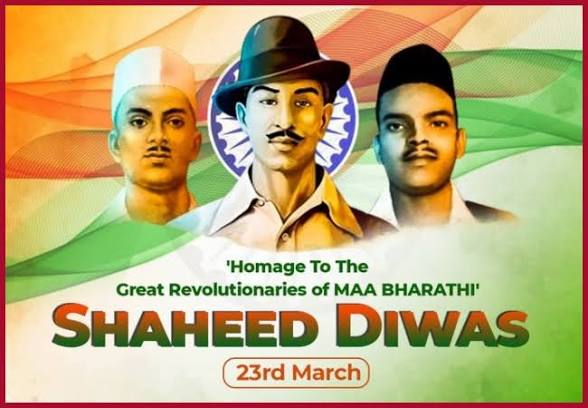
Why Shahid Diwas Is Celebrated in India: History, Date, Significance, Martyrs’ Biography

Why Shahid Diwas Is Celebrated in India: Full History, Date, Significance, and Martyrs’ Biography
Shahid Diwas is celebrated in India on March 23 to honor the sacrifice of Bhagat Singh, Shivaram Rajguru, and Sukhdev Thapar, who were executed by the British in 1931. The day remembers their courage, revolutionary role in India’s freedom struggle, and lasting influence on patriotism, youth activism, and national memory. In 2026, the Government of India and public institutions marked Shaheed Diwas with tributes and nationwide remembrance activities.
Quick Profile Table
| Topic | Details |
|---|---|
| Event name | Shahid Diwas / Shaheed Diwas |
| Observed in India on | March 23 |
| Why it is observed | To remember the martyrdom of Bhagat Singh, Rajguru, and Sukhdev |
| Historical event | Execution of the three revolutionaries by the British in 1931 |
| Main theme | Sacrifice, patriotism, courage, anti-colonial resistance |
| Key personalities | Bhagat Singh, Shivaram Hari Rajguru, Sukhdev Thapar |
| National relevance | Honors India’s freedom struggle and revolutionary martyrs |
| 2026 observance | Tributes by the Prime Minister and nationwide Shaheed Diwas activities, including padyatras and public remembrance events |
Introduction
Shahid Diwas is one of the most emotionally powerful remembrance days in India. It is not just a date on the calendar or a ceremonial observance. It is a national moment of memory, gratitude, and reflection. Every year on March 23, India remembers Bhagat Singh, Shivaram Rajguru, and Sukhdev Thapar, three young revolutionaries whose execution by the British colonial government became one of the defining episodes of the freedom struggle. Their deaths did not silence their message. Instead, their martyrdom made them permanent symbols of sacrifice and resistance in Indian history.
In 2026, Shahid Diwas remained highly visible in India’s public calendar. Official government communication recorded tributes to Bhagat Singh, Rajguru, and Sukhdev on Shaheed Diwas, while public programs and nationwide activities were organized to commemorate their sacrifice. That fresh attention explains why many readers are searching not only for the date and significance of the day, but also for the biographies of the martyrs at the center of it.
This article explains why Shahid Diwas is celebrated in India, the full historical background behind the observance, the date and significance of the day, and the life stories of Bhagat Singh, Rajguru, and Sukhdev. It is written in a biography-friendly format so readers can understand both the event and the people whose courage gave the day its meaning.
What Is Shahid Diwas in India?
Shahid Diwas, also written as Shaheed Diwas, means Martyrs’ Day. In the Indian context, the phrase can refer to more than one remembrance day in the year. However, the March 23 observance is specifically associated with Bhagat Singh, Rajguru, and Sukhdev, who were executed in 1931 during British rule. Government and cultural sources consistently identify this day as a national tribute to their courage and martyrdom.
That detail matters because many people search “Martyrs’ Day in India” and find different dates. The March 23 observance is widely known as Shahid Diwas because it commemorates the sacrifice of these three revolutionaries, whose names have become inseparable from the history of anti-colonial resistance. In recent official communication, the Prime Minister’s tribute on March 23, 2026 explicitly honored Bhagat Singh, Rajguru, and Sukhdev on Shaheed Diwas, confirming the continuing national significance of the day.
Why Shahid Diwas Is Celebrated in India
Shahid Diwas is celebrated in India to honor the memory of Bhagat Singh, Rajguru, and Sukhdev, whose execution became a landmark moment in the independence movement. The day is observed because their martyrdom came to symbolize fearless resistance to colonial rule, deep commitment to national freedom, and the willingness of young revolutionaries to sacrifice their lives for a larger cause.
The importance of Shahid Diwas lies in both history and emotion. Historically, it recalls a real and painful act of colonial punishment. Emotionally, it preserves the idea that freedom was won not only through negotiations and speeches, but also through sacrifice, imprisonment, radical activism, and death. That is why the observance continues to resonate so strongly with students, teachers, historians, political leaders, and ordinary citizens. It is a day when India remembers that some of its greatest national icons died very young, but left behind ideas that outlived the empire that condemned them. This interpretation follows directly from the official framing of the day as a tribute to their courage and martyrdom.
Date of Shahid Diwas in India
Shahid Diwas connected to Bhagat Singh, Rajguru, and Sukhdev is observed on March 23 each year. In 2026, official government communication and public observances on March 23, 2026 once again marked the day with tributes and remembrance activities.
The date is tied to the execution of the three revolutionaries in 1931. Because of that historical connection, March 23 has become fixed in India’s remembrance culture as a day dedicated to their martyrdom. Whenever people ask why Shahid Diwas is celebrated, the answer begins with this date, but it cannot end there. The date matters because of what happened, who it happened to, and what their deaths came to mean in the national imagination.
The Historical Background of Shahid Diwas
To understand Shahid Diwas properly, it helps to understand the period in which Bhagat Singh, Rajguru, and Sukhdev lived. Early twentieth-century India was under British colonial rule. Nationalist politics had many streams: constitutional reform, mass protest, social reform, underground activism, labor organizing, and revolutionary action. While some leaders favored gradual or nonviolent methods, others believed that direct revolutionary resistance was necessary to challenge the brutality of colonial power.
Bhagat Singh, Rajguru, and Sukhdev emerged from that revolutionary tradition. They were associated with organizations and networks that saw British rule not merely as foreign administration, but as an unjust and violent system that had to be confronted with bold action. Their generation had witnessed repression, police crackdowns, and the use of state violence against Indian political aspirations. In that atmosphere, revolutionary politics gained appeal among many young people. The continuing national remembrance of the three men on Shaheed Diwas reflects how deeply that phase of the freedom struggle remains embedded in Indian historical memory.
Their execution in 1931 transformed them from important revolutionaries into immortal martyrs. Martyrdom, in a national context, turns biography into symbol. Once that happens, a person is remembered not only for what they did, but for what they come to represent. Bhagat Singh came to represent revolutionary courage and intellectual defiance. Rajguru came to represent youthful bravery and action. Sukhdev came to represent commitment, discipline, and loyalty to the cause. Over time, Shahid Diwas became the yearly moment when India formally recalls all three together. That symbolic interpretation is consistent with official descriptions of the day as a tribute to their “courage” and “martyrdom.”
How Shahid Diwas Is Celebrated in India
Shahid Diwas is observed through tributes, public remembrance, speeches, educational programs, processions, patriotic songs, essay competitions, and historical discussions. Schools and colleges often use the day to teach students about the freedom struggle and the lives of Bhagat Singh, Rajguru, and Sukhdev. Cultural institutions and public bodies also organize commemorative events. Government communication from recent years shows that national programs have been held at multiple locations to remember the martyrs.
In 2026, the observance included official tributes and nationwide activities. Press Information Bureau releases recorded that MY Bharat planned nationwide Shaheed Diwas Padyatra 2026 across 763 districts under the theme “MY Bharat, My Responsibility.” That makes it clear that Shahid Diwas in India is not treated as a mere symbolic date, but as an active civic remembrance with public participation.
The modern celebration of Shahid Diwas usually combines mourning with inspiration. It is solemn because it remembers execution and sacrifice. But it is also motivational, because the martyrs are presented as role models of courage, purpose, and national commitment. That dual tone is one reason the day stays relevant. It is not only about grief; it is about moral energy.
Significance of Shahid Diwas in Indian History
The significance of Shahid Diwas lies in at least four major areas: freedom struggle memory, youth inspiration, national identity, and political morality.
First, it preserves the memory of the freedom struggle. India’s independence was not achieved through one method or one leader. It was the result of many streams of struggle, including revolutionary action. Shahid Diwas ensures that the contribution of armed and underground revolutionaries is not erased from public memory.
Second, it inspires young people. Bhagat Singh, Rajguru, and Sukhdev were young men. Their age is central to their legacy. They are remembered not as distant elder statesmen but as youthful figures who acted with unusual courage. That is why student communities often connect strongly with Shahid Diwas. The day reminds the country that youth can carry conviction, clarity, and sacrifice.
Third, Shahid Diwas strengthens national identity. Nations are held together not only by constitutions and institutions, but also by shared memory. Public remembrance of martyrs creates a common moral vocabulary: sacrifice, bravery, resistance, dignity, and love of country. Shahid Diwas is one of the days when India actively rehearses that vocabulary in public life.
Fourth, the day raises questions of political morality. Martyrs are remembered because they placed ideals above personal safety. Their memory quietly asks every generation what kind of country it wants to build and what sacrifices it is willing to make for justice, equality, and freedom. This is an inference, but it follows naturally from the public framing of the day around courage, remembrance, and responsibility.
Biography of Bhagat Singh
Bhagat Singh is the most widely recognized among the three martyrs remembered on Shahid Diwas. He is celebrated across India as one of the most iconic revolutionaries of the anti-colonial struggle. His public image combines bravery, intelligence, political awareness, and a rare fearlessness in the face of death. Official and public tributes on Shaheed Diwas consistently place his name first, reflecting his enormous symbolic place in Indian history.
Bhagat Singh was born in 1907 in Punjab, in a family shaped by nationalist sentiment. From an early age, he grew up in an environment where colonial rule was not seen as normal or acceptable. That atmosphere helped shape his political consciousness. He did not emerge suddenly as a revolutionary; he grew into one through exposure to public struggle, repression, and nationalist thought. Although different sources summarize his life differently, his historical importance is clear and widely acknowledged in both official remembrance and major reference works.
As he matured, Bhagat Singh became associated with revolutionary groups that believed British rule had to be confronted directly. He is remembered not only as a man of action, but also as a thinker. His popularity endures because he was more than a dramatic symbol. He represented a serious political mind shaped by anti-imperial ideas, questions of justice, and the dream of a free India built on dignity and equality. This interpretive point is widely reflected in how he is remembered in Indian public culture, even when brief official tributes focus mainly on his martyrdom.
Bhagat Singh’s fame rose sharply after his involvement in revolutionary actions against British authorities. He became a powerful public figure because he faced arrest and trial with composure and conviction. His courtroom presence, prison protest, and refusal to appear afraid helped transform him into a national icon even before his death. By the time he was executed, he had already become a symbol of youthful defiance. After his death, that image only grew stronger.
What makes Bhagat Singh’s biography so enduring is the combination of action and thought. Many heroes are remembered for bravery alone. Bhagat Singh is remembered for bravery plus political depth. That is why his image continues to appeal across generations, ideologies, and regions. On Shahid Diwas, his name still carries extraordinary emotional force because he represents the idea that freedom must be pursued with both courage and clarity.
Biography of Shivaram Hari Rajguru
Shivaram Hari Rajguru, commonly known as Rajguru, is one of the three martyrs honored on Shahid Diwas. While he is often remembered alongside Bhagat Singh and Sukhdev, his own contribution deserves individual attention. Rajguru came from Maharashtra and became closely involved in revolutionary activism at a young age. His place in Indian memory rests on courage, loyalty to the cause, and willingness to face death without retreat.
Rajguru is remembered as a committed revolutionary who worked in close association with fellow freedom fighters in anti-colonial struggle. His youth is especially striking. Like Bhagat Singh and Sukhdev, he belonged to a generation that did not wait for old age to act. He entered a dangerous political world early, fully aware that the path of revolutionary resistance could end in prison or execution.
In public history, Rajguru’s name often appears as part of the unbreakable trio of Bhagat Singh, Rajguru, and Sukhdev. That collective remembrance is powerful, but it can sometimes flatten his individuality. Rajguru was not simply “the second name” in a slogan. He was a historical actor in his own right: a young man shaped by anti-colonial conviction and willing to stake everything on freedom. Shahid Diwas gives him back that individuality by ensuring his name is spoken every year in the national public sphere.
His martyrdom carries special importance because it reminds India that the revolutionary movement was not confined to one province or linguistic community. Rajguru’s origins in Maharashtra and his place in a wider revolutionary network reflect the pan-Indian character of resistance to colonial rule. That broader significance helps explain why the March 23 observance speaks to the whole nation, not to a single state or region.
Biography of Sukhdev Thapar
Sukhdev Thapar, usually remembered simply as Sukhdev, was the third member of the martyr trio commemorated on Shahid Diwas. He is often described in public memory as disciplined, committed, and unwavering in his dedication to the cause of freedom. Like Bhagat Singh and Rajguru, he became a symbol not because he lived long, but because he lived with purpose and died for an idea larger than himself.
Sukhdev’s role in the revolutionary movement was substantial. He was not a marginal follower swept up by larger personalities. Historical memory places him firmly among the leading young revolutionaries of his generation. His inclusion beside Bhagat Singh and Rajguru in every official tribute is not ceremonial accident. It reflects his recognized contribution to the struggle and the equal importance of his sacrifice.
In many ways, Sukhdev represents the less theatrical but equally essential side of revolutionary politics: organizational seriousness, commitment, and endurance. Popular memory often gravitates to the most charismatic figure, which in this trio is usually Bhagat Singh. But Shahid Diwas resists that simplification by binding all three names together. It reminds the country that historical sacrifice is often collective. Movements are built not only by the most famous face, but also by those who stand beside it with equal courage.
Sukhdev’s martyrdom continues to matter because it affirms a hard truth about freedom struggles: even the most committed and disciplined young lives can be cut short by unjust power, yet still become a permanent source of inspiration. That is part of why March 23 remains such a meaningful date.
Why Bhagat Singh, Rajguru, and Sukhdev Are Remembered Together
Bhagat Singh, Rajguru, and Sukhdev are remembered together because their lives and deaths were bound together in the history of the revolutionary movement and in the act of martyrdom that gave Shahid Diwas its meaning. Official tributes, cultural programs, and public commemorations consistently name the three together, reinforcing a collective memory rather than isolating one figure from the others.
This collective remembrance matters for two reasons. First, it reflects historical truth: they were part of the same phase of anti-colonial struggle and were executed in connection with the same broad historical episode. Second, it carries moral meaning. Remembering them together tells India that sacrifice in the freedom struggle was collaborative. No martyr stood completely alone. The national story was written through networks of trust, friendship, ideological commitment, and shared risk.
That is why Shahid Diwas is not only about hero worship. It is about comradeship. It honors the bond between people who were willing to die for the same dream.
Shahid Diwas and Youth in India
One of the biggest reasons Shahid Diwas remains so relevant is its connection to youth. Bhagat Singh, Rajguru, and Sukhdev are not remembered as remote historical elders. They are remembered as young people who acted with astonishing seriousness. That fact gives the day unusual force in schools, universities, and youth-focused civic programs. The 2026 nationwide Shaheed Diwas Padyatra initiative under the theme “MY Bharat, My Responsibility” shows how public institutions continue linking the day to civic-minded youth participation.
Young readers often connect strongly with Shahid Diwas because it asks a difficult question: what does conviction look like when the stakes are real? The martyrs did not merely express patriotic feeling. They made choices under danger. That distinction gives their memory lasting power. In modern times, Shahid Diwas encourages not violence, but seriousness of purpose. It invites the younger generation to think beyond comfort, distraction, and self-interest.
This is one reason the day remains educationally important. It gives teachers and parents a way to discuss character, courage, public duty, and the cost of freedom in a concrete historical frame.
Shahid Diwas in Schools, Colleges, and Public Institutions
Across India, Shahid Diwas is commonly observed in educational institutions through assemblies, speeches, debates, patriotic performances, essay competitions, and historical presentations. Public institutions may organize wreath-laying ceremonies, exhibitions, and remembrance events. Government-linked sources show that multiple programs have been held on or around Shaheed Diwas to honor the martyrs and educate the public about their contribution.
This institutional observance matters because public memory does not survive automatically. It has to be taught, repeated, and renewed. Shahid Diwas survives as a meaningful national day because India keeps returning to it in classrooms, public speeches, and cultural remembrance. Every fresh generation has to be told why March 23 matters. The observance itself is part of that teaching process.
Difference Between Shahid Diwas and Other Martyrs’ Days in India
A useful clarification for readers is that India observes more than one day connected to the memory of martyrs. The March 23 Shahid Diwas specifically remembers Bhagat Singh, Rajguru, and Sukhdev. That is the observance discussed in this article and the one prominently marked in 2026 official communication.
This distinction is important for SEO and clarity because many users search “Martyrs’ Day in India” without realizing that the phrase can point to different historical commemorations. For biography and history content, being specific about the March 23 observance helps match real search intent and avoids confusion.
The Emotional Legacy of Shahid Diwas
There are many national remembrance days, but Shahid Diwas has a particularly emotional hold on Indian public memory. One reason is the youth of the martyrs. Another is the dramatic injustice of colonial execution. But there is also something else: the moral clarity of sacrifice. Bhagat Singh, Rajguru, and Sukhdev died before independence, before recognition, before reward. They did not live to enjoy the nation they fought for. That gives their memory a tragic dignity that people continue to feel deeply.
This is why their names are still invoked in patriotic poetry, speeches, public slogans, films, textbooks, and commemorative writing. Shahid Diwas is powerful because it turns remembrance into a moral encounter. It asks the living to remember the dead not as decorative heroes, but as people whose unfinished dreams still demand attention.
Shahid Diwas in 2026: Why It Is Trending
Shahid Diwas in 2026 drew visible official and public attention. The Prime Minister paid tribute to Bhagat Singh, Rajguru, and Sukhdev on March 23, 2026, and government-linked announcements highlighted nationwide Shaheed Diwas Padyatra activities across hundreds of districts. These fresh observances are a major reason the topic is trending in search right now.
Trending interest around Shahid Diwas usually spikes when there are high-profile tributes, school programs, social media remembrance, and public events. In 2026, those conditions were clearly present. That makes biography-style content especially useful, because many readers searching today want more than a one-line definition. They want the history, the date, the significance, and the life stories behind the observance.
Conclusion
Shahid Diwas is celebrated in India on March 23 to honor the martyrdom of Bhagat Singh, Shivaram Rajguru, and Sukhdev Thapar, three revolutionaries whose execution in 1931 became a defining moment in the freedom struggle. The day matters because it preserves the memory of sacrifice, keeps revolutionary history alive in public consciousness, and reminds India that freedom came at a human cost.
Its meaning is not limited to the past. Shahid Diwas still speaks to the present. It inspires young people, strengthens national memory, and provides a moral vocabulary of courage, responsibility, and commitment. Official tributes and nationwide remembrance activities in 2026 show that the day remains deeply relevant in India’s civic life.
For readers asking why Shahid Diwas is celebrated in India, the clearest answer is this: it is celebrated because a nation chooses not to forget those who gave their lives for its freedom. Bhagat Singh, Rajguru, and Sukhdev are remembered not only as historical figures, but as permanent symbols of sacrifice and patriotic courage. That is why their story still matters, and why March 23 still carries such emotional and national significance.
FAQ
Why is Shahid Diwas celebrated in India?
Shahid Diwas is celebrated in India to honor the sacrifice of Bhagat Singh, Rajguru, and Sukhdev, who were executed by the British in 1931 during the freedom struggle.
On which date is Shahid Diwas observed in India?
This Shahid Diwas is observed on March 23 every year. In 2026, official tributes were made on March 23, 2026.
Who are remembered on Shahid Diwas?
Bhagat Singh, Shivaram Rajguru, and Sukhdev Thapar are remembered on Shahid Diwas.
What is the significance of Shahid Diwas?
The day honors revolutionary sacrifice, preserves the memory of India’s anti-colonial struggle, and inspires patriotism and civic responsibility.
How is Shahid Diwas celebrated in India?
It is observed through tributes, public events, school programs, cultural activities, speeches, and remembrance initiatives such as the 2026 nationwide Shaheed Diwas Padyatra.
Is Shahid Diwas the same as every Martyrs’ Day in India?
No. In India, “Martyrs’ Day” can refer to more than one observance. The March 23 Shahid Diwas specifically commemorates Bhagat Singh, Rajguru, and Sukhdev.
