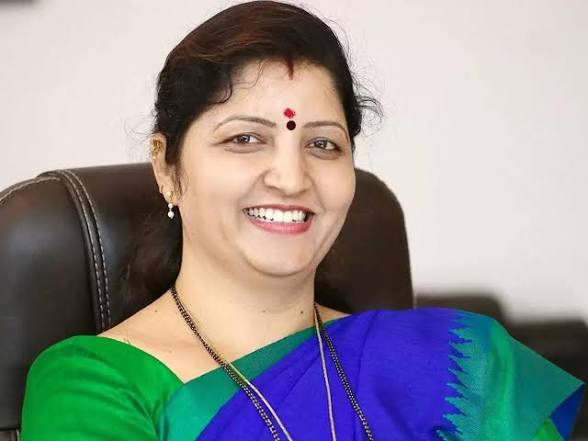
Rupali Chakankar Biography: Age, Career, Political Journey, Husband, Party and Latest News
Rupali Chakankar is a well-known Indian politician from Maharashtra and a prominent face in the Nationalist Congress Party. Over the years, she has built a public image around grassroots politics, women’s issues, party organization, and state-level leadership. She is widely recognized for serving as the Chairperson of the Maharashtra State Commission for Women, a position she first took in October 2021 and was re-appointed to in October 2024.
Her name has remained relevant in Maharashtra politics because she combines party work with public advocacy on women’s rights, social issues, and political representation. In recent days, she has also drawn fresh public attention after political controversy linked to the Ashok Kharat case, which has kept her in the news cycle as of March 20, 2026.
This detailed biography looks at Rupali Chakankar’s early life, age, family, husband, political career, party affiliation, role in public life, leadership style, and latest updates.
Quick Profile
| Field | Details |
|---|---|
| Full Name | Rupali Chakankar |
| Known For | Indian politician and women’s rights public figure |
| Date of Birth | May 28, 1982 |
| Age | 43 years old as of March 20, 2026 |
| Birthplace | Pune, Maharashtra, India |
| Nationality | Indian |
| Profession | Politician |
| Political Party | Nationalist Congress Party (NCP), Ajit Pawar faction |
| Current Role | Chairperson, Maharashtra State Commission for Women |
| First Appointed | October 19, 2021 |
| Re-appointed | October 2024 |
| Spouse | Nilesh Chakankar |
Who Is Rupali Chakankar?
Rupali Chakankar is an Indian politician from Maharashtra who has become especially visible through her work in state politics and women-centered public institutions. She is associated with the Nationalist Congress Party and has held an influential role in women’s political mobilization within the party. Her public identity is tied not only to electoral politics but also to advocacy, representation, and governance around women’s concerns in Maharashtra.
For many people searching online, the interest in Rupali Chakankar comes from three major angles. The first is her political journey in Maharashtra. The second is her leadership position in the Maharashtra State Commission for Women. The third is her visibility in current affairs due to recent political controversy and media attention. That combination makes her biography important for readers who want both background and updated information.
Early Life and Background
Rupali Chakankar was born on May 28, 1982, in Pune, Maharashtra. Her roots in Maharashtra are central to her public persona. Pune has long been one of the key political, social, and intellectual centers of the state, and many leaders who emerge from the region carry strong regional recognition into broader state politics. In Chakankar’s case, that local grounding helped shape her long association with public work and political organization.
Although not every aspect of her childhood and education is consistently documented in mainstream public sources, her emergence as a public leader suggests years of involvement in Maharashtra’s political networks, especially in spaces linked to women’s leadership and party-building. Like many politicians who rise through state structures rather than purely national celebrity, her story is one of gradual visibility rather than overnight fame.
Her public image has usually reflected a combination of organization-level politics and issue-based activism. That matters in biography writing because it distinguishes her from leaders known only through elections or headline-driven controversy. She has instead developed recognition through sustained participation in political and institutional roles.
Rupali Chakankar Age
Rupali Chakankar was born on May 28, 1982. Based on that date, she is 43 years old as of March 20, 2026.
Age is often one of the most searched biography details, especially for politicians whose public visibility grows quickly. In Chakankar’s case, her age also reflects a relatively young leadership profile compared to many long-established state politicians. This has likely helped her connect with both party workers and audiences interested in a newer generation of political figures in Maharashtra.
Family and Husband
Publicly available sources identify Rupali Chakankar’s spouse as Nilesh Chakankar. Beyond that, detailed family information is not extensively documented in the reliable public sources reviewed here, which is fairly common for Indian regional political biographies unless the family itself is directly active in public office or business.
In biography writing for AdSense-friendly publishing, it is always better to stay with verified information instead of adding rumors or unsupported personal details. So while search interest may exist around her family life, the safest and strongest editorial approach is to mention what is confirmed and avoid speculative claims.
That also makes the article more trustworthy. Search engines and readers increasingly value biographical content that is factual, careful, and free from sensational filler. In the case of Rupali Chakankar, the publicly confirmed family detail most often referenced is her marriage to Nilesh Chakankar.
Political Party and Ideological Identity
Rupali Chakankar is associated with the Nationalist Congress Party. Current public sources identify her with the faction led by Ajit Pawar, which is important because the NCP has undergone factional change in recent years. Mentioning the specific faction matters for updated biography content and helps avoid outdated summaries that treat the party as politically unchanged.
Her role within the NCP has not been limited to symbolic presence. She has also been identified as serving in a leadership position connected to the women’s wing of the party in Maharashtra. This aligns with her larger public identity as a politician whose political relevance is strongly linked to women’s representation and advocacy.
In practical terms, this means her career sits at the intersection of three spheres: political party work, women-centered public leadership, and state-level issue intervention.
That mix has given her a distinctive profile in Maharashtra politics. She is not known only as a party spokesperson or only as a commission chair. Instead, she has operated across both political and institutional platforms.
Rise in Maharashtra Politics
Rupali Chakankar’s rise in Maharashtra politics appears to have been built through organization work, public outreach, and her increasing visibility in women-related political spaces. This route is significant because many regional politicians spend years cultivating networks inside a party before reaching a more prominent appointment.
Her political growth reflects a broader pattern in Indian state politics where women leaders often build influence first through party organization, social mobilization, and issue advocacy before entering major statutory or government-linked posts. Chakankar’s eventual appointment to a top role in the Maharashtra State Commission for Women fits that pattern.
One of the key reasons her biography is widely searched today is that she represents both political ambition and institutional authority. Readers are often interested in how a politician moves from party ranks into a position that gives direct influence over public complaints, women’s welfare questions, and policy-facing interventions. Her career provides exactly that narrative arc.
Chairperson of Maharashtra State Commission for Women
A major turning point in Rupali Chakankar’s public career came when she was appointed Chairperson of the Maharashtra State Commission for Women on October 19, 2021. This appointment significantly elevated her public visibility because the commission plays a recognizable role in handling women-related grievances, recommending action, raising awareness, and engaging the government on gender justice issues in Maharashtra.
The Maharashtra State Commission for Women is a statutory body established under Maharashtra law. Its role includes examining issues affecting women, addressing complaints, recommending legal or policy intervention, and promoting the protection and welfare of women across the state. As chairperson, Chakankar became one of the most visible institutional faces on such issues in Maharashtra.
This appointment mattered for her biography in several ways.
First, it gave her a platform beyond party politics.
Second, it placed her in a quasi-public accountability role.
Third, it made her part of regular media coverage whenever women’s rights issues or major gender-related incidents emerged in Maharashtra.
Those factors widened public curiosity about her background, leadership style, and political affiliations.
Re-appointment and Continued Relevance
Public sources indicate that Rupali Chakankar was re-appointed to the position in October 2024. Re-appointment to such a role usually signals continued political trust and institutional relevance, though it can also attract scrutiny from rivals and critics depending on the political climate.
Her continued tenure suggests that she remained an important figure not only in the NCP ecosystem but also in the wider structure of women-focused state leadership. In Indian politics, re-appointments often become a story in themselves because they indicate ongoing backing from influential decision-makers.
For biography readers, this is a key point: Rupali Chakankar is not merely someone who briefly held office. She has maintained visibility and relevance across multiple years, which strengthens her profile as a durable political figure in Maharashtra.
Public Role and Women’s Issues
As chairperson of the Maharashtra State Commission for Women, Rupali Chakankar’s public responsibilities have extended into many social and legal issues affecting women. The commission itself is designed to respond to rights violations, recommend steps to authorities, assist in cases of discrimination or harassment, and push for stronger protection mechanisms.
Because of that, Chakankar’s role has often required public reactions to high-profile incidents, interaction with government agencies, and visible statements on women’s safety. That kind of work can be politically delicate. It requires balancing institutional seriousness, public empathy, legal sensitivity, and sometimes party-linked pressure.
The office also naturally brings media attention. Whenever there is a major case involving crimes against women, public pressure often turns toward the state women’s commission. That has made Chakankar one of the recognized names in Maharashtra’s public discourse around gender justice.
Leadership Style and Public Perception
Rupali Chakankar’s leadership style, as inferred from her public roles, appears rooted in visibility, party-backed authority, and issue-oriented engagement. Politicians who hold commission roles must often function in both symbolic and operational ways. They are expected to represent institutional concern while also showing that action is being taken.
Public perception of such figures can shift quickly. Supporters may see them as accessible and effective on social issues, while critics may question whether they are acting independently enough from party interests. That tension is common for leaders serving at the overlap of politics and statutory responsibility.
In Chakankar’s case, her profile has benefited from recognition as a women-centered public leader, but it has also faced sharper public scrutiny whenever controversy touches institutions connected to women’s safety. That dynamic is especially relevant in understanding the latest news about her.
Latest News About Rupali Chakankar
As of March 20, 2026, Rupali Chakankar is in the news due to controversy linked to the arrest of Nashik-based astrologer Ashok Kharat in a rape case. Multiple reports say the case has created a political storm in Maharashtra because of Kharat’s alleged links to powerful figures and institutions. These reports also note that Chakankar has faced criticism because she is described as a trustee of a trust headed by Kharat.
Recent reporting indicates that opposition voices and even some political figures have demanded that she step down from her role as chairperson of the Maharashtra State Commission for Women, arguing that her position could become a matter of concern in the context of an investigation tied to women’s safety allegations.
At the same time, the Maharashtra government has constituted a Special Investigation Team to probe the allegations against Kharat. That move has added to the scale of the story and increased public attention around everyone linked to the matter.
For biography readers, the most important editorial point is this: Chakankar is currently a politically relevant figure whose name is appearing not just in profile pages but in active news reporting. That makes current, carefully worded biography content especially important.
Why Her Name Is Trending
There are a few reasons Rupali Chakankar’s name trends in search and media discussions.
The first is her official role. Any chairperson of a women’s commission naturally attracts interest in serious public cases.
The second is her political affiliation and visibility in Maharashtra’s power circles.
The third is the controversy surrounding the Ashok Kharat case, which has created a high-intensity mix of crime reporting, politics, institutional accountability, and public outrage.
Trending interest often leads users to search basic biography terms such as age, husband, party, education, career, and latest news. That is exactly why a well-optimized biography article works well for organic traffic: it answers evergreen questions while also acknowledging current developments.
Career Significance in Maharashtra Politics
Rupali Chakankar’s larger significance lies in how she fits into Maharashtra’s political structure. She represents the type of leader who gains importance through both organizational politics and institutional appointment. That matters because such leaders often have more long-term influence than public attention first suggests.
Her relevance can be understood in three layers.
At the party level, she is associated with NCP leadership structures.
At the state level, she occupies or has occupied a recognized women’s policy and rights platform.
At the media level, she becomes part of the public conversation whenever gender-related institutional accountability is discussed.
This layered role is one reason biography content about her can perform well in search. Readers are not interested in only one dimension of her career. They want the full picture.
Importance of Her Commission Role
The Maharashtra State Commission for Women is more than a ceremonial body. It exists to examine and respond to issues related to women’s protection, equality, and justice in the state. The commission can receive complaints, highlight failures of enforcement, recommend reforms, and advocate on issues affecting women’s rights.
Because the commission has both symbolic and practical significance, the identity of its chairperson matters a great deal. A chairperson is expected to carry public trust, intervene visibly in serious cases, and represent the state’s responsiveness to women’s concerns.
That explains why Chakankar’s biography cannot be treated as just a routine politician profile. Her office gives her a wider public responsibility than many other party leaders. In search terms, that expands the range of people interested in her biography, from political followers to general news readers.
Challenges of Public Office
Holding a position like chairperson of a state women’s commission comes with heavy challenges. Every major case involving violence, abuse, harassment, or institutional failure can generate calls for comment, action, and accountability. Public trust can be strengthened by timely intervention, but it can also be damaged if controversy creates doubts about impartiality.
Rupali Chakankar’s current media moment illustrates that clearly. The Ashok Kharat case has amplified debate not only around the alleged crimes themselves but also around relationships, associations, and political accountability.
This does not erase her broader career, but it does shape how the public currently views her. Biographies that ignore this would feel incomplete. Biographies that sensationalize it without context would feel unreliable. The best approach is to include it factually and carefully, which is what this article does.
Public Image Beyond Headlines
It is easy for any politician’s profile to get reduced to the latest controversy. But a fuller view of Rupali Chakankar shows a politician whose public image has been built over time through party work and institutional leadership.
That does not mean criticism should be ignored. It means the biography should be proportionate. Her story includes party leadership, women’s issues, commission-level authority, and now an especially intense round of media scrutiny. All of those pieces belong in an accurate portrait.
This is also the kind of balanced tone that helps a page appear more credible for readers, advertisers, and search engines. Sensational writing might generate clicks, but a well-structured biography tends to have stronger long-term value.
Conclusion
Rupali Chakankar is an Indian politician from Maharashtra who has built a recognizable public career through the Nationalist Congress Party and her leadership role in the Maharashtra State Commission for Women. Born on May 28, 1982, in Pune, she has emerged as a prominent state-level figure associated with women’s issues, political organization, and public advocacy. She is married to Nilesh Chakankar and is widely known for serving as the chairperson of the women’s commission since October 2021, with a re-appointment in October 2024.
As of March 20, 2026, her public profile is being shaped not only by her political and institutional work but also by controversy linked to the Ashok Kharat case, which has placed her under renewed media and political scrutiny.
For anyone searching for Rupali Chakankar biography, the key takeaway is simple: she is not a minor background figure. She is a significant Maharashtra political personality whose name matters in both ongoing public life and current news.
FAQs
Who is Rupali Chakankar?
Rupali Chakankar is an Indian politician from Maharashtra associated with the Nationalist Congress Party and known for serving as the Chairperson of the Maharashtra State Commission for Women.
What is Rupali Chakankar’s age?
She was born on May 28, 1982, which makes her 43 years old as of March 20, 2026.
Who is Rupali Chakankar’s husband?
Publicly available sources identify her husband as Nilesh Chakankar.
Which party does Rupali Chakankar belong to?
She is associated with the Nationalist Congress Party, specifically the Ajit Pawar-led faction in current public references.
What is Rupali Chakankar known for?
She is known for her political role in Maharashtra and for serving as Chairperson of the Maharashtra State Commission for Women.
Why is Rupali Chakankar in the news in March 2026?
She is in the news because of controversy linked to the Ashok Kharat case, with reports noting criticism over her association with a trust connected to him and calls from some political figures for her resignation.