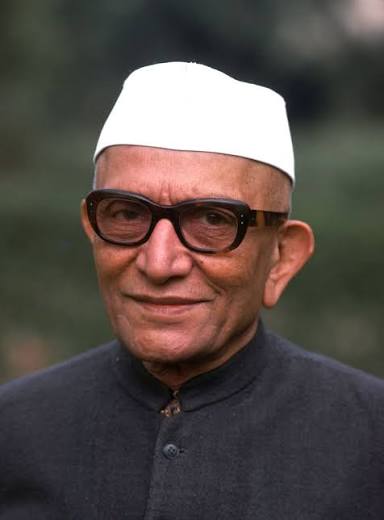
Morarji Desai Biography: The Life, Career, and Legacy of India’s Former Prime Minister

Morarji Desai Biography: The Life, Career, and Legacy of India’s Former Prime Minister
Morarji Desai Biography
Morarji Desai was an Indian politician, freedom fighter, statesman, and public administrator widely recognized as the fourth Prime Minister of India. Known for his integrity, discipline, and commitment to democratic values, he became one of the most respected political leaders in Indian history.
Over the course of his long political career, Morarji Desai served in several important positions, including Chief Minister of Bombay State, Deputy Prime Minister of India, Finance Minister, and eventually Prime Minister. His leadership during a critical period in India’s democratic journey earned him a lasting place in the country’s political history.
Many people continue searching online for information about Morarji Desai’s age, family, political career, achievements, and legacy.
His journey from a civil servant and freedom fighter to becoming India’s Prime Minister serves as an inspiration to generations of leaders and public servants.
In this article, we explore everything you need to know about Morarji Desai, including his early life, education, political journey, family, achievements, and lasting influence on India.
Morarji Desai Profile Summary
| Full Name | Morarji Ranchhodji Desai |
|---|---|
| Popular Name | Morarji Desai |
| Date of Birth | February 29, 1896 |
| Age at Death | 99 Years |
| Birthplace | Bhadeli, Gujarat, India |
| Nationality | Indian |
| Profession | Politician, Freedom Fighter |
| Known For | Fourth Prime Minister of India |
| Political Party | Janata Party (Formerly Indian National Congress) |
| Date of Death | April 10, 1995 |
Early Life and Background
Morarji Desai was born on February 29, 1896, in Bhadeli village, located in present-day Gujarat, India.
He was raised in a disciplined family environment where education, honesty, and public service were highly valued. His father was a school teacher, and these early influences helped shape the principles that guided his entire life.
From a young age, Desai displayed strong leadership qualities and a commitment to personal discipline.
These values later became central to his political philosophy and public service career.
Education
Education played a significant role in Morarji Desai’s development.
He completed his early schooling in Gujarat before pursuing higher education at Wilson College in Mumbai.
During his academic years, he demonstrated intelligence, discipline, and a strong interest in public affairs.
His educational background provided a foundation for his future career in administration and politics.
Early Career and Civil Service
Before entering politics, Morarji Desai worked in the civil service under British India.
He served as a Deputy Collector in the Bombay Presidency and gained valuable experience in governance and administration.
Although he enjoyed a stable government career, he eventually resigned in response to India’s growing independence movement.
His decision reflected his commitment to national service and freedom.
Participation in India’s Freedom Struggle
One of the most important chapters of Morarji Desai’s life was his involvement in India’s independence movement.
Inspired by Mahatma Gandhi and other nationalist leaders, he joined the struggle against British colonial rule.
During this period, he actively participated in:
- Civil disobedience movements
- Nationalist campaigns
- Political mobilization
- Freedom movement activities
His dedication to India’s independence resulted in multiple arrests and periods of imprisonment.
These experiences strengthened his reputation as a committed freedom fighter.
Political Career
After India gained independence in 1947, Morarji Desai continued serving the nation through politics.
His administrative abilities and leadership skills quickly earned him important responsibilities.
Over the years, he held several major positions including:
- Chief Minister of Bombay State
- Finance Minister of India
- Deputy Prime Minister
- Prime Minister of India
His career reflected decades of service to the country.
Chief Minister of Bombay State
Morarji Desai served as the Chief Minister of Bombay State from 1952 to 1956.
During his tenure, he focused on:
- Administrative reforms
- Economic development
- Public welfare
- Infrastructure improvement
His leadership style emphasized discipline, accountability, and efficiency.
These qualities helped establish him as one of India’s most respected administrators.
Finance Minister of India
As Finance Minister, Morarji Desai played an important role in shaping India’s economic policies.
He introduced measures aimed at promoting fiscal discipline and economic stability.
His financial management approach reflected his belief in responsible governance and accountability.
Many observers regarded him as a principled and effective policymaker.
Becoming Prime Minister of India
One of the defining moments of Morarji Desai’s life came in 1977 when he became the Prime Minister of India.
Following the end of the Emergency period, the Janata Party won a historic electoral victory.
Desai became India’s first Prime Minister from a non-Congress government, marking a significant moment in the country’s democratic history.
His appointment demonstrated the strength and resilience of India’s democratic institutions.
Leadership as Prime Minister
As Prime Minister, Morarji Desai focused on:
- Restoring democratic institutions
- Strengthening civil liberties
- Promoting government accountability
- Encouraging political transparency
- Improving governance
His administration worked to reverse many policies associated with the Emergency period.
His commitment to democratic values remains one of his most celebrated achievements.
Family Life
Morarji Desai was married to Gujraben Desai.
The couple had children and maintained a family life grounded in simplicity and traditional values.
Despite holding high political office, Desai remained known for his modest lifestyle and personal discipline.
Family values played an important role throughout his life.
Awards and Recognition
Morarji Desai received numerous honors during his lifetime.
One of his most notable recognitions was the Bharat Ratna, India’s highest civilian award.
He also received Pakistan’s highest civilian honor, the Nishan-e-Pakistan, making him one of the few individuals honored by both countries.
These awards reflected his contributions to public service and international relations.
Leadership Style
Morarji Desai became known for:
- Honesty
- Discipline
- Simplicity
- Integrity
- Commitment to democracy
His leadership style earned admiration from supporters and political observers alike.
Many people regarded him as one of India’s most principled leaders.
Interesting Facts About Morarji Desai
- He was born on February 29, 1896.
- He served as India’s fourth Prime Minister.
- He was the first non-Congress Prime Minister of India.
- He participated in India’s freedom movement.
- He served as Finance Minister and Deputy Prime Minister.
- He received the Bharat Ratna.
- He received Pakistan’s Nishan-e-Pakistan.
- He lived to the age of 99.
Challenges and Success Story
Like many political leaders, Morarji Desai faced numerous challenges throughout his life.
His political journey included imprisonment during the freedom struggle, electoral battles, ideological conflicts, and national leadership responsibilities.
Despite these obstacles, he remained committed to his principles and public service.
His perseverance helped him become one of India’s most respected statesmen.
His story demonstrates the importance of integrity, dedication, and democratic values.
Legacy
Morarji Desai’s legacy remains deeply connected to India’s democratic development.
His role in restoring democratic institutions after the Emergency period continues to be remembered as one of his greatest contributions.
Many historians regard him as a symbol of political integrity and principled leadership.
His influence continues to inspire public servants, politicians, and citizens across India.
Conclusion
Morarji Desai was a distinguished Indian statesman whose life reflected dedication, discipline, and service to the nation.
From his participation in the freedom struggle to becoming India’s fourth Prime Minister, his journey demonstrated extraordinary commitment to democratic values and public welfare.
His achievements continue to inspire generations of Indians.
Today, Morarji Desai is remembered as one of the most respected leaders in India’s political history and a champion of integrity in public life.
