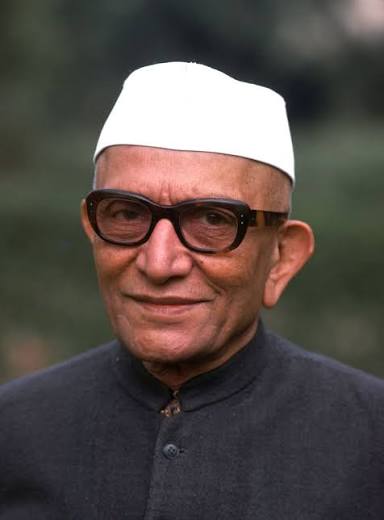
Morarji Desai Biography: The Life, Career, and Legacy of India’s Former Prime Minister

0

Morarji Desai Biography: The Life, Career, and Legacy of India’s Former Prime Minister

Quick Profile

Field Details
Full Name Morarji Ranchhodji Desai
Popularly Known As Morarji Desai
Date of Birth February 29, 1896
Place of Birth Bhadeli, Bombay Presidency, British India
Nationality Indian
Profession Politician, Statesman, Freedom Fighter
Famous For Being the 4th Prime Minister of India
Political Party Indian National Congress, later Janata Party
Years as Prime Minister 1977–1979
Father’s Name Ranchhodji Desai
Mother’s Name Vajiaben Desai
Spouse Gujraben Desai
Children Kanti Desai and others
Religion Hindu
Date of Death April 10, 1995
Age at Death 99 years
Known Legacy First non-Congress Prime Minister of India

Introduction

Morarji Desai remains one of the most important figures in Indian political history. Known for his discipline, honesty, simplicity, and firm leadership style, he played a central role in shaping India’s democratic journey during some of its most difficult years. He is remembered not only as a former Prime Minister of India but also as a freedom fighter, administrator, reformer, and a man of strong personal principles.

For many readers searching online for Morarji Desai biography, the interest often begins with one simple question: who exactly was Morarji Desai, and why is he still remembered decades after his time in office? The answer lies in a life that stretched across nearly a century and touched almost every major turning point in modern Indian history. He lived through British colonial rule, India’s freedom struggle, independence, nation-building, political crisis, and the rise of coalition politics.

Morarji Desai was the first Prime Minister of India who was not from the Indian National Congress after independence. That fact alone gave him a special place in history. His victory after the Emergency period marked a major turning point for Indian democracy. At a time when many people feared the weakening of democratic institutions, his leadership symbolized the return of constitutional rule and political accountability.

His image was different from many modern politicians. He was known for austere living, strict routine, personal discipline, and a belief in clean governance. Admirers saw him as a rare example of honesty in public life. Critics sometimes considered him rigid and uncompromising. Yet even those who disagreed with him often acknowledged that he was deeply committed to what he believed was right.

This detailed article explores Morarji Desai’s early life, family background, education, freedom struggle, political rise, role in independent India, prime ministership, major achievements, leadership style, controversies, death, and lasting legacy. The goal is to provide an easy-to-read, AdSense-friendly, informative biography for readers, students, researchers, and general audiences.

Early Life and Childhood

Morarji Ranchhodji Desai was born on February 29, 1896, in the village of Bhadeli, located in present-day Gujarat. At the time of his birth, India was under British rule, and the social and political environment of the country was very different from what it would become later. He was born into a modest Anavil Brahmin family with strong cultural values and a respect for education and discipline.

His father, Ranchhodji Desai, worked as a school teacher. His mother, Vajiaben, played an important role in shaping his character. Morarji grew up in a household where honesty, self-control, duty, and simplicity were valued. These family influences stayed with him throughout his life and later became part of his public identity.

As a child, he was known to be serious, disciplined, and focused. Unlike many who drift through their younger years without clear purpose, Morarji Desai developed habits of order and restraint very early. His later political life reflected the same personal traits that were visible in his youth: punctuality, hard work, and a deep sense of duty.

Growing up in colonial India also had a strong effect on him. He saw firsthand how Indians lived under foreign rule, how public institutions were controlled by the British, and how many educated Indians struggled with the question of service, dignity, and national identity. Though he did not immediately become a political activist in his youth, the atmosphere of the period certainly shaped his thinking.

His early years were not marked by luxury or privilege. Instead, they were marked by effort, discipline, and education. These experiences prepared him for a life of administration and leadership. The same values that guided him as a boy would later define him as one of the most disciplined political leaders in Indian history.

Education and Intellectual Development

Morarji Desai received his early schooling in Gujarat. He was an intelligent and hardworking student who took education seriously. At a time when access to higher learning was limited and highly valued, he stood out for his commitment to study and personal growth.

He later attended Wilson College in Bombay, one of the well-known educational institutions of that era. His years in Bombay exposed him to a broader world of ideas, administration, and public affairs. The city was an important intellectual and political center, and students there were often influenced by currents of nationalism, reform, and public debate.

His education did not simply provide academic knowledge. It helped shape his analytical mind and his faith in orderly governance. He believed in institutions, systems, and discipline. Even later, when he became active in mass politics, he retained the mindset of an administrator who respected rules and structure.

Unlike some leaders whose political influence came mainly from fiery speeches or popular emotional appeal, Morarji Desai’s strength came from seriousness, organization, and a reputation for personal integrity. Education strengthened these traits. It made him practical, methodical, and capable of handling administrative responsibilities.

This background would prove valuable in the next stage of his life, when he entered government service under the British administration.

Early Career in Civil Service

Before joining the freedom struggle fully, Morarji Desai worked in the provincial civil service. He entered the Bombay Presidency Civil Service and served in different administrative roles. This experience gave him firsthand knowledge of government machinery, bureaucratic systems, taxation, law and order, and public administration.

Working in the civil service was considered prestigious. It offered stability, influence, and respect. But for a man like Morarji Desai, it also created an internal conflict. He was serving within a system controlled by British colonial power, even as nationalist sentiments were rising across India.

His administrative experience shaped his later political identity. Unlike leaders who came only from activism, Morarji understood how files moved, how decisions were implemented, and how governance affected ordinary people. This made him an effective administrator later in independent India.

See also  Karabo Khakhau Biography: Age, Education, Political Career, and DA Leadership Journey

However, the growing national movement led by Mahatma Gandhi and others increasingly attracted patriotic Indians away from government service. The call for freedom became stronger. For many educated Indians, the question was no longer whether the British system could be improved from within, but whether it should be resisted altogether.

Eventually, Morarji Desai made a major life decision. He resigned from the civil service and joined the national movement. This was not a small step. It meant giving up security and entering a difficult and uncertain path. Yet that choice marked the true beginning of his political life.

Role in India’s Freedom Struggle

Morarji Desai became actively involved in India’s freedom movement during the period when the struggle against British rule was intensifying. Influenced by Mahatma Gandhi and the Indian National Congress, he committed himself to the cause of independence.

He participated in civil disobedience activities and nationalist campaigns. During British rule, political activism often led to arrest and imprisonment, and Morarji Desai was no exception. He spent time in jail for his participation in the freedom struggle. These experiences strengthened his nationalist credentials and deepened his commitment to public service.

His role in the freedom movement is important because it placed him among the generation of leaders who did not simply inherit political authority after independence but earned their place through sacrifice and involvement in the struggle against colonial rule. This gave him moral legitimacy in public life.

While he may not have become as globally famous as Gandhi, Nehru, Patel, or Subhas Chandra Bose in the freedom movement narrative, he was still an active and committed participant. His contribution reflected dedication rather than dramatic showmanship. He was a serious worker, an organizer, and a disciplined nationalist.

The values of the freedom struggle stayed with him. He believed that independence should lead to responsible governance, moral leadership, and national discipline. He did not see freedom as an excuse for disorder. Instead, he saw it as a responsibility that demanded character and accountability from leaders.

Rise in the Indian National Congress

After India gained independence in 1947, Morarji Desai became an important figure in the Indian National Congress. At the time, Congress was the dominant political force in the country, and many leaders from the freedom struggle moved into governance and administration.

Desai’s administrative background and disciplined reputation helped him rise steadily. He held several important positions in state and national politics. He was known as a capable administrator who took his responsibilities seriously. He did not rely on personal charisma alone. Rather, he earned influence through efficiency, hard work, and a clean public image.

One of the defining stages in his early post-independence career was his role in Bombay State politics. Before the reorganization of states, Bombay State was a major administrative unit, and Desai played a central role there. His work in state administration helped establish him as a leader who could govern effectively.

He later became the Chief Minister of Bombay State. In that position, he earned a reputation for firmness and order. He approached governance with discipline and often made decisions based on principle rather than popularity. This won him supporters, but it also gave him an image of rigidity.

Within the Congress party, Morarji Desai belonged to the tradition of leaders who emphasized administrative efficiency, fiscal discipline, and moral seriousness. He did not fit the mold of a populist mass leader. Instead, he represented a more conservative, institution-focused style of politics.

Chief Minister of Bombay State

Morarji Desai served as the Chief Minister of Bombay State from 1952 to 1956. This was a very important phase in his career because it brought him into executive leadership in a major region of India. Bombay State at that time included areas that later became part of Maharashtra and Gujarat.

As Chief Minister, he focused on administration, law and order, and financial discipline. He believed that public office was a duty, not a privilege. His style was efficient, strict, and sometimes stern. He expected discipline not only from government officials but also from the public sphere more broadly.

He worked to improve governance, maintain order, and strengthen administrative systems. His supporters admired his no-nonsense approach and believed he represented the type of leadership India needed in its formative years. Critics, however, sometimes viewed him as too rigid and insufficiently flexible in dealing with complex political emotions.

The period also involved tensions related to linguistic reorganization, a major issue in Indian politics at the time. Demands for states based on language became stronger, and the Bombay region saw major political movements. These developments created challenges for any leader in office. Desai’s handling of such matters was often judged through the lens of his strict administrative outlook.

Still, his tenure as Chief Minister made one thing clear: Morarji Desai was no ordinary politician. He was a serious administrator with national ambitions and a strong belief in orderly governance.

Entry Into National Politics

Morarji Desai’s success in state politics led to his rise in national politics. He moved into the central government and became one of the most prominent leaders in the Congress system after Jawaharlal Nehru. He held key portfolios and became a significant figure in policy and governance.

He served as India’s Finance Minister, a role well-suited to his personality. Desai believed in financial discipline, careful spending, and orderly economic management. His approach to public finance reflected his personal values: restraint, accountability, and seriousness.

As Finance Minister, he developed a reputation for fiscal conservatism and administrative discipline. He believed governments should act responsibly and avoid reckless policies. This perspective brought him respect in some quarters and criticism in others, especially among those who wanted more aggressive economic measures.

During the 1960s, Morarji Desai emerged as one of the senior-most leaders in Indian politics. After Jawaharlal Nehru’s death in 1964 and Lal Bahadur Shastri’s death in 1966, Desai was seen as a contender for India’s top leadership position. His seniority, experience, and reputation made him a strong candidate.

However, politics is not determined by merit alone. It is also shaped by alliances, strategy, and timing. In the leadership struggle that followed Shastri’s death, Indira Gandhi emerged as Prime Minister instead of Morarji Desai. This became one of the defining political rivalries of his career.

Rivalry With Indira Gandhi

The rivalry between Morarji Desai and Indira Gandhi became a major chapter in post-independence Indian politics. Both were powerful figures, but they represented very different styles of leadership.

Morarji Desai was disciplined, conservative in temperament, and institution-oriented. He believed in order, procedure, and moral seriousness. Indira Gandhi, on the other hand, projected a more centralized, politically adaptive, and mass-oriented style of leadership. Their differences were not only personal but also ideological and strategic.

When Indira Gandhi became Prime Minister in 1966, Morarji Desai remained a major figure within the Congress party. He later served as Deputy Prime Minister and Finance Minister under her government. However, the relationship between the two leaders was uneasy. There were tensions over economic policy, internal party control, and political direction.

The conflict deepened as the Congress party split in 1969. This split changed Indian politics. Morarji Desai became associated with the Congress (O), the organization faction opposed to Indira Gandhi’s Congress (R), which later became the dominant Congress force. The split marked a decisive break and pushed Desai into the opposition space.

See also  How Old Is Dawood Ibrahim Now? Current Age, Birth Date, and Quick Facts

This period was difficult but important. It showed that Morarji Desai was willing to stand apart from centralizing political power and remain committed to his principles, even at the cost of position and immediate influence. It also set the stage for his later role in the anti-Emergency movement.

Opposition Politics and the Emergency Era

One of the most important chapters in Morarji Desai’s life came during the Emergency declared by Prime Minister Indira Gandhi in 1975. The Emergency remains one of the most debated periods in Indian political history. Civil liberties were restricted, opposition leaders were arrested, censorship increased, and democratic institutions came under intense strain.

Morarji Desai became one of the major opposition figures during this time. He strongly opposed the Emergency and stood as a symbol of democratic resistance. Because of his opposition, he was arrested and imprisoned. His imprisonment during the Emergency strengthened his image as a defender of democracy.

The anti-Emergency movement united many opposition leaders and parties that had previously been divided. Out of this resistance came the Janata Party, a broad coalition formed to challenge Indira Gandhi and restore democratic accountability.

For Morarji Desai, this period brought his long career to a historic turning point. After years in state politics, central administration, Congress leadership battles, and opposition struggles, he became one of the faces of democratic restoration.

The Emergency era also helped reshape public perception of him. To many Indians, he was no longer just a stern former Congress leader. He became a veteran statesman who had stood firm during a constitutional crisis.

Becoming Prime Minister of India

In the 1977 general elections, held after the Emergency was lifted, the Indian electorate delivered a historic verdict. Indira Gandhi and the Congress party suffered a major defeat in many parts of northern India, and the Janata Party coalition came to power.

Morarji Desai became the 4th Prime Minister of India and, significantly, the first Prime Minister from a non-Congress government after independence. This was one of the biggest political shifts in Indian history.

His appointment represented more than a personal victory. It symbolized the resilience of Indian democracy. A government that had imposed Emergency rule had been defeated at the ballot box, and an opposition leader who had been jailed now became Prime Minister. This peaceful democratic transfer of power sent a powerful message both inside India and internationally.

At the time he became Prime Minister, Morarji Desai was already in his eighties. Yet he brought to office decades of experience, deep administrative knowledge, and a firm belief in constitutional governance. His leadership was expected to restore trust in democratic institutions and reverse the excesses of the Emergency period.

For many citizens, his government represented hope for a more accountable and less authoritarian political system. For historians, his rise marked the beginning of coalition politics at the national level in India.

Major Achievements as Prime Minister

Morarji Desai’s tenure as Prime Minister from 1977 to 1979 was relatively short, but it was historically important. His government’s biggest contribution was the restoration of democratic norms after the Emergency.

Restoration of Civil Liberties

One of the main priorities of the Janata government under Morarji Desai was to restore civil liberties and democratic rights. The Emergency had created fear and resentment, especially because of arrests, censorship, and coercive state action. Desai’s government moved to undo many of these measures and reassure citizens that democracy had returned.

Strengthening Democratic Institutions

His administration sought to protect institutions from excessive executive control. This was especially important in the aftermath of a period when the concentration of power had raised serious concerns. His government symbolized constitutional correction.

Inquiry Into Emergency Excesses

The Janata government also initiated investigations into abuses that took place during the Emergency. This was politically significant because it showed that state power could be questioned and reviewed in a democracy.

Cleaner Image in Governance

Morarji Desai’s personal reputation for honesty gave his government moral weight. Even critics who disagreed with his politics often admitted that he had a clean image. His leadership reinforced the idea that public office should be held with integrity.

Foreign Policy Approach

Desai’s government also pursued diplomatic efforts with neighboring countries, including Pakistan. He favored peace, dialogue, and stability in the region. His broader style in foreign affairs reflected caution, restraint, and seriousness rather than dramatic symbolism.

Federal and Political Transition

His government demonstrated that India could be governed by a non-Congress coalition. That alone was a major democratic milestone. It opened the door for future coalition governments and weakened the idea that one party had a permanent right to rule.

Challenges Faced During His Premiership

Despite its historic importance, Morarji Desai’s government faced major internal and external challenges. The Janata Party was a coalition of different groups united mainly by opposition to the Emergency and Indira Gandhi. Once in power, those differences became harder to manage.

There were ideological divisions, personality clashes, and struggles for influence within the government. Leaders who had come together for a common cause did not always agree on policy, political style, or power-sharing. Desai, with his rigid and principled style, sometimes found it difficult to balance these competing interests.

His age was sometimes discussed in the public sphere, though supporters argued that his experience mattered more than anything else. More importantly, his leadership style, while respected, did not always lend itself to the compromises needed in coalition politics.

The Janata coalition also struggled with internal rivalries involving prominent leaders such as Charan Singh and Jagjivan Ram. These conflicts weakened the government and reduced its ability to maintain long-term stability.

In the end, the coalition fractured. Morarji Desai resigned as Prime Minister in 1979, bringing his government to an end. Though his tenure was not long, its symbolic importance remained enormous.

Leadership Style and Personality

Morarji Desai was one of the most distinctive personalities in Indian politics. He was known for discipline, punctuality, honesty, and simplicity. He followed a strict daily routine and believed strongly in self-control and moral conduct.

He was not a flashy speaker or a theatrical politician. His strength lay in seriousness and consistency. He projected the image of a man who believed public life should be guided by ethics, not convenience. Many people respected him for this. In a political culture often marked by compromise and personality-driven maneuvering, he stood out as someone deeply attached to principle.

At the same time, these same qualities sometimes made him appear rigid, stubborn, or inflexible. Critics argued that he could be too uncompromising and insufficiently adaptable in fast-moving political situations. His style worked well in administration but less well in the constant negotiation required in coalition politics.

Still, there is no doubt that his personal character shaped his public reputation. He came to symbolize integrity in office. Even long after his tenure ended, he was remembered as a politician whose personal life matched his public message.

Views on Governance and Public Life

Morarji Desai believed governance should be honest, efficient, and rooted in discipline. He distrusted political excess, populist shortcuts, and disorderly administration. For him, statecraft was not performance. It was responsibility.

He also believed in moral standards in public life. He expected leaders to behave with restraint and seriousness. He did not support the idea that politics justified any method or compromise. His worldview was shaped by nationalism, conservative ethics, and administrative realism.

See also  Pauline Njoroge Biography (2026): Age, Net Worth, Career, and Achievements

On economic matters, he was often associated with financial prudence and caution. He believed governments should manage resources carefully and avoid unnecessary extravagance. His experience as Finance Minister reinforced this image.

In many ways, Morarji Desai belonged to an older tradition of public service. He saw leadership as an extension of personal discipline. In today’s terms, that may sound old-fashioned to some, but to many admirers it remains one of the reasons he is still respected.

Personal Life and Family

Morarji Desai was married to Gujraben Desai. The couple had children, including Kanti Desai. His family life remained relatively private compared with the highly public political life he led. He was known more for his public discipline than for displaying personal matters in the media.

His lifestyle was simple and austere. He avoided extravagance and believed in restraint. This simplicity strengthened his public image as a man of honesty and self-control. Unlike leaders whose lifestyles become symbols of privilege, Morarji Desai was associated with modest living.

He maintained strong personal habits throughout life. His discipline in food, routine, and daily conduct became part of his legend. Supporters admired this as proof of self-mastery. Whether one agreed with his choices or not, there was no doubt that he lived according to a strict personal code.

Controversies and Criticism

Like all major political figures, Morarji Desai was not free from criticism. Some of the criticism focused on his leadership style. Opponents and even some colleagues considered him too rigid, too formal, or too unwilling to compromise.

His tenure as Prime Minister also drew criticism because the Janata Party government failed to stay united. Some believed Desai could not manage internal power struggles effectively. Others felt the coalition itself was too fragile for any leader to hold together for long.

He also faced controversies linked to political conflict with rivals. In highly charged times, especially after the Emergency, accusations and investigations became part of the political environment. However, his personal reputation for honesty remained one of his strongest shields.

It is important to note that while critics challenged his effectiveness in some situations, fewer people challenged his personal integrity. That is a rare distinction in politics and one reason his image has endured.

Awards and Recognition

Morarji Desai received several honors during his lifetime. One of the most notable was the Bharat Ratna, India’s highest civilian award. This recognition reflected his long service to the nation and his importance in Indian political history.

He was also awarded the Nishan-e-Pakistan, one of Pakistan’s highest civilian honors, for his efforts to improve relations between India and Pakistan. This was especially notable given the complex and often tense relationship between the two countries. It reflected recognition beyond India’s borders.

These awards highlighted different aspects of his legacy: his national service, his democratic role, and his contribution to regional diplomacy.

Later Years

After resigning as Prime Minister in 1979, Morarji Desai gradually withdrew from frontline politics. However, he remained a respected elder statesman. His long life gave him a unique place in public memory. He had witnessed colonial rule, independence, the Nehru era, political fragmentation, and the emergence of coalition politics.

Even in old age, he remained known for his sharp mind, disciplined habits, and strong opinions. He continued to be discussed in public life as a symbol of an older generation of principled leadership.

His later years also deepened the historical interest in him. As India changed and newer political styles emerged, Morarji Desai increasingly came to represent a kind of moral seriousness associated with the freedom generation.

Death

Morarji Desai died on April 10, 1995, at the age of 99. His death marked the passing of one of the last major political leaders whose life stretched back into the colonial era. He had lived through nearly a century of Indian history and had played a direct role in many of its defining events.

His passing was widely noted because he was more than just a former Prime Minister. He was a symbol of democratic resilience, political morality, and constitutional transition. Tributes recognized his honesty, public service, and his place in India’s democratic story.

Legacy of Morarji Desai

Morarji Desai’s legacy is larger than the length of his time in office. He is remembered for several reasons, and each of them is historically important.

First, he was the first non-Congress Prime Minister of India, proving that democratic power in India could change hands peacefully. This strengthened the foundation of Indian democracy.

Second, he led the country after the Emergency, a moment when restoring constitutional norms was essential. His government represented democratic correction after a period of political overreach.

Third, he is remembered for personal honesty and discipline. In a political world often filled with compromise and scandal, Morarji Desai stood out for living according to strict principles.

Fourth, he represents a bridge between the freedom struggle generation and the era of coalition politics. His life helps explain how India moved from colonial resistance to democratic competition.

Finally, his legacy survives in discussions about ethics in public life. Whether people agree or disagree with his policies, many still see him as a leader who believed politics should be grounded in character.

Why Morarji Desai Still Matters Today

Modern readers may wonder why Morarji Desai still matters in the twenty-first century. The answer is simple. His life raises questions that remain relevant: What should honesty in politics look like? How should leaders behave after a democratic crisis? Can discipline and morality still matter in public office? What happens when principle meets coalition politics?

His story also reminds us that Indian democracy has survived serious tests before. The period after the Emergency showed that institutions, voters, and constitutional processes could still correct political imbalance. Morarji Desai’s rise was part of that correction.

In a time when political personalities often dominate headlines, his example offers something different: seriousness, restraint, and a belief that governance is a responsibility, not a show. That is one reason his biography continues to attract interest from students, researchers, and readers looking to understand India’s political past.

Conclusion

Morarji Desai was one of the most disciplined, respected, and historically significant political leaders India has produced. Born in 1896 under British rule, he rose from a modest background to become a civil servant, freedom fighter, Chief Minister, Finance Minister, Deputy Prime Minister, opposition leader, and finally Prime Minister of India.

His life reflected duty, sacrifice, discipline, and democratic commitment. He was not the most flamboyant leader, nor the most populist, but he was among the most serious. His personal integrity became one of his greatest strengths. His role after the Emergency ensured that his place in history would remain secure.

Even though his government lasted only a short time, his impact on Indian democracy was profound. He showed that leadership could be honest, that opposition could become government through elections, and that democratic systems could recover from crisis.

For anyone searching for a detailed Morarji Desai biography, the central truth is clear: he was more than a former Prime Minister. He was a statesman shaped by discipline, a freedom fighter committed to national duty, and a democratic leader whose legacy continues to matter.

FAQs About Morarji Desai

Who was Morarji Desai?

Morarji Desai was an Indian politician, freedom fighter, and statesman who served as the 4th Prime Minister of India from 1977 to 1979.

Why is Morarji Desai famous?

He is famous for being the first non-Congress Prime Minister of India and for leading the country after the Emergency period.

When was Morarji Desai born?

He was born on February 29, 1896.

When did Morarji Desai die?

He died on April 10, 1995.

What was Morarji Desai’s political party?

He was first associated with the Indian National Congress and later became a leading figure in the Janata Party.

What is Morarji Desai’s legacy?

His legacy includes democratic restoration after the Emergency, personal honesty in politics, and becoming India’s first non-Congress Prime Minister.

Did Morarji Desai participate in the freedom struggle?

Yes, he took part in India’s freedom movement and was imprisoned during the struggle against British rule.

What was Morarji Desai known for personally?

He was known for discipline, simplicity, honesty, and a very strict personal lifestyle.

Leave A Reply

Your email address will not be published.